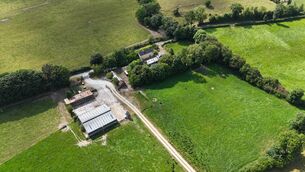
Major farming market trends but renters carry on regardless

Much of their dealing in land renting occurs from November to March, as they plan ahead for the coming season.
Over the past number of years, there had been increased pressure within the land rental market, as a result of the Common Agricultural Policy Reform which culminated in the new Basic Payment Scheme entitlements, to run from 2015 to 2019.
Some farmers sought to maximise their land area in 2013 in a bid to stave off convergence cuts.
Those with high-value single farm payment entitlements were tempted to dilute down their payments over a larger area, so that they would avoid any immediate ceiling cut-off when the new basic payment scheme entitlements came into effect.
This plan was the reversal of “stacking”, in effect.
Meanwhile, new entrants and young farmers were very much an influence on the 2015 land rental market.
They were making up for the many years in which they (new entrants, in particular) had benefited little from the Single Farm Payment scheme, because the National Reserve was hopelessly under-funded.
Looking forward to 2016, the influence of the reference year and national reserve should evaporate.
In the meantime, the new Basic Payment Scheme entitlements are subject to a two-year usage rule.
Under the new rules, it is also expected that farmers can sell entitlements in 2016, but sales will be subject to a 50% claw-back.
Looking away from EU payments, the general prospects for Irish agriculture should surely have a major influence on the demand for farm land.
With milk prices on the floor, and failing to make consistent gains over the past year, dairy farmers should reassess the value (if any) in taking on extra land.
There are other potentially worrying international dimensions for those looking at prospects for Irish agriculture.
But that will probably will matter nought when it comes to taking on extra land or renewing conacre, as usual, it’s simply a case of carry on regardless.
However, it can’t be denied that the International Grains Council has predicted a surplus supply of grain for the 2015/2016 season, taking global stocks to a 29-year record high of 454m tons.
At the same time, low fuel prices are dragging down prices of natural gas, a major component in fertiliser manufacture.
Oil prices are currently at a 10-year low, which reduces the costs of producing grain, and of transporting and exporting grain, particularly in oil-exporting countries such as the United States.
Meanwhile, farmers in Europe have failed to benefit from the fall in fuel prices, with fertiliser prices remaining stubbornly high.
Oil prices are at pre-2005 levels of about $40 a barrel. Back around them, in 2005/2006, CAN 27% fertiliser cost between €215 and €230/ ton, but current CAN prices here are upwards of €310 per ton.
Similarly, 18-6-12 compound fertiliser was available during those years at €255-270 per ton, compared to current prices in the region of €415 per ton.
The high fertiliser price hits our almost uniquely heavily grass (and fertiliser) dependent industry.
At the same time, our competitors can make use of cheap grains and fertilisers to underpin their profitability.
And if cheap fuel puts ethanol producers out of business, a sustained slump in grain prices could leave our dairy and beef industries even less competitive.
International beef prices have already steadied, with drops of over 20% for R3 steers in Brazil, and 14% in the US over the past year.
The strength of sterling, and the weakening of the euro against the dollar, have helped offset these negative headwinds to some degree for Irish farmers.
With the euro trading at about US$1.08, the past 12 months have seen a drop in the value of the EU currency against the dollar of over 12%, or a total of about 21% since December 2013.
This has helped shore up the euro value of milk and beef exports, reckoned to have helped our dairy farmers by as much as four cent per litre.