300% difference in silages
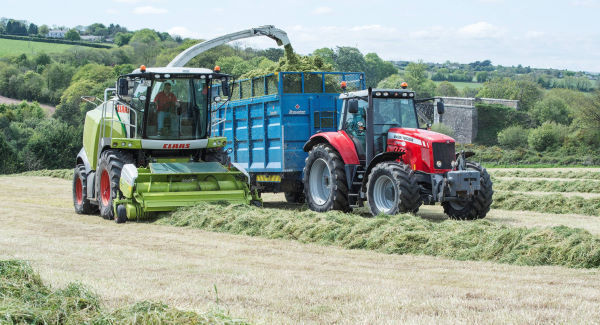
Grass silage is the basis of most winter feeding systems in this country, and satisfactory animal performance is largely dependent on the adequate intake of good quality silage.
The level of meal feeding on your farm is determined by the quality of your silage.
Therefore, knowing your silage quality must be the starting point in planning your winter feed, when making cost effective decisions on concentrate supplementation.
Silage made under poor conditions this year could have low dry matter, low digestibility (energy value), low crude protein, high ammonia levels, and high acidity.
These silage characteristics will give rise to low dry matter intakes and poor animal performance.
Knowing this information before you start feeding animals will allow you to correctly assess what supplementary feed you require.
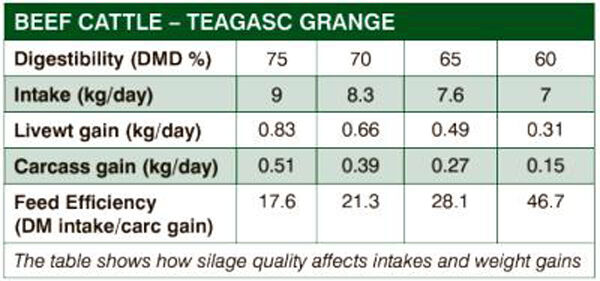
The accompanying table showed how silage quality affected intakes and weight gains, in trials with beef cattle at the Teagasc Grange research centre.
It takes 17kg (dry matter, DM) of 75DMD silage to put on 1kg of carcass, as opposed to 46kgs DM of 60 DMD.
The Teagasc silage analysis service provides an accurate assessment of preservation quality, feeding value and potential intake of your silage.
Concentrate supplementation rates are then provided in a detailed report for the type of animals on your farm. The main components measured include:
Dry matter (DM%): this is the amount of silage material after water has been removed.
Generally, the higher the dry matter, the higher the potential intake of silage.
However, silages that are too dry can give rise to moulds and heating.
Fermentation is described by pH, ammonia and lactic acid.
The pH, normally 3.8 to 4.2 , measures the silage acidity, and the ability of the silage to store.
Reduced intakes can occur with too low a pH, while a high pH in low dry matter silages can be an indicator of poor fermentation.
Ammonia is a useful indicator of fermentation quality.
Ammonia values of less than 10% are desirable; values greater than 15% can cause reduced intakes, resulting in poor animal performance.
High nitrate levels in the grass will contribute to this.
Lactic acid is produced at ensiling.
Following ensiling, it quickly reduces the pH of the silage, and acts as a preservative.
Crude protein levels are a direct reflection of the quality of the grass at the time of harvest.
Young leafy grass produces high protein silage, while older stemmy grass produces low protein silage.
Protein levels in grass can also be much higher earlier in the silage season than in mid-summer.
Metabolisable energy (ME) measures the usable energy of the silage, which is higher at the young leafy grass stage and lower at the hay stage.
The DMD (dry matter digestibility) is an accurate and reliable test of forage feeding value.
The DMD result is used to estimate energy of the silage, as well as expected live weight gains/milk yields and planning supplementation rates.
DMDs of 70% and over are good.
Visual assessment is not adequate when it comes to determining the quality of your silage; get it analysed.
It costs €36 to have a silage sample analysed, with a detailed independent report provided within about a week.
Contact your local Teagasc office for details.