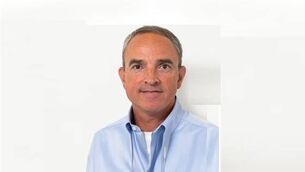
Phil Hogan’s next change target: better credit for EU farmers

Over the last eight years, wholesale skim milk powder prices in the EU varied from a peak month of over €3,800 per tonne in 2007 to a low of less than €1,650 in 2009, then rose to €3,300 in early 2014, but fell to under 1,700 in mid-2015.
Phil Hogan’s next change target: better credit for EU farmers

The Irish dairy industry has done well to survive these extremes of volatility.

Every success our dairy industry has achieved has been against the odds, with only a small home market to support this 90% export business. At the end of the dairy production chain, the Irish dairy farmer is particularly vulnerable to the effect of price movements further up the chain, on his or her farm earnings and cash flow.

This vulnerability is amplified where large debts are in place on the farm — particularly so in Ireland, where farmers are estimated to be charged 0.17% more in bank interest rates loans than they should be.

That figure comes from European Commissioner Phil Hogan, who is bringing one of the few bits of promising news to a dairy industry currently struggling through the low point of the price volatility cycle.

Commissioner Hogan says working for better access to finance on Irish farms remains an absolute priority for him, from day one of his commissionership.

For Irish farmers who know of his record in delivering change in Irish politics — most notably in water charges and local government reform — it’s encouraging that Mr Hogan has a plan to combat dairy volatility though better credit availability.

He aims for flexible loan repayments to minimise the impact on farm earnings of milk price volatility — which would all be made possible by EU guarantee funds offering up to 80% security to banks and other bodies lending money to farmers.

There’s considerable weight behind his plan, in the form of the European Investment Bank, the biggest private bank in the world, owned by the 28 EU member states, which has signed a memorandum of understanding with the European Commission, to work towards doubling use of financial instruments such as loan guarantees, compared to the 2007-2013 period. The EU sees such financial instruments as magnets to pull in private money to generate economic growth.

However, most member states have so far been reluctant to cater for these financial instruments in their rural development plans.

Only seven countries used them in the 2007-2013 rural development programme period — Belgium, France, Greece, Italy, Lithuania, Latvia and Romania.

The European Commission wants financial instruments to help farmers unlock investment funding from banks that have become much more cautious since the financial crisis.

The aim is to give security to banks offering loans to the farm sector, encouraging them to lend, and with more favourable conditions such as lower interest rates, longer repayment periods and fewer requirements for collateral.

It’s clearly the way ahead to achieve agricultural growth for Commissioner Hogan, but he says a ‘coalition of the willing’ is needed to fully throw its weight behind the proposal, applying pressure on the EIB to deliver for the agri-food sector.

He asked dairy industry leaders in Ireland last week to play their part as key industry stakeholders, by contacting decision makers and influencers at home and abroad.

He held out the prospect of under-pressure dairy and pig farmers, and the Irish forestry sector, using volatility-proofed loans, enjoying loan terms of up to 15 years at very low interest rates, dairy farmers’ monthly milk cheques used as loan security, and flexible loan repayments that can reflect milk price movements.

Loans for landless young farmers would open the possibility of accelerated agricultural growth.

All of these are “workable”, says Commissioner Hogan.

The man who achieved a seismic shift in local government and national taxation policy as Environment Minister inevitably made many enemies along the way, but if his record of reform proves successful in the area of credit for farmers, he will win many friends in the agriculture and food industries.

More in this section

Farming

Newsletter

Keep up-to-date with all the latest developments in Farming with our weekly newsletter.

Cookie Policy Privacy Policy Brand Safety FAQ Help Contact Us Terms and Conditions

© Examiner Echo Group Limited