Oliver Moore: Why Castlewood is a model to follow
It has been used as a Teagasc demonstration farm, and now it is likely to be visited even more frequently, with the opening of a shop and tea rooms earlier this year.
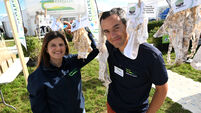
Dominic Leonard spoke with me about the farm.
Tell me about your background, Dominic.
Fifteen years ago I moved from Dublin, when my uncle wanted to retire. He was alone, farming for 25/30 years, and he asked if I’d take over.
In Dublin, I’d worked with Focus Ireland and trained in psychotherapy. I’d always had an interest in environmental issues, being an active Green Party member, shopping in the Dublin food co-op and so on.
My uncle wasn’t necessarily into organic, he thought all the animals would die! But the farm was never pushed hard. It was gentleman farming beforehand, in a way.
Tell me about the farm.
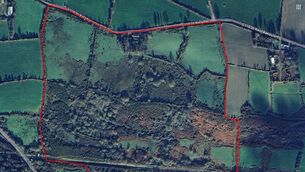
We’re between Durrow and Abbeyleix, close to Kilkenny. Its 250 acres, including woodland, and some boggy areas, though its mostly good land.
When we took over it was dry stock - cattle and sheep - as well as tillage. Now we’ve also got pigs, a reasonable sized orchard, hens as well as cattle, sheep and tillage.
It’s our own stock, there’s no buying in. We like this and a closed system.
We have 30 suckler cows at present, but we’ll be increasing this. We finish all the cattle here on the farm, and sell to Slaney Meats. Our cattle are a Simmental cross with an Angus bull.
Simmental adds a bit of size. But it’s hard to source good stock at the moment. We used to go to the marts, but the stock isn’t what I tend to want. It is a fair trek to an organic mart in the west or north, only to find nothing.
It’s hard to find nice Simmental animals in an organic system. So we’ve been using AI which isn’t always successful. There are lots of Angus crosses out there, but I want something with a little more growth potential than just Angus.
Recently John Purcell (Good Herdsman) is buying up weanlings for veal and export, which takes stock out of the system.
No, we have the occasional conventional breeding heifer, with a derogation. The cows don’t go into the organic system, but the stock born from them can be organic. There’s no market for organic cows anyway.
We have 130 ewes, and about 300 sheep on the farm in total. They are all finished here too and, thankfully, we get to sell most of these into the organic system: our lambs go to Irish Country Meats in Camolin.
They are Belclare ewes with a Texel lamb. Our tillage is 40 acres a year at the moment, its limited by the rotation. We supply oats for Flahavans, the rest is for ourselves, for the animals on the farm.
We did a lot of pork before the recession, but the market just hasn’t been there since then. The organic feed for pigs is expensive, this in turn makes the product dear, and people won’t buy it.
We have sold at farmers’ markets too, but they have decreased too since the recession. So we’ve sold frozen meat - lamb, pork, bacon - from the house here.
This direct selling seems to have tweaked the Leonard’s interest in upscaling this side of the farm enterprise. As and from March of this year, the couple has been running a farm shop and tea rooms, every Friday, Saturday and Sunday. And that’s what we’ll explore next week.