Control of grassland weeds guide
Best control of docks will be achieved in good growing conditions when docks are actively growing, and nutrients are actively being transported to new foliage and roots.
Control of grassland weeds guide

If seed stalks are seen on the plant, or if the dock has diseased leaves or is under pest attack, it is better to cut, top or graze and allow re-growth of the docks, before applying chemical.

Do not apply chemicals in a period of drought, as the chemicals will not be taken up by the plant leaves in sufficient quantities.


Use the highest water rates on the manufacturer’s label, for best effects.

Allow adequate time between spraying and cutting silage for the herbicide to work.

Season-Long Control

Use of herbicides based on aminopyralid, dicamba, triclopyr, fluroxypyr, etc, will give season-long control of docks plus a wide range of common grassland weeds.

Where clover is of consequence, Eagle or Prospect may be applied. These products do not harm clover, but Prospect may have some effect on the constituent grasses in the sward.

These are best applied in good growth conditions, and will give season-long control.

Eagle has label clearance for dock control on grassland, at the 40-60 g/ha rate, 60 g/ha being the full recommended rate for docks. The higher rate should be used where the infestation is high, or the docks have a well-established tap root.

Recent Teagasc trials have shown that longer term (up to four years) control of docks can be achieved by applying a suitable herbicide (such as Starane2 at 1.5 litres/ha) onto small docks shortly after re-seeding.

Applying the herbicide at this stage of the dock’s development, facilitates almost complete elimination of the docks.

The trials have also shown that docks that emerge in the following years rarely establish, due to competition from the grass.

Other Grassland Weeds

It is difficult to assess accurately the damage weeds do to pasture output — except where livestock death is the result of plant poisoning from bracken, ragwort or hemlock.

Other weeds, such as thistles, nettles, rushes and dandelions, can also interfere with grass and animal production, and should be eliminated as soon as possible.

* Bracken is poisonous in the green state, and the young green shoots are particularly so. Over the years, many herbicides have been used on this weed, but Asulox or Roundup are the most effective.

The optimum time of application is from the end of June to mid-July, when the expanded fronds are tender and actively growing.

* Ragwort is poisonous in the green and preserved state, and has been responsible for many animal fatalities.

Normally, it is not eaten in pasture, where it takes up to 12% of the animal’s body weight to cause problems. But where it is present in finely chopped silage, it becomes far more potent and the natural animal selectivity is reduced, so serious fatalities can occur.

It becomes more palatable to animals when cut or sprayed, as it releases sugars.

Any control strategy should be based on the fact that Ragwort is a biennial (lives for two years), and also that just because you killed it with a spray does not mean it cannot harm livestock.

Small numbers of ragwort can be effectively pulled or dug up, and safely removed.

For larger numbers, sprays such as MCPA, 2, 4-D, Dicamba, Thrust and Forefront provide good control, but measures must be taken to avoid stock eating any dying or dead ragwort present.

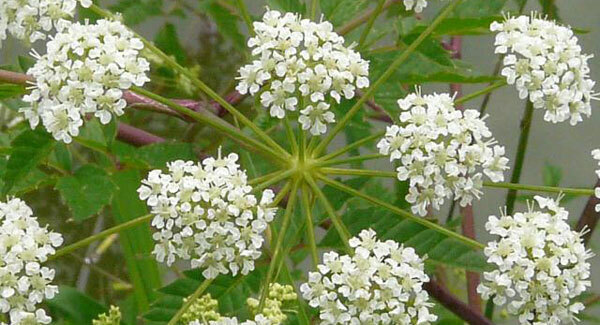
* Hemlock is one of the most poisonous grassland weeds. Its poisonous alkaloid (coniine) is very virulent, and dangerous to man and animals. It can be controlled with fluroxypyr or Aminopyralid or any of the dicamba based sprays.

* Creeping thistle is a perennial plant, and grows mainly from an underground stem or rhizome, and this makes total control difficult with one spray. Yield losses of up to 15% have been recorded, but creeping thistle causes most damage by preventing animals grazing around them.

Frequent topping can reduce the root reserves but will seldom eradicate the problemm, as root fragments can lay viable and dormant for years.

This weed is best sprayed with Thistlex, Forefront, MCPA or 2, 4-D in June, before flowering, and it may need a second treatment later in the season to control any late shooting thistles.

In a reseed, both root fragments and seed can cause an explosion of creeping thistles.

* Spear thistle only spreads by seed. Each plant lives for two years (like ragwort), producing a flattened rosette of leaves in year one, and then the familiar ‘tree-like’ structure in year two.

Once controlled in the re-seed, it is rarely a problem in grazed fields, except after poaching or other sward damage.

Topping is not effective to control the growth in year one, but can be carried out on the second year growth, before seed is set. Chemical control options are the same as for creeping thistle.

* Perennial nettle tends to grow in clumps in pasture, and can prevent grazing.

The growth pattern of this weed makes it an ideal target for spot treatment with some of the dicamba/triclopyr/Fluroxypyr/aminopyralid based products.

If the clumps are small and not too dense, some of the dicamba/CMPP based products will also contain them, if sprayed on a regular basis.

High water volumes (400 l/ha) are essential when spot treating.

Treat before seed production, for best effects.

* Soft rush is the most common of the many rush species in this country.

Draining of infested areas is essential if any herbicide programme is to be successful.

Soft rush can be controlled with MCPA or 2, 4-D applied in June or July when growth conditions are good.

Cutting and removal of the rush about three weeks before spraying will give the best results. A wetting agent can improve the spray sticking to the slender rush ‘target’.

* Dandelions are a perennial weed with a deep tap-root.

They primarily spread by seed and can reduce the overall value of the pasture, if allowed to establish. In small amounts, MCPA or 2, 4-D will keep them at bay, but where long term control is required, the aminopyralid/Fluroxypyr/dicamba based sprays are best, if applied in the summer or early autumn.

* Common chickweed is an annual weed (lives for one year), and only spreads by seed.

However, it can germinate and set seed throughout the year, making it seem a perennial weed (one that lives for many years).

It is a low, ground-hugging weed, and its fast growth allows it to become established, especially after re-seeding.

It has been shown to reduce silage yields and quality, in trials. The key to its effective management is to get the grass sward establish rapidly, to smother out the chickweed (and other annuals).

Late sown and poorly established re-seeds are likely to have chickweed problems. In old pastures, there are many excellent chemical options available, but the ‘holes’ left after killing the chickweed are ideal for more seeds to germinate, continuing the problem.

Fluroxypyr/CMPP/D icamba/Aminopyralid offer very good control, but dense patches may need a second spray, due to coverage issues.

More in this section

Farming

Newsletter

Keep up-to-date with all the latest developments in Farming with our weekly newsletter.

Cookie Policy Privacy Policy Brand Safety FAQ Help Contact Us Terms and Conditions

© Examiner Echo Group Limited