Stephen Cadogan: Blip in Ireland’s huge BSE elimination progress

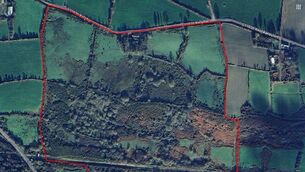
Barring unforeseen discoveries in the painstaking investigations of a suspected BSE case on a Co Louth farm, there seems little reason why the World Organisation for Animal Health (OIE) should alter its recent decision to recognise Ireland as having a negligible risk for BSE.
Stephen Cadogan: Blip in Ireland’s huge BSE elimination progress

If the case is confirmed, it is only a blip in the huge progress made in Ireland over many years towards eradicating this disease from the national cattle herd.

Contaminated meat and bone meal in feed triggered the disease in the UK in the late 1980s. It peaked in the UK at 37,280 in 1992, with about 180,000 cases in total (and 177 recorded cases of variant CJD in humans, likely to be due to eating beef).

Northern Ireland has had 2,201 cases since 1988, peaking at 459 in 93.

We have had nearly 1,660 cases, peaking at 333 in 2002, in a herd of over six million.

Our grass-based milk and beef production reduces our need to use meat and bone meal — so Irish farmers were well placed to adapt to the full 1996 ban on meat and bone.

This ban is combined with removal of all spinal-cord and brain material from the food chain, to eliminate BSE. All confirmed BSE animals are slaughtered, along with those reared alongside them, and thus at risk of having eaten the same materials.

With these controls in place, by 2010, our BSE incidence had fallen to only two cattle, followed by three each in 2011 and 2012, and no case in 2014.

The Food Safety Authority of Ireland has pointed out that last week’s announcement of a suspected BSE case in Co Louth demonstrated that Irish BSE control measures are effective — because the animal was identified through on-going official surveillance of animals which die on farms, and did not enter the food chain and therefore, did not pose a public health risk.

Not only are fallen animals on farms checked.

All animals are inspected by veterinary surgeons at beef abattoirs to ensure they are healthy. And the risky central nervous system tissue of all cattle is barred from the food chain.

This approach convinced the OIE in May 2008, to officially recognise Ireland as a country with effective BSE controls — which allowed our beef be traded internationally. And on June 3, 16 days ago, came the breakthrough OIE decision to recognise Ireland as a country with negligible risk for BSE.

The ball in now back in the OIE’s court to decide if Ireland must revert to “controlled risk status” which applied up to this month, and which has facilitated our beef exports, with the US, Japan, and China the most recent to lift bans on Irish beef.

However, we could pay a price if unscrupulous competitors in the global beef market use our BSE setback to “blacken” the name of Irish beef, in the hope of stepping in with their own beef if some importers choose to err on the side of consumer caution.

Also, negligible risk status would save our beef industry an estimated €25m per year, mostly incurred for removal of spinal-cord and brain materials.

It is a difficult decision for the OIE, the inter-governmental organisation responsible for improving animal health worldwide, but one Ireland will have to live with.

More in this section

Farming

Newsletter

Keep up-to-date with all the latest developments in Farming with our weekly newsletter.

Cookie Policy Privacy Policy Brand Safety FAQ Help Contact Us Terms and Conditions

© Examiner Echo Group Limited