Stephen Cadogan: Beef Data and Genomics Programme offers €52m per year carrot to save suckler farms
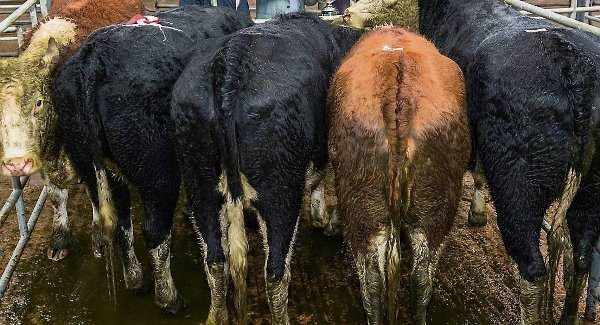
There has been a lot of negative farmer reaction to the launch of the BDGP scheme, much of it centred on the requirement that participants have to commit to a six-year contract, on pain of having payments clawed back if they don’t comply with scheme requirements for six years.
One could interpret that reaction as a sign that many farmers had intended to give up suckler farming in the next six years.
But the scheme’s promise of €142.50 per hectare for the first 6.66 payable hectares, and €120 per payable hectare after that, may hook enough customers to guarantee suckler farming into the 2020s.
Farmers have until midnight tomorrow to get their applications in.
Agriculture Minister Simon Coveney has said the six-year contract is an EU requirement, but it should suit committed suckler farmers, and is long enough to allow applicants meet the requirements of the scheme on a phased basis, and see real benefits from genetic gains.
However, many suckler farmers are in their 60s or older.
That explains why Independent Roscommon-South Leitrim TD Denis Naughten asked Agriculture Minister Simon Coveney what protection a family has from payment clawback, if the farmer passes away during the six years of the programme, or what happens if there is no farming successor.
It’s a natural reaction for an older suckler farmer to wonder if their health will hold up over the next six years, in a farm enterprise where one needs to be not only healthy, but fit also.
As a suckler farmer himself, Michael Fitzmaurice, also an Independent Roscommon-South Leitrim TD, was uniquely equipped to question Minister Coveney in the Dáil about the new scheme.
Last October’s by-election winner has 65 suckler cows on 65 acres and some rented land, selling calves mostly as weanlings.
On the six-year BDGP commitment, he feared that “if something goes wrong within five years, one will be in trouble and have to pay back the money.”
He said if a person works a year, their wages are based on that year’s work.
“If farmers do it right year one, year two and year three, they should not be penalised for the back-money.
“Every year should stand for itself.”
“Farmers are frightened of this scheme. We have seen problems between the Department and farmers over the past few years on eligibility and so forth.
“Farmers are frightened that if something goes wrong in year five, that they could be looking at having to pay a big bill.
It will soon be known how many suckler farmers are frightened off by the six-year commitment. Over 12,600 applications had been received by Tuesday morning, tomorrow is the last day to apply.
In the fore-runner to the scheme in 2014, nearly 36,500 suckler farmers applied to take part, after application forms were sent to 70,000 beef farmers. But there is a bigger carrot now, with total annual funding of €52m into suckler farms on offer.
Minister Coveney has assured farmers there is no question of payments being clawed back for minor non-compliances. And there are force majeure provisions for difficult situations such as death, illness or animal disease. He said farmers have nothing to be frightened of in the scheme.
But the fear of a six-year commitment and payment claw backs has also been highlighted by IFA.
And ICSA had demanded that withdrawal from the six-year contract should not result in a clawback of monies received by farmers, with ICSA president Patrick Kent wondering why such a long commitment is needed, from suckler farmers who had shown “incredible” commitment and dedication.
He said if Minister Coveney really wanted to encourage farmers to stay in suckling for the long term, he should do more to ensure a fair price for their produce, so they can make an adequate living.
Therein lies the rub for suckler farmers, having to commit for six years to an enterprise which is unlikely to be profitable for all of those six years.