Kieran Coughlan: Superlevy deductible this year
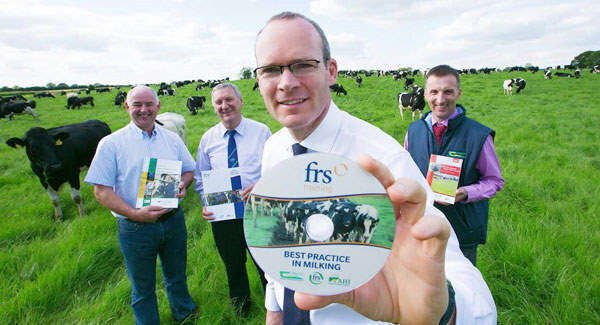
However, some of this is undoubtedly the result of the unprecedented efforts to hold milk over into April, in one last major effort to avoid superlevy fines.
Just this week, Agriculture Minister Simon Coveney confirmed that Ireland was estimated to have finished up 4.34% over quota, leaving Irish dairy farmers with a hefty superlevy bill of about €69m, or an average of about €3,800 for each dairy farmer.
Of course at individual farm level, some farmers who significantly exceeded their quotas will face huge bills.
However, some comfort is available from the fact that the superlevy fines are set to be paid over three years.
From a tax point of view, it should be possible for farmers to claim any super levy fines as a full deduction against the farm income for 2015, even where those superlevy fines are not fully paid until 2017.
General accounting principles determine that income and expenses should be prepared on an accruals basis, meaning that farmers should include expenses relevant to the year, regardless of whether those costs are paid or not.
From a cash-flow perspective, the reduction in income for 2015 may help reduce the income tax liability for 2015, offering potential for making lower preliminary tax payments for 2015, and/or lower final payments before the final deadline of October 31, 2016.
Of course, 2014 was in the most part a relatively good year, with strong milk prices for much of the earlier part of the year.
For many, this will mean hefty tax bills to be paid by this October.
From a cash flow management point of view, it is good to get your 2014 accounts prepared early, in order to have some certainty about your tax position.
Meanwhile back to post-quota expansion: farmers should consider carefully the costs and tax implications of expanding.
In particular, it’s important to be aware that expenditure on stock, machinery, building improvements, land drainage or other capital costs is not deductible as day-to-day expenditure, instead an allowance is granted over eight years in the case of equipment, or seven years in the case of buildings.
The cost of expanding a dairy herd by a few cows can literally just be the cost of those extra cows, but large scale expansion results in a much wider spectrum of costs, such as extra cubicle spaces, extra shed space, extra feed barriers, bigger parlour and milk tank capacity, wider and longer farm roadways, and higher capacity water flow.
The Greenfield Kilkenny project suggested a conservative expansion cost per cow of up to €4,000 for basic specification installations.
Higher spec upgrades can add significantly to this cost.
Looking at this from a tax view point, a farmer can normally only take a tax deduction for 25% of the cost of the purchase of heifers or cows (where that farmer is increasing their stock).
In monetary terms, spending €1,500 on a cow will result in a tax saving of just €195 for a high rate tax payer (€1,500 at 25%, at 52%).
Some categories of farmers, such as those involved in registered farm partnership or young trained farmers within their first three years of farming, can claim higher tax deductions of 50% or 100% respectively.
However, recent changes have now capped the amount of stock relief available to young farmers at a relatively low €70,000.
Similar to expenditure on stock, spending €2,500 on other infrastructure to accommodate the extra cow will at best save a further €195 in year one (€2,500 at 15%, at 52%), with a further six years of relief available.
Some expenditure is not tax deductible at all — such as the purchase of land, or co-op shares.
Meanwhile, any extra profit earned from expanding is taxed at the tax payer’s marginal rate (of up to 54%).
All in all, our tax rules do little by way of tax breaks to support farmers willing to expand.