How the global warming debate is heating up here
eamonnpitts@gmail.com
Some aspects of environmental policy are difficult to explain — to coin a relevant phrase, it is difficult to see the wood from the trees.
World population is increasing by 150 people per minute, carbon emissions are increasing by 6,150 tonnes per minute, tropical forests (which absorb massive quantities of carbon) are disappearing at the rate of 25 hectares per minute, while urban encroachment on farming land is at the rate of 5.5ha per minute.
Those who attended the Agri-Environment conference organised by Teagasc recently got a very fine summary of where environmental policy relevant to our countryside is, from Karl Richards of Teagasc, and John Muldowney of the Department of Agriculture.
The three major environmental issues facing agriculture are climate change, water quality and biodiversity. The water quality issue appears to be under control in Ireland.
But there are continuing problems in explaining and getting public agreement on biodiversity, as witnessed by the broad refusal to accept directives on limiting turf cutting, or providing habitats for birds such as hen harriers.
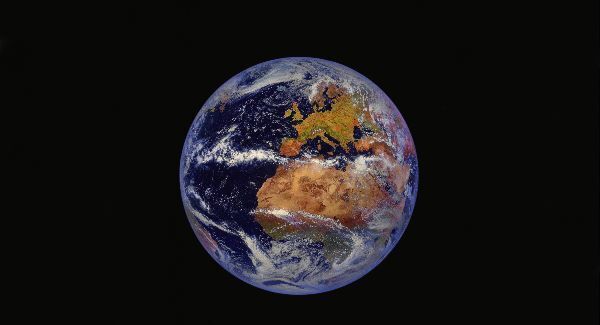
However the greatest long term environmental issue is undoubtedly the impact of climate change — formerly called global warming.
Climate change is constantly in the news. The UN scientists dealing with the issue published, this month, a further report on the absolute necessity for action to reduce carbon emissions, if further climate change is to be averted. EU Government leaders agreed to new targets. Negotiations will take place next year, involving all the world’s leaders, to try to agree a plan of action.
So what exactly is the problem and why is it of specific interest to those engaged in agriculture in Ireland?
One of the greatest Irish emissions is methane from belching bovines. The more bovines and sheep we have, the higher our greenhouse gas output. Because of our limited industrial base, and the dominance of bovines in our agriculture, 32% of Irish greenhouse gas emissions in 2012 came from agriculture. That is projected to increase to 48% by 2020, because of increased dairy production. The average contribution of agriculture in the EU as a whole is only 9%.
There is broad scientific agreement that the earth has been warming up, and that the cause of this is increased emissions of “greenhouse gasses” (which include carbon dioxide, methane and nitrous oxide), arising from human activities, including burning of coal oil and natural gas, but also some agricultural activities.
There is also wide agreement that this warming up will continue in the short term, and will increase unless the human race takes action to reduce its carbon emitting activities. The higher temperatures may lead to
* higher sea levels, swamping some islands and low lying coastal areas
* greater intensity of rainfall, causing flooding
* heat waves of greater frequency and length
* desertification, and substantial reductions in crop yields, in many areas.
These risks have been understood, and targets have been set for reduction of greenhouse gas emissions, notably under the Kyoto agreement of 1997. This agreement obliges the EU and 35 other developed economies to reduce their emissions by 2020.
Within the EU, the targets for 2020 have been split in two. One relates to the industrial sector, where the Union as a whole has adopted a target of a reduction of 21% from 1995 levels; meeting it isthe responsibility of the European Commission. The second relates to emissions from transport, buildings, waste and agriculture, where national targets have been set.
A technical problem with these targets, is they include all the emissions from farming, but do not take into account that forestry and permanent grassland absorb carbon, and should be entitled to a credit.
The targets set for Ireland were to limit greenhouse gas emissions in 2012 to a 13% increase above 1990 levels (we achieved a reduction of 8.6%), but to reduce emissions 20% by 2020, compared to 1990 levels. It’s unlikely this latter target will be achieved, but the cost of an overrun will be met by an administrative procedure, whereby the Irish government purchases carbon credits from other countries, who have “surplus” carbon.