Having the power to stay safe
We are dependent on electricity but sometimes forget the dangers.
Sociologists accept that rural electrification in the second half of the last century was one of the most significant events in Ireland’s modern history.
It took the drudgery out of household work, helped farmers to modernise their enterprises, boosted the growth of small industry, banished talk about ghosts and shone a bright light on some of the darker corners of rural society.
Electricity is today an essential part of the national economy with ESB Networks providing a service to its 2.4 million electricity customers’ right across the country.
Yet, electricity is often taken for granted and it is only when there is a power outage at a crucial time that people fully accept how dependent they are on it in their everyday activities.
It is a powerful and versatile source of energy, but it can be dangerous unless people use it safely in their homes and in their work places, including farms.
There were 66 fatalities due to electrocution from 1995 to 2013. It is likely that 13 of these could have been avoided had there been awareness of overhead networks and the precautions to take.
On the customer side, seven of the fatalities could have been avoided had earthing or protection fusing been correct.
Some 30 of these accidents occurred when the person came into contact with live overhead power lines, 26 resulted from contact with live electrical equipment while 10 occurred in the home. Fatal accidents have declined, from five per annum during 2004/2005 to around two in recent years.
Aside from fatalities, electrical accidents also involve severe injuries from burns, shocks and fires, all of which can cause long term loss of income and losses arising from livestock deaths and damage to farm buildings.
Stray electricity also has a significant impact on livestock performance and farm incomes as it leads to reduced live-weight gain in cattle, reduced milk yield, higher cell counts and increased level of mastitis.
Agriculture, Food and the Marine Minister Simon Coveney recently launched a new farm safety guide on behalf of ESB Networks.
“Farm Safety with Electricity — It Makes Sense to Check” is part of a wider campaign by ESB Networks to raise awareness of the potential hazards of electricity on farms, and to promote farm safety. He said simple behavioural changes are all that it takes to save lives.
He strongly urged all people involved in farming to read the booklet and to work through the safety checklist and self-rating at the end.
In a foreword to the guide, he stated that he is particularly concerned about statistics showing that accidents on farms cause more workplace deaths than all other occupations combined. “Farming is the most dangerous occupation in the country. Even minor accidents can cost a lot of time and money,” he states.
Minister Coveney stresses that the use of correctly installed and maintained electrical systems will help to reduce the number of farm accidents that occur in connection with electricity.
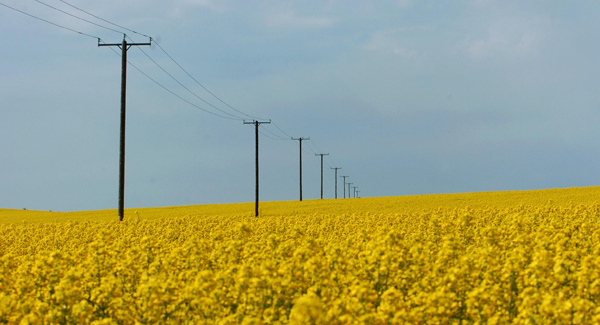
“Additionally great care should be taken when working near overhead power lines as contacts with the lines have caused fatalities. You should always know where overhead power lines are when operating tall machines such as harvesters.”
Jerry O’Sullivan, managing director, ESB Networks, who acknowledged the support of the Farm Safety Partnership in the publication of the guide.
“Over the last 10 years we have invested €6 billion to refurbish and upgrade our electricity network. We continue to develop and use new technologies to improve the quality and reliability of the electricity supply,” he said.
Director of group, people and sustainability at ESB, Pat Naughton, said: “We mustalways make safety a priority on farms, in the work place and in the family home.
Seven potential electrical hazards around farms are identified in the guide. These are fallen wires, wiring installation, portable tools, stray voltage, electric fences, standby generators and machinery-high loads.
It also details four key safety messages and a self-rating check to help keep farmers, their families and their livestock safe.
Farmers are urged to watch out for overhead wires, have installation checked regularly, complete the self-rating checklist and have a Residual Current Device trip switch (RCD) installed and regularly tested to provide protection against electric shock.
* www.esb/networks.ie