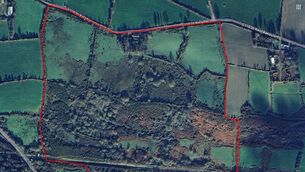
ICSA president slams delay in land parcels appeals system

But the Minister for Agriculture Simon Coveney insists that the appeals process he introduced is robust and comprehensive.
Applicants are entitled to have their case reviewed by submitting their appeal on the form provided by his Department.
If they are not satisfied with the outcome of the review, they can appeal their case to the independent-chaired Land Eligibility Appeals Committee.
He told the former agriculture minister Brendan Smith in a written reply to a Dáil question in June that some 10,173 appeals had been received to that date and that 3,852 had been finalised.
A total of 3,464 cases had been referred for verification visit, in order to establish the position on the ground.
“To date, 179 cases have been referred to the Appeals Committee for consideration.
“The number of cases being referred will increase, as the number of verification visits finalised increases,” he said.
However, the Irish Cattle and Sheep Farmers president Patrick Kent, said there has been no update on figures in relation to these appeals since June 24.
“Only 3,854 cases have been finalised, leaving more than 7,000 farmers in limbo. It’s likely that the cases which have been resolved were the less complicated ones.
“Moreover, the minister makes no reference at all to the status of over 2,500 appeals that have neither been finalised nor referred for verification visit,” he said.
Mr Kent said that the delay in processing these appeals is just not good enough.
With up to 100% penalties on their single farm payment, farmers are at risk of serious financial difficulties.
Mr Kent said the ICSA is now calling on the minister to clarify the position in relation to these appeals and to do everything in his power to expedite the process,” he said.
The over claims issue is particularly relevant in areas of marginal land, including parts of Cork, Kerry and the west coast.
Mr Coveney explained in his Dáil reply that his Department is bound, under EU Regulations, to maintain the accuracy of the land parcel identification system which underpins the direct payments.
At the start of each year, his department issues colour maps of all land parcels declared by farmers in the previous year together with a covering letter.
In that letter, farmers are clearly informed of the need to examine each map carefully and to identify and exclude from their application all unfarmed land and ineligible features such as buildings, farmyards, scrub, roadways, forests, lakes.
“There is, therefore, an onus on all farmers to ensure that the area of land declared by them as eligible for payment under the direct payment schemes is accurate.
“They are also given the means to do so by making the ortho-photos available to them on an annual basis,” he said.