Wait to fully exploit biomass
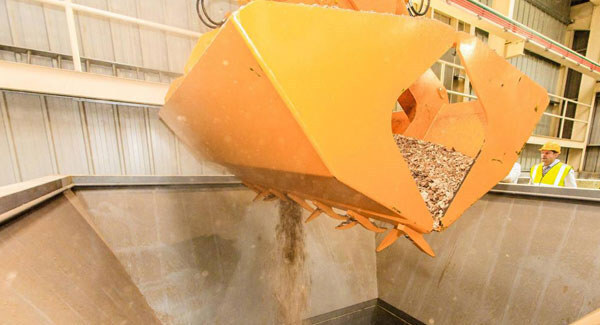
Biomass must replace the raw materials currently made from fossil sources if we are to sustainably satisfy the demand for plastics, solvents, paints and adhesives, according to Harry Bitter, recently appointed professor of biobased commodity chemistry at Wageningen University in the Netherlands.
“This is quite a challenge, as there are many different forms of biomass and its composition varies from year to year,” said the scientist.
“The use of biomass to replace crude oil immediately runs up against a mountain of problems.
“There is every reason to make the switch from crude oil, as it is slowly running out, and because biomass is CO2-neutral. However, biomass is not oil, it is usually wet, contains a lot of inflexible, ‘difficult’ oxygen at the molecular level, and its composition is like the soup of the day, it largely depends on the main ingredient of the harvest that year.”
In solid form, it is also more difficult to transport, comes from several locations, and is only available at a particular time of year.
“And from this turbulent biomass soup, we are going to have to obtain our raw materials,” said Professor Bitter.
“The trick is to keep the useful molecular structures in the biomass or to find a simple way of transforming them into useful components to replace the crude oil alternatives. If it sounds like we can already do this, then I am afraid I am going to have to disappoint you.”
His research will focus primarily on simplifying the conversions, using a chemical acceleration process called catalysis, so that organic molecules in the biomass soup can be quickly selected and converted into useful components for making, for example, food additives, medicines, adhesives, paints, plastics or biodiesel. After conversion, the required products are still mixed in amongst the residual biomass.
“Which is why it is also important to be find ways to separate them, for example using membranes or by collecting them as a solid or gas.”
It is already possible to fish certain components out of the biomass to convert into useful ingredients, such as lactic acid. Chains of lactic acid units form poly lactic acid, from which biodegradable plastic beakers can already be made.
“Which is why it is also important to be find ways to separate them, for example using membranes or by collecting them as a solid or gas,” daid the professor
Another example is a nylon-like material made from biomass that is already used in flexible petrol pump hoses. “Ultimately, however, we need to use 100% of the biomass, which is why you need to work out exactly which molecules in the biomass you want to use for which purpose.”
In 10 to 20 years, he expects we will have made significant progress in this area.