Lavender brings joy to sunny South-East
As aids to healing in the time before commercial medicines, in the kitchen to flavour foods, and as important ingredients used to fragrance perfumes, pomanders and the musty interiors of medieval homes, they have proved invaluable.
But out of all the many varieties of herbs, lavender must surely reign supreme when it comes to beauty, usefulness and as heir to such a rich and colourful history.
Lavendula is a genus of 39 species of flowering plants in the mint family, which originated in the Mediterranean and is believed to have been spread by the Roman army who utilised its many properties. They favoured lavender oils for that favourite pastime of bathing, used it for cooking and scenting the air, and gave it its Latin name of lavare — meaning to wash.
The flower’s soothing and insect-repelling qualities also added to the value of the herb in ancient times. It is mentioned often in the Bible by its earlier name of spikenard.
In the Gospel of St Luke, the writer reports: “Then took Mary a pound of ointment of spikenard, very costly, and anointed the feet of Jesus and wiped his feet with her hair and the house was filled with the odour of the ointment.”
An even earlier legend recounts that the plant was taken from the Garden of Eden by Adam and Eve, but it didn’t acquire its powerful perfume until many years later when Mary laid the newly-washed clothes of the baby Jesus on a lavender plant to dry.
This may also explain why the plant has been regarded as a holy safeguard. In many homes, a cross of lavender was hung on the door for protection against evil.
In ancient Egypt, lavender was used for embalming and also for the creation of the exotic perfumes that are credited with aiding Cleopatra in the seduction of both Anthony and Julius Caesar.
While in medieval Europe, washerwomen became known as lavenders. The nun Hildegard of Bingen rather surprisingly swore by lavender water, her own concoction of gin or brandy mixed with the dried flowers as a cure for migraine headaches.
Its reputation as a cure for whatever ails you may well have been enhanced during the Great Plague in London when it was believed a bunch of lavender fastened to each wrist would protect against the deadly disease.
And an extraordinary concoction known as Four Thieves Vinegar was reputed to have been created by a gang of grave robbers and plunderers of the homes of the newly dead. They credited remaining plague-free to their mixture, which contained liberal amounts of lavender and other herbs.
And in France, glove makers who perfumed their wares with lavender escaped a cholera epidemic. European royal history is also filled with stories of lavender use. Charles VI of France demanded that there be lavender-filled pillows wherever he went and Queen Elizabeth I insisted on lavender conserve at the royal table while Queen Victoria favoured lavender as a deodorant.
Until recently, France, the US and UK were the places to go to sample fragrant lavender farms with their rows of deeply-coloured plants. But now Ireland’s first lavender farm has opened in Wexford.
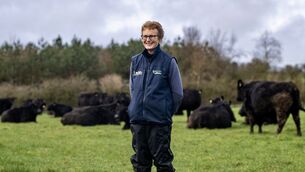
Proprietor and lover of all things purple, Moira Hunt told me about the unexpected crowds who visited her farm over the holiday weekend.
Q. I believe you were rushed off your feet for the four days Moira?
a. “Yes, it was fantastic. We hoped we’d be busy of course, and the weather was good but we must have had 300 or 400 visitors. And of course, as a new venture, we are still finding our feet. We’ve had great support locally and of course, Gorey is a popular tourist destination, so hopefully, we’ll keep the interest up. As well as the two acres of lavender we’ve planted, there are woodland walks, play areas for the children, a Billy the Bull quad train ride and a café selling some lovely food and yummy treats. There are also lavender inspired souvenirs in the gift shop and in 2016, we hope to start producing our own organic lavender oil.”
Q. How did you become so passionate about lavender?
A. “I’ve always loved it for its colour, the fabulous scent and its many uses. And I used to love visiting lavender farms in the UK and of course, in Provence. My grand parents bought this farm in the 40s. They had a dairy operation and some arable. My husband, two children and myself have been living here for about eight years now, since my aunt was no longer able to keep the place going. We rent most of the land out to a local farmer. When we decided on lavender, we planted over 6,000 plants last year, but first we put down rolls of weed suppressant that was, so we thought, firmly pegged down. That was all well and good until the storms earlier this year which ripped it all out.”
Q. What’s your own professional background?
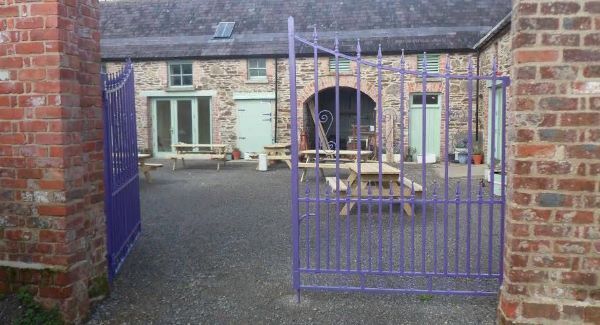
A. “It wasn’t in horticulture, although I always really loved gardening. I was PA to the CEO of Druids Glen for a number of years and that has given me invaluable experience in what visitors expect, merchandising, marketing, sales and so on. But having my own business was something I always wanted to do. We are lucky to have a number of lovely stone and brick outbuildings, stables and lovely courtyards so that there is plenty of room for us to grow.
“What we want is a facility that has something for everyone, whether you want a quiet cup of coffee, lunch, a walk in the fields or you are organising a children’s birthday party. As time goes on and we harvest more lavender, our gift shop will be full of lavender based goodies to buy for presents or as a treat for yourself. I’m really looking forward to producing our own lavender honey.”