EII vehicle to carry on BES job creation success
The Business Expansion Scheme (BES) was introduced in 1984, as an incentive to private investors to invest long-term equity capital in companies (particularly new and smaller ones), operating in certain sectors of the economy which would otherwise find it difficult to raise such funding and would instead have to rely on loan finance.
EII vehicle to carry on BES  job  creation success

The scheme was originally intended to operate for a three-year period, but was renewed on a regular basis up to 2011.

The BES was a great success with, for example, over 1,700 companies availing of funding through these schemes in the eight years from 2001 to 2008.


The reward to the economy from the facilitation of tax relief for BES investment has been the creation of jobs, with a study showing that over 20,000 jobs were created by those same 1,700 companies.

Obtaining credit from banks has become as difficult now as it was in the 1980s, especially in the case of new businesses, and it follows that the need for a BES scheme exists now as much as it did back then.

The old BES had been overhauled multiple times since the 1980s, and the latest reincarnation is a relatively new scheme entitled the Employment Investment Incentive (EII) Scheme, which has existed since 2011.

One key principle is that the EII scheme only applies in the case of companies. For entrepreneurs or business owners looking for a leg up from investors, the scheme incentivises investors to invest in your business through share ownership.

The benefit for the entrepreneur is easier access to funding — and the investment in the share capital of the company does not need to be repaid.

The benefit for investors includes income tax relief on investments up to €150,000 per annum, with the potential to gain from subsequent share sales if their chosen company is successful.

Relief from income tax is initially available to an individual at 30%. A further 11% tax relief will be available where the company increases its employment levels within a three-year period, or if the company invests the proceeds in research and development.

Therefore, an investor who subscribes for €150,000 can potentially receive a tax rebate of €61,500 at the combined 41% rate. In this example, on subsequent sale of the shares in the business, the investor does not pay tax on the proceeds of their shares up to €150,000.

The incentive is that the share purchase qualifies for income tax relief without losing capital gains tax relief for the cost of the shares, in the event of a future disposal.

One fly in the ointment is that, in the event the shares are sold at less than their cost, the loss is not available against other gains.

This scheme is available to the majority of small-sized trading companies with certain medium-sized companies also qualifying — the relief isn’t focused purely on new companies.

Some specific activities are, however, excluded, such as dealing in shares, professional activities, land development, forestry, hotels and other hospitality operations.

The maximum investment by all investors in any one company or group of companies is €10,000,000, subject to a maximum of €2,500,000 in any one 12-month period.

There must be no condition which would eliminate the risk to the investor — such as guaranteed contracts for repurchase of shares.

Relief is not normally allowable until the company starts trading and the shares must be held for a period of three years, with the company trading throughout that period.

Anti-avoidance rules ensure that relief will be withdrawn if the company in which an individual has invested makes a loan to the individual, or attempts to pass back to investors the money which they have invested.

For larger schemes, the EII scheme is designed for genuine cases of entrepreneurs looking for third party investors, and it does not allow tax relief for investment in company shares by the business owner, their family or other connected parties. However, some relaxation of these rules is available for small companies looking for less than €500,000.

Rather than having all eggs in one basket, the legislation also allows relief to be granted for investment in funds which are usually operated by brokers, with these funds investing in multiple EII schemes.

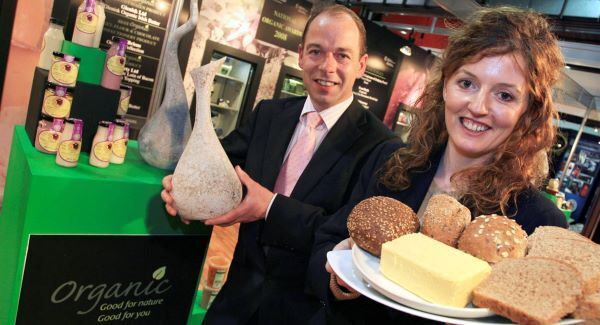
Previous beneficiaries of BES funding include now well-known brands such as Boru vodka, Glenisk yogurts, and Java Republic coffee.

The new EII scheme is more liberal than the previous BES schemes, and is well worth considering, if you are looking for funding to expand your business.

As always, each person’s circumstances should be looked at for the best advice.

x

More in this section

Farming

Newsletter

Keep up-to-date with all the latest developments in Farming with our weekly newsletter.

Cookie Policy Privacy Policy Brand Safety FAQ Help Contact Us Terms and Conditions

© Examiner Echo Group Limited