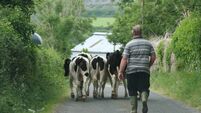
Stephen is glad he followed Teagasc’s development plan

After studying agriculture in Scotland and gaining work experience on farms in France, Switzerland and Australia, I returned home to commence farming in 1995.

Stephen is glad he followed Teagasc’s development plan

The farm covers 120 hectares, is made up of mainly free draining clay soils and is in one block with a central farmyard, which lends itself to efficient livestock farming.

Previously, the farm was run on a simple summer fattening system where bullocks (mainly Hereford and Angus) were purchased in the spring and slaughtered in the autumn having been fed an all-grass diet. A small flock of mid-season lambing sheep were also kept giving a stocking rate of less than 1LU/Ha.


In summary, the farm had a very low output of production in terms of kgs/ha, and also at the time very little capital was being invested into the farm infrastructure.

Farm Development Plan

In consultation with my Teagasc adviser the following is a list of areas that were initially identified as in need of improvement if the farm was going to support a full time worker into the future:

(1) Increase the production in terms of kgs/ha, so heavier beef breeds — mainly Charolais and Limousin — were introduced;

(2) Reduce the reliance on purchased cattle with their variable levels of profit margin. The decision was taken to start as suckler herd and therefore control more of the costs and also breeding in the beef production;

(3) Improve and expand the housing facilities to accommodate the growing herd. This involved building a number of slatted sheds, silage pit, dung stead and lambing shed.

(4) Boost and improve the quality of grass production on the farm. This has been achieved through a combination of reseeding, liming and the introduction of a paddock grazing system. Through the implementation of the advice received from my adviser the farm currently has a stocking rate of 1.6LU/Ha, which includes 65 suckler cows with all progeny brought to beef, winter housing for 220 cattle, and a flock of 180 ewes. The decision was also taken to join REPS and plant five hectares of broadleaf forestry.

Role of Adviser

As the farm business has grown and evolved over the last 17 years so too has the role played by my adviser. Initially the advice centred on switching from an extensive based farming system to one focused on increased production, therefore areas such as suckler cow management, grassland production and farm building design were most focused on.

With the increased number of EU farm directives and programmes, more of my adviser’s time is currently being used to explain and implement the accompanying rules and regulations.

More recently the financial part of the business has been more closely studied using the Teagasc Cost Control Planner.

This enables expenditure to be properly allocated to each enterprise and a comparison can then be made over a number of years, it also serves as a benchmark against other farms with a similar type of production.

Communications/Extension

In my experience there are five main methods of communicating agricultural advice: one-to-one meetings with my adviser, organised group discussions, public events, agricultural publications and general farmer conversation. I will deal with the first three as these are relevant to the role of farm advisers.

(1) One-to-one meetings: These can be of great benefit as the focus is on the specific individual farm, so a thorough investigation can be made of the business. Also problem areas can be discussed confidentially.

(2) Organised discussion groups: These allow farmers to learn from each others experiences and works best during farm walks when practical issues can be seen and discussed. It’s important that groups are kept to a maximum of 20 members as talking in public can be challenging. These meetings can be further enhanced when group members allow a ‘critical eye’ to be cast over their business.

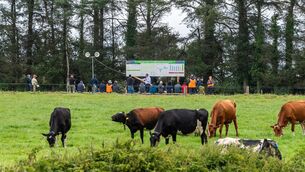
(3) Public events: A good way to showcase best methods of production and also have experts to demonstrate new techniques. Public events can be a victim of their own success when large crowds attend and reduce the time available for questions and answers.

Conclusion

Farmers gather knowledge and advice from many different areas but it’s very important to have a source that is independent and not ‘tainted’ by commercial interests.

This independent advice gives the farmer more strength and security when it comes to making practical on-farm decisions.

It’s also a fact that each farm and farmer is unique i.e. individual farmers may have different abilities in particular areas of farming, and different land may lend to suitability for certain enterprises. These factors can all be taken into consideration when the adviser is well acquainted with his client over a number of years.

Finally, advice given to farmers must be of sound practical use and take into consideration constraints such as labour, finances and not least weather issues that farmers work with and at times against!

More in this section

Farming

Newsletter

Keep up-to-date with all the latest developments in Farming with our weekly newsletter.

Cookie Policy Privacy Policy Brand Safety FAQ Help Contact Us Terms and Conditions

© Examiner Echo Group Limited