Voyage of discovery walking the land
A lady of charm, generosity and forthright opinions who, although born, bred and reared in the southern capital, has always maintained very close links with her country cousins.
I mention this because my wife is a woman who believes that guests must be cared for, entertained and above all fed.
So, having painted the town of Carrick-on-Suir red on Saturday night, Sunday saw the creation of the Sunday breakfast/lunch, as is traditional on these occasions. Later, and suitably overfed, I decided that a walk in the air to look over the stock might not be a bad idea.
Having assisted with the clean-up, I donned my wellies and headed off.
There is something very settling about being able to walk your ground at a leisurely pace, belly full and the countryside quiet and easy on a Sunday afternoon.
I’d been planning a sort of aimless ramble for some time, to get a feel for the state of the land.
I walk portions of it every day, moving and checking the cattle, but that is different, because you have a definite purpose.
You proceed at pace, doing the job and noting the odd problem that might need attention — a broken or pulled fence stake, a leak from a water tank, the condition of the animals, ordinary farm work and observations.
However, Sunday, I wanted time, time to see what price this very wet year had extracted from the land.
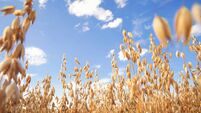
My wheat and barley crops had suffered about a 50% fall-off in yield due to the incessant rain which drowned acres at a time and leached the good out of the rest.
Those fields would be ploughed again and put back in order.
The bigger question in the back of my mind was, now that the weather had settled and conditions underfoot were dry, what was the state of the grass in my “heavier” grazing fields?
I’ve mentioned before that about half my farm is made up of what can be called “heavy” ground, great in a dry year, and manageable with care in an average one. However, 2012 wasn’t average, and it was these fields that I now traversed.
I moved from one to the next noting that the grass had thinned somewhat, to be replaced by an over-abundance of buttercup type plants in certain areas, with some of these “patches” covering one or two acres, plus the beginnings of clumps of rushes here and there.
I’d seen this “buttercup effect” before, but usually only in the spring.
Apparently introduced from North America in times past as an ornamental plant, creeping buttercups are a scourge and can become very invasive.
While contact can lead to skin irritation for us humans, in cattle the effect can be more serious, with animals that develop a taste for them liable to suffer serious poisoning problems.
I’d seen them before developing and flourishing during wet cold springs, but usually as the year improved the first round of topping allowed the grasses to reassert themselves, thus largely eliminating the invaders.
It is now late autumn, however, and topping isn’t an option.
After an hour and a half, I returned home, deep in thought as I mulled over the problem.
Having not been controlled during the year due to the poor trafficability of the ground, it’s fair to assume that, come next spring, Mr Buttercup by virtue of his already considerable establishment could expand — and possibly rapidly — to other areas.
At present, the only solution I can think of is to plough and reseed.
Meanwhile, on the telly another shade of yellow — amber, with black stripes, to be exact —was also reasserting its dominance