Consumers lead the charge in organic retail revolution
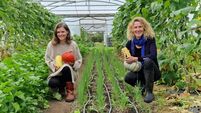
These initiatives involve consumers grouping together to get wholesale prices for very fresh, seasonal, organic produce direct from a farm or farmers.
Farmers get: a guaranteed market; to avoid distributors and retailers; feedback on what to produce and consumers who are willing to share some of the risks of farming (if the harvest is weak, CSA consumers accept less produce but pay the same rate).
An upcoming Soil Association report on CSAs includes the following data from a survey of CSAs in Britain: “56% have increased the amount of land managed to organic principles; 55% have planted more hedges and trees; 61% have introduced new wildlife areas.
“Many CSA projects contribute greatly to farmland wildlife by growing a wide range of crops and raising rare breeds of livestock. 77% of CSA projects have increased diversity of production on their land.”
The Italian experience is especially revelatory. The organic sector is strong in Italy: 8% of all agricultural land is organic. Direct selling is strong too, with 66,300 direct-selling farmers, a number that has increased 61% since 2001.
There are also at least 800 formal and many more informal solidarity purchasing groups. In fact, estimates from researchers who work in this area put the total figure at about 2000, including these informal groups.
The Italian community farming initiative is called GAS — this acronym stands for Solidarity Group Acquisition of food.
One of the interesting things about GAS is that they are designed to make organic food affordable and available to a wider cross-section of society. With volunteers, wholesale scale and no profiting middle men, this is possible — and very important in a recession.
As often is the case, the organic movement expresses an interest in this sort of initiative: it often encourages different organisational structures (like food co-ops and box schemes) or incorporates new ideas or tendencies (like school gardening projects or community gardens).
Some of these groups are initiated by consumers, but organised by organic certification bodies. An organic certification body in Italy, for example, organises for the deliveries and distribution points. Typical GAS have about 30 members, mostly families. Interestingly, each individual GAS draws on the produce of dozens of farmers, mostly local and regional. The exceptions are for PDO or PGI produce like Parmesan cheese, which can only come from certain, slightly further afield parts of Italy.
Churches, town halls, political party offices and specialist shops are all used as distribution points. While the movement is very new, growth rates are also very fast: For example, one fairly typical GAS in Rome started with 10 farms and 30 consumers in 2005. By 2010 it had 40 farmers contributing, and 300 consumers. It’s not just Italy.
I’ve just returned from a conference abroad where 17 different presentations of these sorts of initiatives were outlined from Japan to France and England.
The US has 4000 CSAs; Germany 75; Britain 63, Spain 250 and France more than 700. In France, there are now more than 200,000 consumer members and their CSAs generate €36 million per year.
However, not all countries have them and while Ireland only has two, it is joined by Greece, the Netherlands, the Scandinavian countries and Portugal in having a small number.
A common theme that has emerged is of dialogue. Consumers, who are essentially residents, better understand the realities of what is and is not possible in farming. For example, weeding ‘meitheals’ are often organised by these groups as an alternative to using particular herbicides.
In the area south of Paris, one group (involving farmers and residents) has started to purchase land to prevent encroaching urbanisation, road buildings or military acquisitions.
With these sorts of actions, as well as through making vegetable cropping in peri-urban areas profitable again, these groups are helping to keep fertile land for farming. Originally cities formed close to places where the land was good: the vegetable-growing areas of north Co Dublin attest to this.
As we approach a time when oil will run out, or be unacceptable to use for importing foods that could be produced here, making new partnerships — farmers, residents, NGOs, local authorities, development agencies — may prove to have a number of advantages: profitability for farmers, good local food for consumers, relevancy and functionality for the local authorities and rural development workers and NGOs.