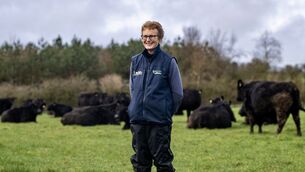
Clinton urges farmers to plough ahead on boosting milk output 50%
But the enormity of the challenge was made clear by Clinton and other speakers at the Irish Examiner Farming Forum, during last Saturday’s National Dairy Show at Millstreet.
Co Cork farmers have conditions as good as anywhere in the world to produce milk off grass, he said – up there with New Zealand, where Clinton is involved in milk production, as well as in his native north Co Meath.
But Irish farmers are coming late to the party, having lost out on the global expansion of milk production from 398 million tonnes in 1983 to 699m tonnes in 2009.
In that time, production doubled in New Zealand, and grew 40% in the US (15% in the past nine years). Where he farms at Invercargill in South Island, New Zealand, he says a 14-fold increase in dairying since 1992 has economically revitalised rural areas.
Even next door in Northern Ireland, there has been 50% expansion of milk production in 15 years. He advised farmers not to make the Northern Ireland expansion mistake of slipping from 3,200 to 2,100 litres of milk per hectare coming from forage.
On milk price, he said expanding Irish milk producers can compete at 26c per litre plus VAT; but if the price is higher and grain is cheap, every dairy farmer in the world will want to expand.
On market opportunities, he said global milk consumption grew 18% from 2002 to 2008, while population grew only 11.5%. Milk use grew fastest in Asia, including China, where the government promotes milk as a health food.
However, even a 50% Irish expansion could be enough to hit world prices – so farmers here will have to be ready for much greater price volatility. With less than 1.5% annual growth in milk use expected in the EU, Mr Clinton says Africa could be the main outlet for growing Irish exports. And our star product of the future could be whole milk powder in 1kg sachets direct to the consumer.
Unless Ireland has to be rescued by the European Central Bank or International Monetary Fund, Mr Clinton sees funding for dairy expansion becoming available from the European Development Fund.
Irish farmers were generally in a better debt situation than their counterparts in other countries. But he saw the “orange light flashing” where any farmer wanted to borrow €3,000 per cow – especially if land is rented.
Many Northern Ireland farmers owe €3,000 per cow, even while renting silage, according to Clinton. New Zealand dairy farmers now find themselves with debts of €3,400 per cow – not as bad as Denmark, where the figure is estimated at between €10,000 and €19,000
In the US, where he sold out his dairying interests about four years ago, many dairy farmers owe $5,000 per cow, more than their asset is worth, because most do not own land.
The ex-IFA president said 50% more milk by 2020 is unattainable in Ireland, because it would require 40% expansion from 2015 – but the target could be reached by 2022 or 2023.
He predicted there will be 200 to 300 start-up herds, but most milk expansion will come from existing dairy farms. The reported surge in heifer rearing is only enough to maintain the national herd, he said.
He advised expanding farmers to start using sexed semen in April 2012 to have heifers calving three years later. But in the years up to 2015, he expected superlevy bills.
He said expanding farmers will have to push land harder than when milk quotas restricted them – soil fertility, re-seeding, rearing of young stock, and milk solids had been neglected.
“Neighbourliness” would be needed – for deals such as land swaps and leasing, to make milk expansion possible.