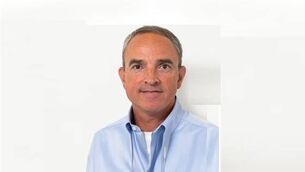
Flak flying at Fischler

SPANISH farmers won't be sorry to see the back of Franz Fischler, when the Agriculture Commissioner retires later this year.
Flak flying at Fischler

"Fischler you bastard, try working like a farmhand," the Spaniards shouted outside the European Commission headquarters.

There were farmers from Ireland, Italy and Portugal also, among 800 sugar beet growers who staged an angry protest against Fischler's proposals to launch a major overhaul of EU support for the sugar industry.


The Commissioner from Austria has been the most successful ever in the Agriculture portfolio, in terms of shaking up EU policies.

It took him only a year to transform European farming, with his Mid Term Review, introducing decoupling and linking farm payments to food safety, animal welfare and respect for the environment.

Overnight agreement, brokered by EU Council President Joe Walsh, followed last April on extending the same reform to the olive oil, tobacco, hops and cotton sectors.

With such achievements behind him, reforming the sugar sector should be easy for Fischler's successor, who will take over in November.

He or she will aim to start the reform process in July 2005, gradually implementing changes over a four year period, if Agriculture Ministers can be persuaded to support the plan.

Fischler got off to a good start, with even the Ministers admitting at their July Council that the EU's 36-year-old sugar policy needed reform.

Fischler says the EU sugar industry will collapse within a few years without reform.

In 10 years, it has shed around 17,000 jobs and closed 105 of its 240 sugar factories (figures for EU-15, enlargement brings in about 100 more sugar factories and more than 100,000 growers in Poland alone).

The sugar regime has no shortage of opponents who will support proposals to dismantle it.

It has been calculated that five times more Europeans work in the sectors that use sugar (and have to pay three times the world price) than in the sugar beet growing and processing sectors which benefit from the Brussels sugar policy.

Nevertheless, it's yet another Fischler shock for farmers, in this case more than 230,000 sugar beet growers in the EU-15.

More than half of them are in Germany, Italy and France, and they have a lot to lose.

In general, sugar beet farms are larger than average, and they achieve a better income.

But farmers are not unified against reform, as they were against the Mid Term Review.

The European farmers organisation COPA-COGECA said it failed to reach a common position between all its member organisations in the EU-25, when asked for their reaction to the proposals.

European sugar manufacturers (CEFS) said they do not understand why the European sugar industry should be the only ones to adapt.

But they are willing to engage in further discussions with the European Commission on the proposals.

Sugar reform gets much stronger backing from EU consumers than the Mid Term Review did.

BEUC, the European consumers' organisation says the reform proposals are not strong enough to end the "scandal at the core of the sugar regime", which is the "dumping on the world market of large quantities of EU sugar at less than the cost of production."

"The sugar regime forces EU consumers and taxpayers to pay for policies that directly damage farmers in the developing world," said Jim Murray, Director of BEUC. The regime, he adds, should be ended "as a matter of urgency".

Equally vociferous are the World Wildlife Fund and Oxfam, powerful lobbyists in Brussels. They calculate that Malawi, Mozambique and Ethiopia, three of the world's poorest countries, lost 238 million dollars between them in 2001 because of EU sugar rules. They evaluate the cost to European taxpayers at e1.5 billion a year.

They want an immediate end to all EU sugar exports and subsidies, a cut in production and an increase in imports from developing countries.

With the odds against them, farmers and processors depend on their well-organised and well-connected lobbies to get the best possible deal out of the sugar negotiations.

They can also make the case that it's too simple to single out the EU as the major culprit for depressed world market prices and the negative effects on developing countries. The figures are there to show how a dramatic increase in the exportable surplus of Brazilian sugar almost exclusively explains the decline in world market prices since 1995.

They can also point to other sugar exporters selling sugar at world market prices, cheaper than their domestic prices.

At the very least, they can demand that Brussels strikes a hard bargain in global trade talks if it opens up its sugar market to trading partners.

More in this section

Farming

Newsletter

Keep up-to-date with all the latest developments in Farming with our weekly newsletter.

Cookie Policy Privacy Policy Brand Safety FAQ Help Contact Us Terms and Conditions

© Examiner Echo Group Limited