Motorola Razr 2026 review: the classic flip phone with a proper battery
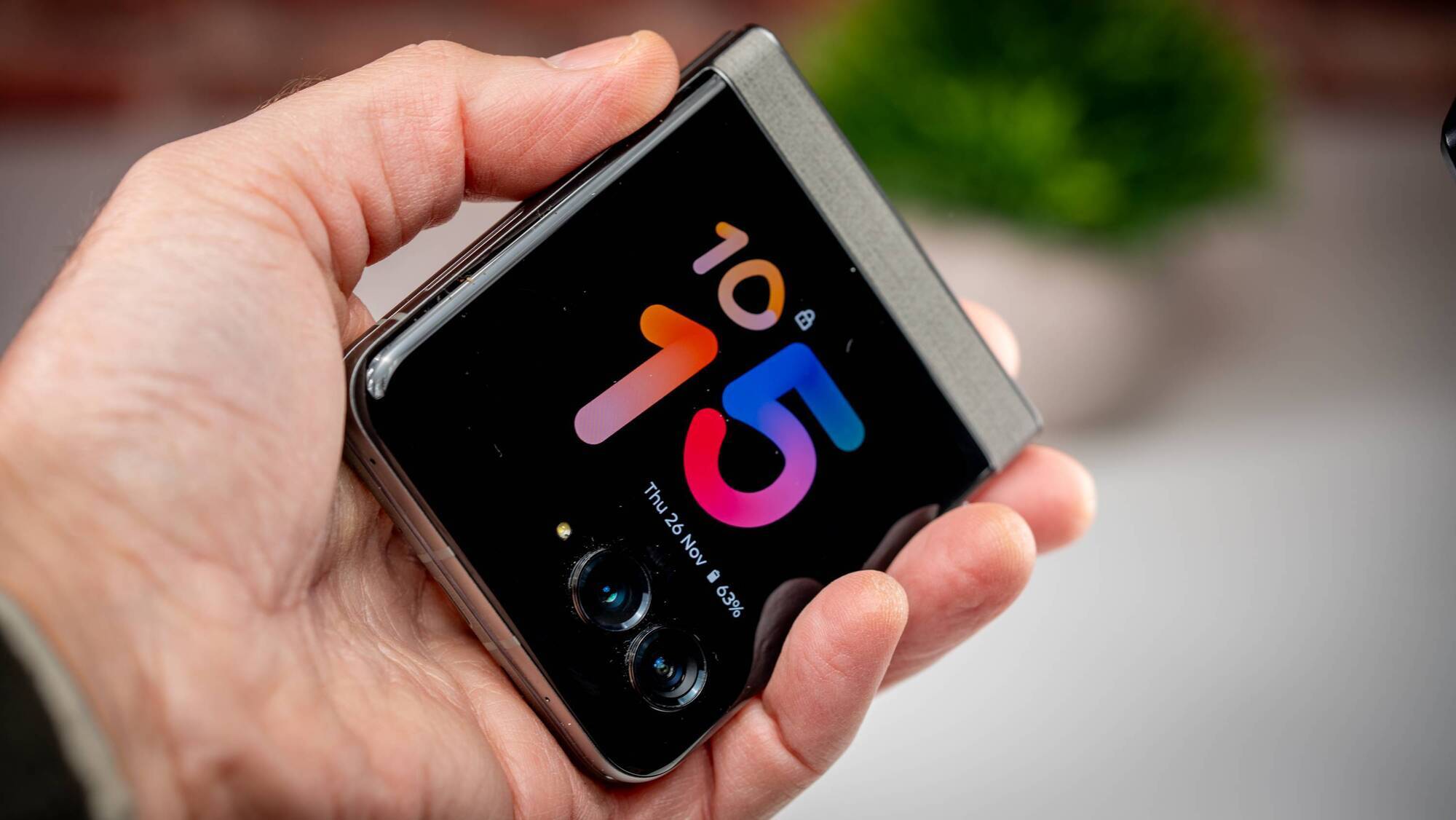
The Motorola Razr 70 is the classic flip, done right: durable build, bright 6.9-inch OLED, and a 4,800mAh battery that actually lasts. Picture: Noel Campion
The Razr 70 is the first Motorola phone I have reviewed in many years, and while it’s a mid-range flipper, it’s a great option for many people who are yearning for a flip phone but don’t want to pay a premium price tag. Motorola has kept the form factor alive for two decades now, ever since the original 2004 Razr. The Motorola Razr 70 launched earlier this year, and I was delighted to get the opportunity to test a new Motorola model with such a nostalgic heritage for me personally.
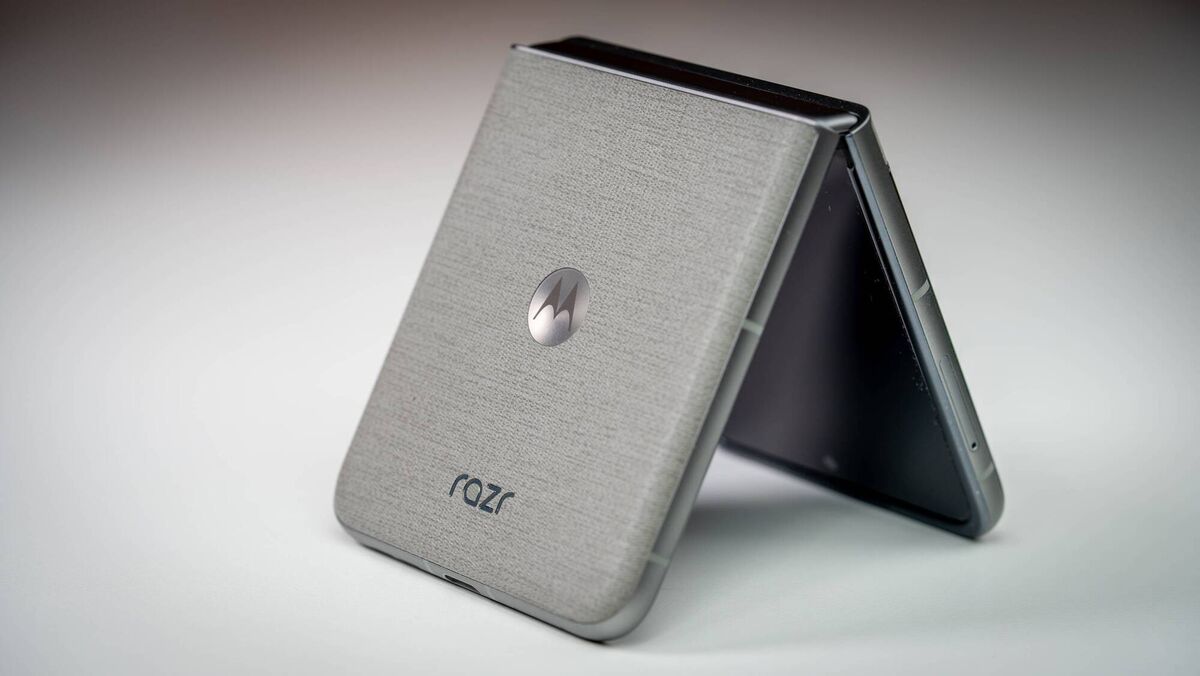
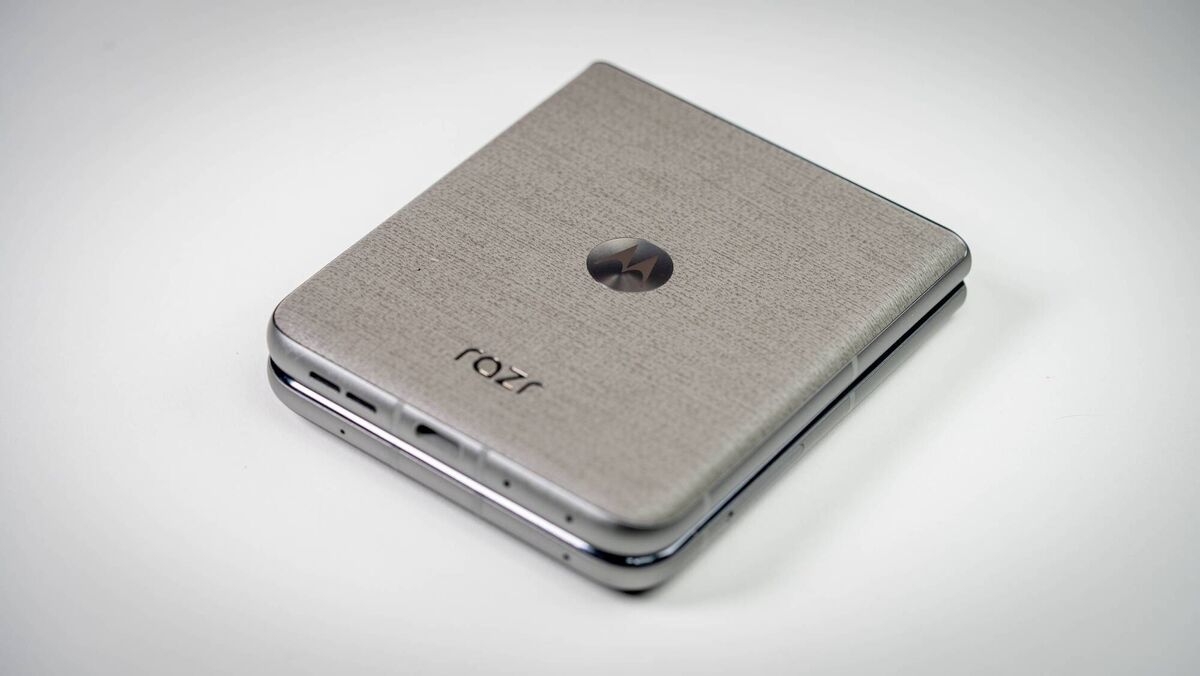
The Razr 70 stays true to its familiar shape in a modern flip phone design. It features a titanium-reinforced frame, which makes it feel light but also durable. The rest of the build is premium, and the phone fits together tightly with a very satisfying snap when you close it. Like all modern foldable flip phones, opening the phone isn’t as easy with one hand as it was with the Razr V3.
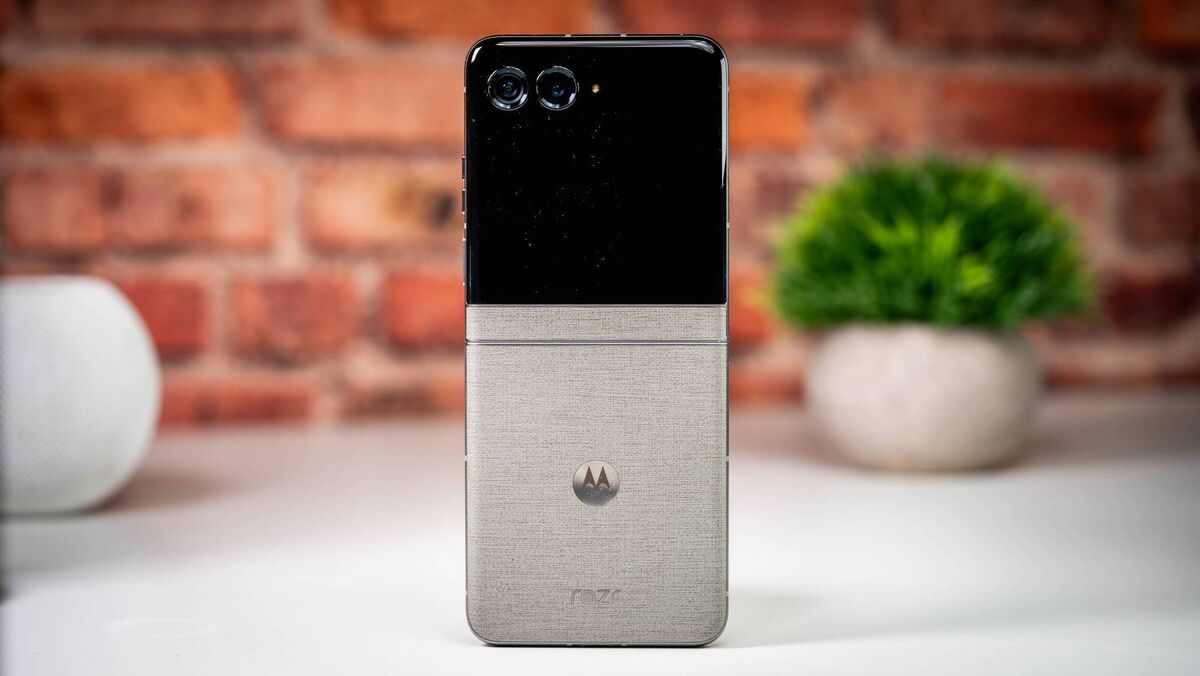
My review unit was the Pantone Hematite version with a textured finish, an aluminium frame, a titanium hinge and Gorilla Glass on the cover screen. It weighs 188g, has rounded edges, and feels great in the hand.
I love the grippy back, the cute, stylish Moto logo in the middle, and the shiny, recessed Razr logo near the bottom edge. The textured material on the rear also forms a stripe along the top of the cover display, which looks very stylish.
The two rear cameras are cut into the cover display at the bottom-right, which is a compromise, but it doesn’t really interfere with everyday use.
You also get decent IP48 ingress protection for water and dust. Flip phones like the Razr 70 are built for people who carry them everywhere rather than keep them on a desk. I’ve been using it for the last few weeks without a case (one comes in the box), and it shows no signs of wear.
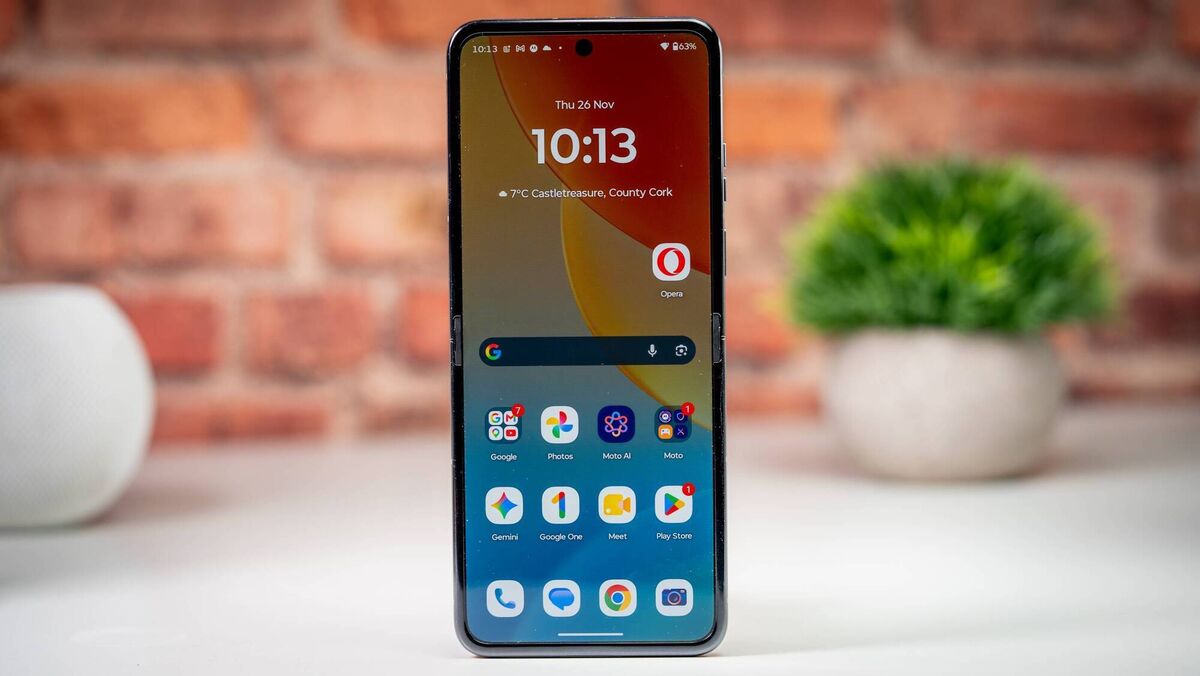
The main display has a tall 22:9 aspect ratio and is a 6.9-inch foldable OLED with a 120Hz refresh rate. There’s a crease where the screen folds, and it is visible if you look for it, but it’s subtle enough that you stop noticing after a day or two. LTPO technology lets the panel drop from 120Hz down to 1Hz when the phone is idle, which helps with battery life.
The display is bright enough for outdoor use, but at 3,000 nits peak, it’s far from class-leading. Support for HDR10+ and Dolby Vision is welcome, and the panel is plenty sharp at 2640 x 1080p.
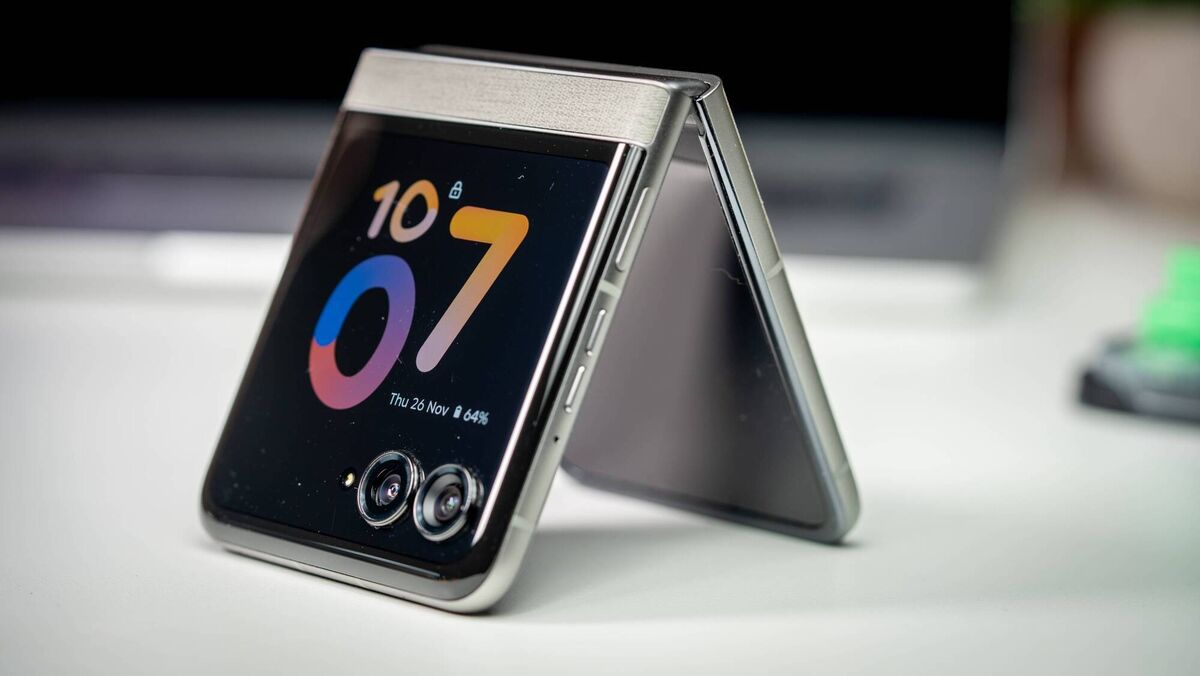
The cover screen is 3.63 inches and runs at 90 Hz. It stops well short of the hinge with that textured stripe, rather than running edge-to-edge. Brightness is respectable, though it doesn't match the inner screen. It doesn’t have LPTO tech, so it only slows down to 60Hz, which is a small shame.
What the cover screen does well is functionality. Quick toggles, a task switcher and notifications are all there, and plenty of apps run normally. You can even play full-fledged games on it if you do not mind squinting at the details. Google Gemini is built in, so you get AI assistance with the phone closed.
The Razr 70 runs on the MediaTek Dimensity 7450X with 8GB of RAM. Benchmarks come out mediocre for the price range, and you can feel it in demanding apps.
For everyday use, though, the phone stays smooth, and gaming holds up. The standout is thermals. The Razr 70 does throttle in stress tests, but not as aggressively as some foldables.
Other hardware features include NFC for contactless payments, WiFi 6 and Bluetooth
The 4,800mAh cell is sized well for a flip phone, and it shows. With regular use, I found the battery life solid for a device with this kind of screen and a folding mechanism.
Charging is 30W wired, which is on the slow side, and there’s also 15W wireless charging.
The rear cameras consist of a 50MP main camera and a 50MP ultrawide. The 32MP selfie camera on the main display is decent, though it is not strictly necessary, since you can shoot selfies with the rear cameras and use the cover screen as a viewfinder.
Selfies from the front camera come out with decent detail, good dynamic range and skin tones, though there is no autofocus. The main camera sharpens things up and adds autofocus, so close-ups of faces are better. The ultrawide is great for group shots and landscapes, but the lack of a dedicated telephoto is a compromise.
Daylight shots from the main camera are pretty decent with a wide dynamic range, good contrast and colour reproduction, but the post-processing tends to over-sharpen. Portrait shots are good but not amazing. At 2x zoom, noise creeps in, and a little softness becomes apparent, though quality is still acceptable. The ultrawide is excellent, as many phones use low-megapixel sensors for this. Detail and dynamic range are good, and colours are accurate.
In the dark, the main camera delivers excellent dynamic range, but white balance can be off, and detail doesn't hold up in shadows. The ultrawide is soft in low light, with noisy shadows, though well-lit areas stay acceptable.
4K daylight video from the main camera is fine. The ultrawide's 4K footage is usable, with good dynamic range and acceptable colour and detail.
Stabilisation is decent, with shakiness smoothed out and there’s no jello effect. Low-light video from the main camera is slightly overexposed and has a lot of noise.
Motorola Hello UI sits on top of Android 16, with custom features organised in the Moto app. Storage on my review model was 256 GB, and it uses UFS 3.1 rather than a faster standard. The side-mounted fingerprint reader in the power button is quick and snappy, and it works just as well as it should. Stereo speakers are loud, and the sound quality is clean and pleasant.
The Moto Razr 70 is a well-built, user-friendly flip phone with adequate performance and decent cameras. Battery life is excellent, and at this price, it’s what makes the phone worth going for. For someone who loves the classic flip form factor, it’s a solid choice for the price.
€549 Motorola

BLACK FRIDAY
Already a subscriber? Sign in

CONNECT WITH US TODAY



Be the first to know the latest news and updates