Elegoo H1 HT filament dryer review: A high-temperature solution for problematic filaments
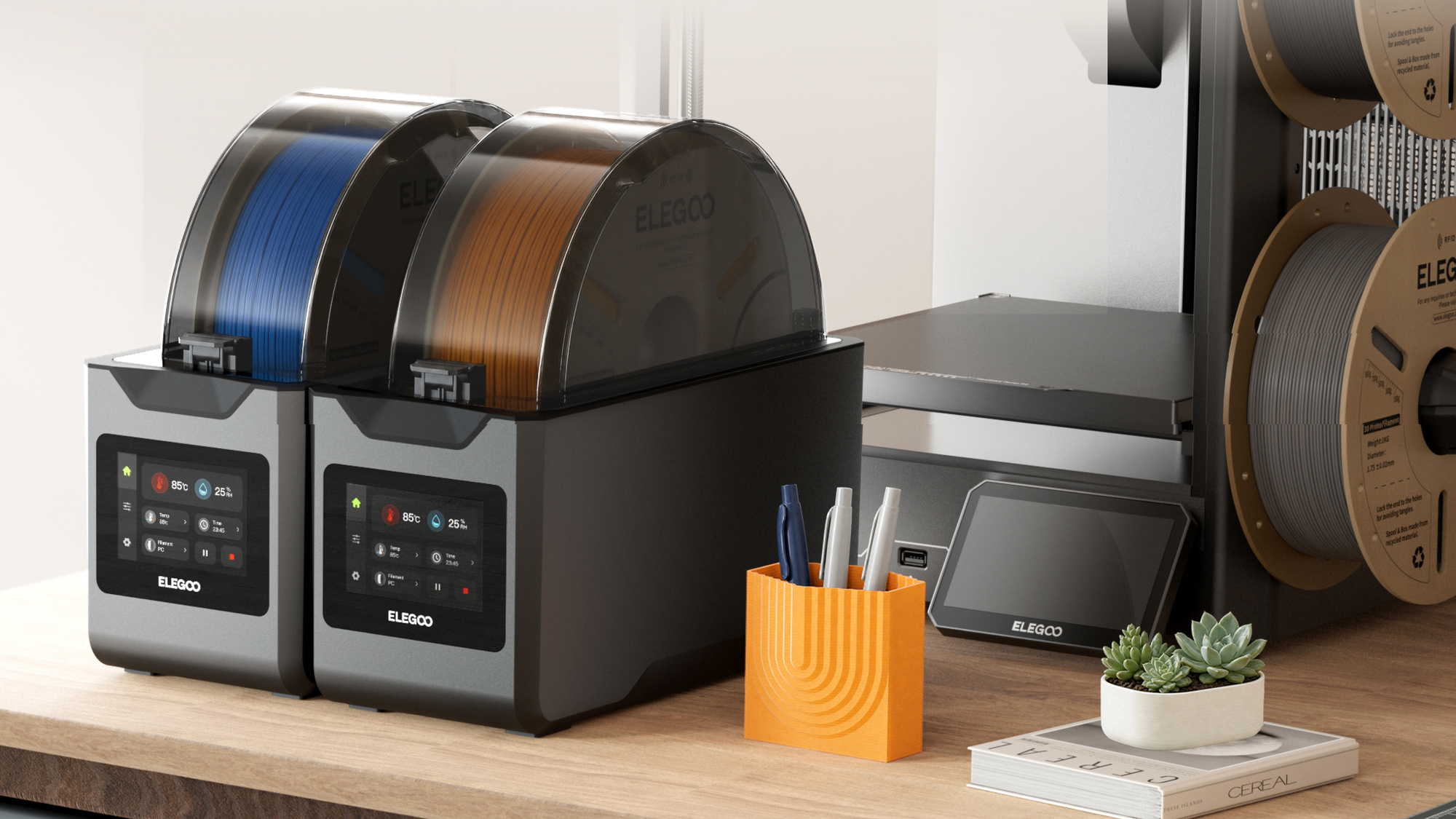
The Elegoo H1 HT filament dryer features an intuitive 3.5-inch touchscreen and a high-temperature capability of up to 85°C. Picture: Elegoo
If you have ever heard your filament popping or snapping during a print, you know how frustrating moisture can be. The core of the problem lies in hygroscopicity, which is just a fancy way of saying how much a material absorbs water from the air. Different plastics behave differently. PLA is relatively forgiving and doesn't suffer as much from ambient humidity, though it can still benefit from an occasional drying session to keep your surfaces smooth.
Other materials are far more sensitive. ABS and Polycarbonate (PC) act like sponges for moisture. In my experience, PC is the most difficult to manage – I rarely get a successful, high-quality print unless I use it straight out of a dryer. Having tested the Elegoo H1 HT, I have found it handles these demanding materials with ease.
The H1 HT nails all the basics and, quite frankly, performs better than several more expensive drying units I currently own.
The build quality is impressive. The lid features a tight hinge and includes a dedicated clasp that keeps the unit sealed firmly when closed. This is vital for maintaining a controlled environment inside.
What sets this unit apart from standard dryers is its ability to reach temperatures up to 85°C. Most budget dryers struggle to provide enough heat for engineering-grade filaments, but the H1 HT handles PA and PC without breaking a sweat.
Inside the chamber, the spool rotates automatically during the drying cycle, but you can also turn this off if you're printing directly from the dryer. I found this particularly useful, as it ensures uniform heat exposure across the filament's entire surface, preventing cold spots that can occur in static dryers. The unit also features active dehumidification via automatic vents that release moist air, then seal back up.
For those working with more flexible or reinforced materials, there is a dedicated bypass outlet for TPU and fibre-reinforced filaments. This helps prevent friction and keeps the feeding process smooth. Safety is also well considered, with an overheat protection system, flame-resistant inner shell, and audible alerts if something goes wrong.
The interface is one of the highlights of the user experience. The 3.5-inch full-colour touchscreen is large and clear. I found the menu system to be intuitive and easy to navigate without having to squint at small icons.
One feature I particularly value is the inclusion of 11 filament presets. This takes a lot of the guesswork out of the process. You don't have to worry about accidentally setting the temperature too high and melting your spool, or too low and failing to remove moisture. It makes the whole workflow much more set-and-forget.
In my testing, the H1 HT has become a staple for my more difficult projects. When I am printing with PC or high-temperature Nylons, I can load the spool in, select the preset, and trust that the material is being prepared correctly. The ability to use it as a continuous-drying station during long prints is a massive advantage for anyone moving away from basic PLA and toward more advanced engineering plastics.
The Elegoo H1 HT is an excellent value-for-money addition to any 3D printing setup. It handles high-temperature materials far better than its competitors, offering a reliable, easy-to-use solution for anyone tired of moisture-related print failures.
€70 eu.elegoo.com

CONNECT WITH US TODAY



Be the first to know the latest news and updates