AI dominates at Dublin Tech Summit but debate remains on long-term labour impact
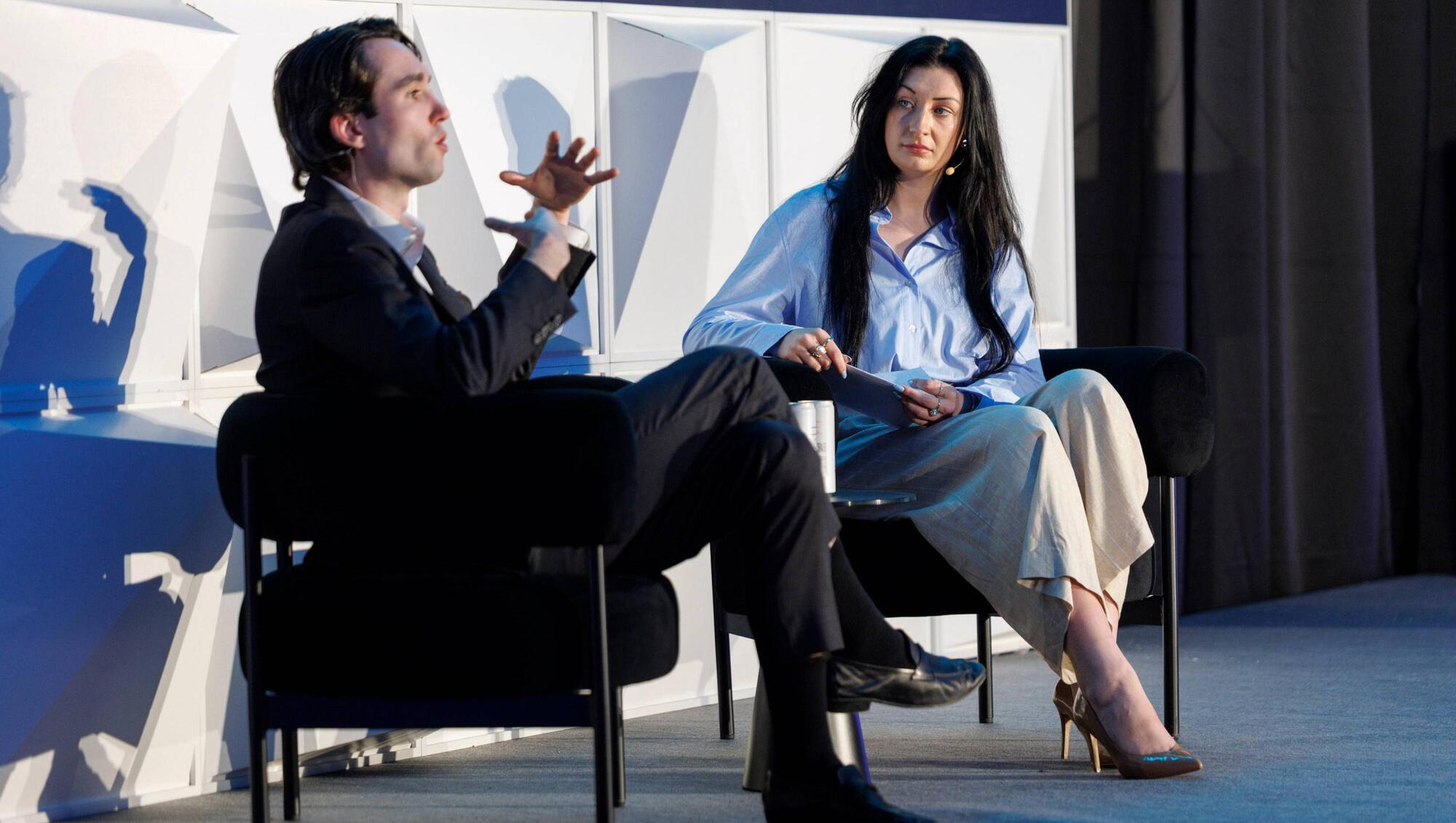
John Willet, co-founder and COO of AI platform Rogo, speaking with Irish Examiner business journalist Emer Walsh. Pic: Dublin Tech Summit
The attendees of this year's Dublin Tech Summit (DTS), Ireland's flagship tech roadshow, arrived at the RDS arena with one topic on their mind.
With guests such as Facebook whistleblower Sarah Wynn Williams, chief executive of Workhuman and Ireland head of the ChatGPT's parent company Emma Redmond, DTS 2026 was, above all else, an AI expo.
Thousands of budding entrepreneurs, start-ups and tech giants flocked to this year's summit to share how they have utilised the newest mainstay technology to enhance their business, with its adoption often considered not only an added benefit but an outright necessity when it comes to securing investor funding.
The sustained hype around the latest work tool-kit has trickled into almost every major industry, with speakers lauding its benefits in areas such as healthcare, customer service, cybersecurity, media, finance and more.
Talks, workshops and fireside discussions focusing on more niche aspects of the nascent technology and its potential drew sizeable crowds, while those focusing on alternative areas of tech, such as embedding sustainable practices and climate considerations, were reserved for smaller stages and struggled to attract the same curiosity.
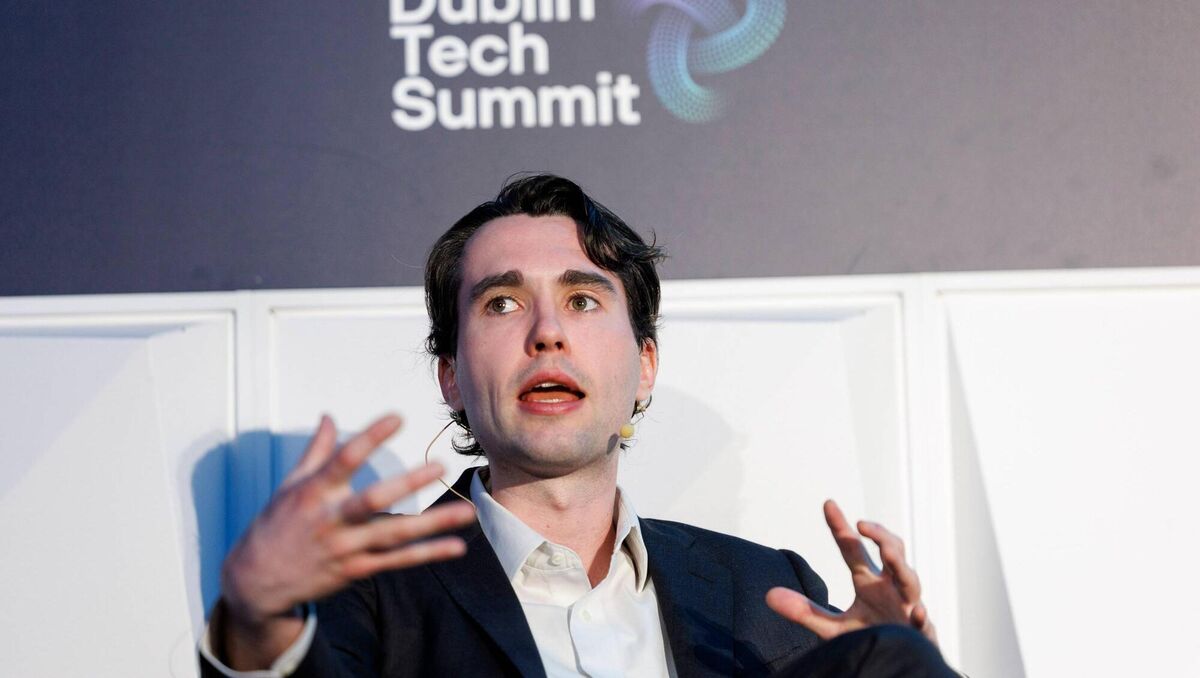
In conversation with the Irish Examiner, co-founder and chief operations officer of AI-platform Rogo John Willet explained on the summit's main stage how his company's purpose-built technology for banking has seeped into nearly every major investment bank in the world.
Clients such as Rothschilds & Co., JPMorgan and Jefferies have adopted Rogo's AI product, with the company's valuation now exceeding $350m (€258m).
As Willet describes, Rogo offers bankers an AI buddy - an assistant that can help with everything from menial tasks to research, developing pitchbooks, Excel modelling and collecting information on companies.
For more senior bankers, Rogo's capabilities extend to preparing for client meetings, compiling information pools, and offering insights into potential deals.
Discussing the future of the finance industry, the COO envisions tasks such as pitching and research as "soft" issues handled in their entirety by large language models (LLMs).
But Willet wants to go further. While primarily used for research and analysis, the Rogo co-founder wants AI involved in actual decision-making; for it to have its say on what to invest in, what transactions to greenlight, and what areas to focus on.
As he sees it, banks are developing a "do or die" mentality when it comes to AI adoption, seeing it as a way to win deals and outcompete rivals. Banks, in many ways, will not be financial companies anymore. They will be tech companies.
AI's widespread adoption has brought a wave of job losses, with companies increasingly favouring technological efficiencies over human capital. These decisions are being felt acutely in Ireland, with Facebook and Instagram owner Meta cutting 350 jobs from its Dublin office, and contractor to the company Covalen laying off a further 700.
A report from Morgan Stanley published at the start of 2026 warned that up to 200,000 European banking jobs could be cut by 2030 as lenders embrace AI, representing around 10% of the total 2.1m banking jobs that exist on the continent.
Just like young start-ups, established European lenders are under increasing pressure from investors to find new ways to cut costs and boost returns on equity that persistently lag behind their US rivals.
With many tired of being outpaced, European banks have already started citing AI as a catalyst for restructuring their operations.
But Willet does not see the two forces as incompatible with one another. He sees room for both and extols their potential for collaboration. "In the end state, I really don't foresee fewer folks," the COO told the Irish Examiner.
AI is already revolutionising workplaces. What was an additional perk to combating menial tasks has, for many, become a compulsory tool, one that workers are mandated not only to use but also to train.
As time lapses, more and more capabilities once reserved for humans will be offered by AI, with the long-term impact on the labour market still largely unclear.
Layoffs are already starting across certain areas of finance and the broader professional services industry. Many remain unconvinced that AI will not replace humans, but Willet sees a way forward for peaceful co-existence. Ironically, if the opposite proves to be true, companies like Rogo will be waiting on the sidelines to reap the benefits.

CONNECT WITH US TODAY



Be the first to know the latest news and updates