Apple M5 Pro MacBook Pro review: Is the massive performance leap worth the premium?

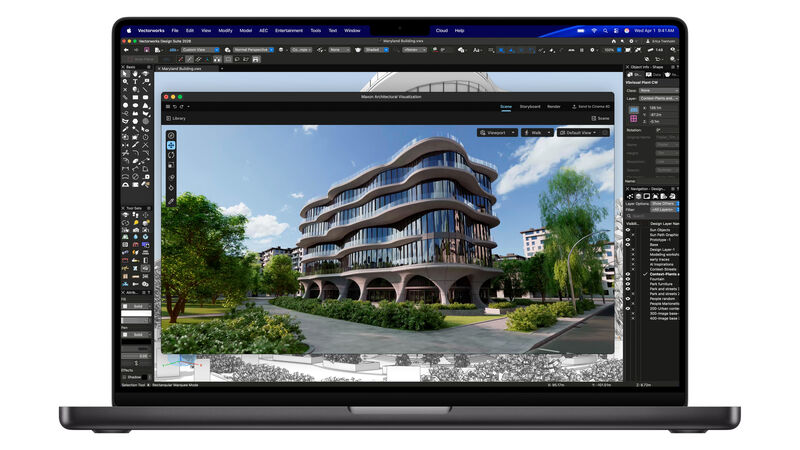
MacBook Pro with the all-new M5 Pro delivers blazing-fast performance and next-level on-device AI. Picture: Apple.
The leap from M1 Pro to the M5 Pro MacBook Pro is so significant that now could be a good time to upgrade from the original M-series Apple silicon. Although the 18-core architecture may be overkill for everyday software, pro-level users will benefit from a significant boost. It represents one of the largest increases in M-series capability since the architecture launched in 2020.
In terms of design, the 16-inch M5 Pro is remarkably similar to the 16-inch M1 Pro in both look and feel. While the substantial weight and footprint are unavoidable when compared to the 14-inch model, the larger screen makes it my preferred choice for those who work primarily at a desk. The MacBook Pro’s keyboard and expansive trackpad remain highlights of the experience. However, the sharp edges of the chassis are less than ideal for long-term ergonomics, even if they do contribute to the device's sleek aesthetic.
Apple has maintained the incredible build quality that defines the Pro line, but the real build innovation is internal. We are looking at a machine designed not just for durability, but for massive data throughput. It is a heavy-hitter in every sense of the word, though it lacks the distinct physical change that would signal such a massive leap in internal architecture. There is also plenty of speculation that this may be the last time we see the MacBook in this form factor, as many expect a total redesign with the M6.
To understand my relationship with these screens, you have to look at my current setup. I still own a 16-inch M1 Pro MacBook Pro, but the display unfortunately failed. Because an official Apple replacement was prohibitively expensive, I still use it to this day, though it is essentially a desktop unit plugged into an external monitor.
For my day-to-day work, my work laptop is a 14-inch M3 Pro, which is ideal for travelling and even intensive tasks. However, with the 16-inch M5 Pro, the extra oomph it delivers is exceptional. The 16.2-inch display is nothing short of stunning, providing the extra screen real estate and incredible accuracy required for colour correction in both video and photo work. When you are viewing HDR content, the depth and vibrancy are on another level. But perhaps most noticeably, the speakers are vastly improved; they offer a much more powerful, bassy presence, making the entire experience more immersive. It isn't just a screen; it’s a sensory upgrade.
This is where the M5 Pro begins to separate itself from the rest of the industry. The raw numbers are, quite frankly, obscene. First, let’s talk about the SSD. The storage speeds in this machine are unprecedented. I was hitting read and write speeds of around 1,200MB/s. To put that into perspective, my M1 Pro MacBook Pro with a 512GB SSD typically achieved read speeds of approximately 4,900MB/s and write speeds of approximately 3,950MB/s using the Blackmagic Disk Speed Test. It is absolute madness, providing a level of data throughput that removes almost every traditional bottleneck.
It is important to note the new architecture here, which differs from the M4 Pro. While the super cores are incredibly powerful, the real magic lies in their sheer number. When you have 18 cores at your disposal, you aren't just looking at faster single tasks; you are looking at a machine that can handle entire workflows without breaking a sweat. My 48GB RAM configuration ensures that even when I am opening everything from Final Cut to Photoshop and dozens of Chrome tabs, I am nowhere near hitting the swap. Of course, things change dramatically when you start loading large learning models into the unified memory.
For normal computing like opening Photoshop, Lightroom, loading a Logic Pro project, or even basic 4K video editing, the machine is incredibly fluid, but the real story is how it handles the extreme. Because the media engines are so robust, many standard 4K exports happen almost instantly. However, when you move into the realm of massive parallelisation, the real power in this MacBook is unleashed.
If you are editing 8K footage, the GPU finally gets pushed hard enough to make a massive difference. However, for those who actually edit 8K video, the M5 Max is a better choice thanks to the extra media engine.
Exporting a batch of 600 Sony A7 IV RAW (33MP) images was seamless, taking just over a minute. The performance leap over my M3 Pro in Lightroom was substantial. The software remained entirely fluid, allowing me to continue editing even while smart previews were being generated in the background.
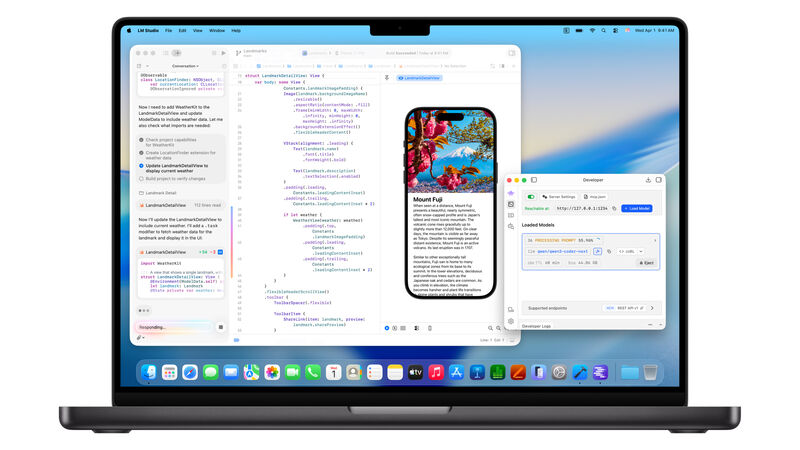
Beyond traditional media, I have been experimenting with Local AI models using Ollama and NotebookLLM. This is where the 48GB of RAM really proves its worth. I think it’s a good balance between performance and price. While more RAM is always better for running increasingly complex local AI models, I was incredibly happy to be able to test relatively large models with such responsiveness. The sheer speed of the SSD and the massive RAM throughput feel like they were purpose-built for this era of local, private intelligence.
Performance is matched by impressive endurance. I found the battery life exceptional, easily lasting a full day of heavy multitasking without needing a charger. This longevity, combined with the M5 Pro's power, makes it a true powerhouse for professionals on the move. However, battery longevity is significantly impacted by intensive workloads. During testing with heavy local AI models and gaming via Steam using Crossover for Mac, the drain was notably rapid. While playing God of War Ragnarok, the battery drained from 100% to 50% in less than half an hour. To be fair, this is an issue with Crossover rather than the MacBook and lighter gaming titles worked so much better.
Potential buyers should note that, as with the European ruling in the mobile market, no charger is included in the box. Although I was able to reuse my existing 140W adapter that came with the M1 Pro, anyone without a spare will face an additional expense of anywhere between €65 for a 70W unit and €119 for the 140W model.
The M5 Pro is a powerhouse for 8K editors, developers, and AI specialists, providing the multithreaded performance and throughput required for modern professional workflows. For the average user, however, it may be overkill. The base M5 and M5 Air models already offer a substantial performance boost for anyone upgrading from an M1 or M2.
Apple.ie

CONNECT WITH US TODAY



Be the first to know the latest news and updates