GameTech: Mattress is smart way to drift off
Luna is a mattress protector that monitors your sleep and changes the mattress temperature dynamically, depending on how restless you are.
It can even heat one side of the bed differently to the other, so couples can sleep at different temperatures.
However, that’s not the real selling point of this crowd-funded tech. Luna is designed to talk with the other smart devices in your home and sync them up with your sleeping habits.
If you like your coffee freshly boiled when you wake up, then Luna can talk to your percolator and have that java waiting. It can speak to Spotify and turn off your background music just when you are drifting away. It can even switch off lights and lock doors when your head hits the pillow. All of this happens without any wearable tech, with the mattress cover picking up on your body’s sleep state through its material.
It’s a brilliant idea, but there’s one small catch. We still live in regular dumb households, not the smart kind envisaged by Luna. Unlike fictional private detectives, our doors don’t get locked by themselves.
Our lights don’t wait for instruction from the cloud. And our coffee machines definitely don’t talk to our mattress covers. All that aside, Luna is a fantastic concept. Daily routines are built around sleeping habits and the notion of your bed subtly managing household activity to reflect sleeping patterns is ingenious.
Even without the smart house infrastructure, Luna is a cool product and another example of crowd-funding done right. The mattress cover is shipping to backers this month and hopefully it works as advertised. APPLE OF CHINA Speaking of smart homes, the mysterious Chinese conglomerate Xiaomi is determined to build a smart-device ecosystem in its home country.
Xiaomi has been called the ‘Apple of China’, so their plans for interconnectivity should be an interesting proving ground. If you’ve never heard of Xiaomi, then you’re not alone, but the company was valued at $45bn earlier this year, with smartphones laying the groundwork for that success. Xiaomi is supposedly the third-biggest provider of smartphones in the world.
Recently, however, the firm has morphed into an all-round consumer electronics and household provider, with connected home devices a big focus. They just announced a 48’’ smart TV, the Mi TV 2S, that is 9.9mm thin.
It has a Samsung UHD display with support for 4k, along with a quad-core 1.4GHz processor powering the set. That’s a nice piece of kit for the €400 price. Strangely, however, the Chinese giant also revealed another, less flamboyant product, one that highlights the company’s new direction.
It was a water purifier. A smart water purifier, to be precise, meaning owners can monitor the device’s activity on smartphones and the purifier will tell you when a new filter is needed (don’t tell Irish Water). Xiaomi have previously released an air purifier, a MiTV (think Apple TV) and even an internet router.
Unlike Google Nest and Samsung’s SmartThings, there is no open SDK-style approach to this plan, meaning Xiaomi are effectively starting a true ‘internet of things’ from scratch, using only their own ecosystem. It will be fascinating to see how that ecosystem develops in the company’s reportedly devout Chinese fanbase.
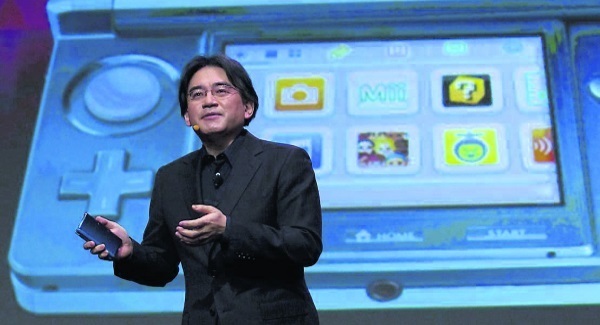
Nintendo is another company with devout fans, all of whom will have been saddened to learn of Satoru Iwata’s death, recently.
The Nintendo president, who died of a bile duct disease at 55, was at the forefront of the company’s innovation in recent years, spearheading the Wii phenomenon. Despite that, he always took time to address fans personally in regular Nintendo Direct updates.
While Iwata started life as a coder, working on classics like Earthbound and Balloon Fight, his responsibilities changed greatly on becoming president. Despite that, rumour had it Iwata could still be found coding from time to time at Nintendo HQ. Good luck on the next level, Satoru.