Microsoft 365 outage explained: What happened and what does it mean for online services?
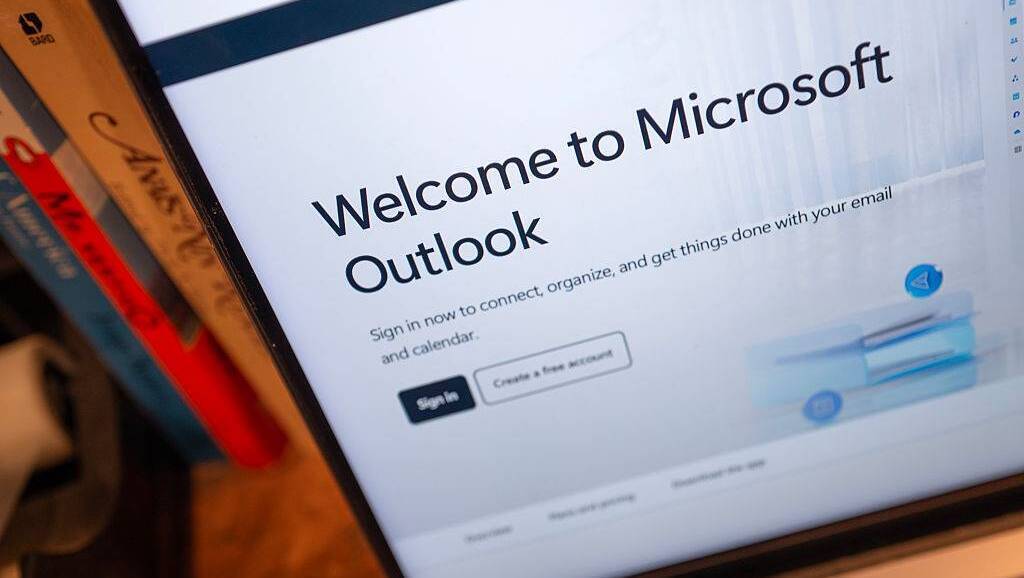
A Microsoft Outlook sign-in page is shown on a computer on November 12, 2026 in Chicago, Illinois. Picture: Scott Olson/Getty Images
Potentially millions of people were unable to access their emails, Teams chats or meetings on Thursday night and Friday morning after a Microsoft 365 outage disrupted services across the globe.
The incident affected businesses, government agencies and even Microsoft employees, who were unable to send emails during more than nine hours of disruption.
What happened, what caused the outage and what does it say about our reliance on online services in 2026?
At around 6pm Irish time on Thursday, outage-monitoring website Down Detector recorded a spike in reports of problems with Microsoft 365 – the suite of cloud software that includes Teams, Word, Excel, PowerPoint and Outlook.
There were nearly 130,000 reports at the time.
The outage had lasted more than nine hours by the time of reporting, with Microsoft working to restore services.
Read More
So far, the problem appears to have been caused by a configuration update that resulted in some servers becoming overloaded and going offline, Microsoft indicated.
When the company attempted to apply a fix, servers that had come back online became unresponsive again as traffic returned to them.
As some servers went down, traffic was redirected to those still operating, placing additional pressure on the remaining servers.
To identify what was causing the problems, Microsoft began limiting the traffic reaching affected servers in specific locations. On some servers, it also rolled back to an earlier software configuration to see whether this would resolve the issue.
By 2am Irish time on Friday, Microsoft had narrowed most of the problems down to Microsoft Exchange, the email service behind Outlook. Teams meetings and chats had returned to service.
An outage lasting more than nine hours is unusual for a service as critical as Microsoft 365.
The company has not explained why the disruption lasted so long, but its updates offered a possible clue.
As servers became unresponsive again after being brought back online, engineers had to work through alternative solutions, delaying the restoration of services.

Many people who rely on Microsoft 365 reported being unable to access their inboxes on Friday morning.
Councils, state and federal government agencies, courts and schools were among those telling the public they could not be contacted by email on Friday morning.
Businesses and healthcare services that rely on Microsoft 365 for communications also reported problems, but said their own services remained operational.
Given the recent OpenAI agent attack on Medicare in Australia and a spate of cyber-attacks in Europe that brought down internet-connected fridges, some quickly speculated that the global outage could be another attack on critical infrastructure.
Microsoft quickly dismissed the suggestion, saying there was no indication that the incident was a cyber-attack.
As the name Microsoft 365 suggests, the world has become accustomed to online services being available around the clock.
Software is no longer solely downloaded to individual PCs; it is also hosted on company-owned servers. As a result, outages such as this are inevitable. Most are brief, but some are not.
Outages in recent years involving telecommunications providers, the PHP incident and the CrowdStrike incident show how varied the sources and causes of major service disruptions can be.
Many different components keep online services running, but the impact when even one fails is greater than ever.
RMIT associate professor Mark Gregory said on Friday that organisations should thoroughly test updates before rolling them out across live networks.
This is in addition to the security testing companies must carry out to protect their services from threat actors armed with AI tools that can identify vulnerabilities faster than ever before.
Gregory has said companies that rely on services such as Microsoft 365 should have back-up options, such as Google's Gmail, in the event of an outage.
Others have suggested LibreOffice, a free and open-source alternative to Microsoft Office.
CONNECT WITH US TODAY



Be the first to know the latest news and updates