Inflation makes further interest rate hikes 'prudent'
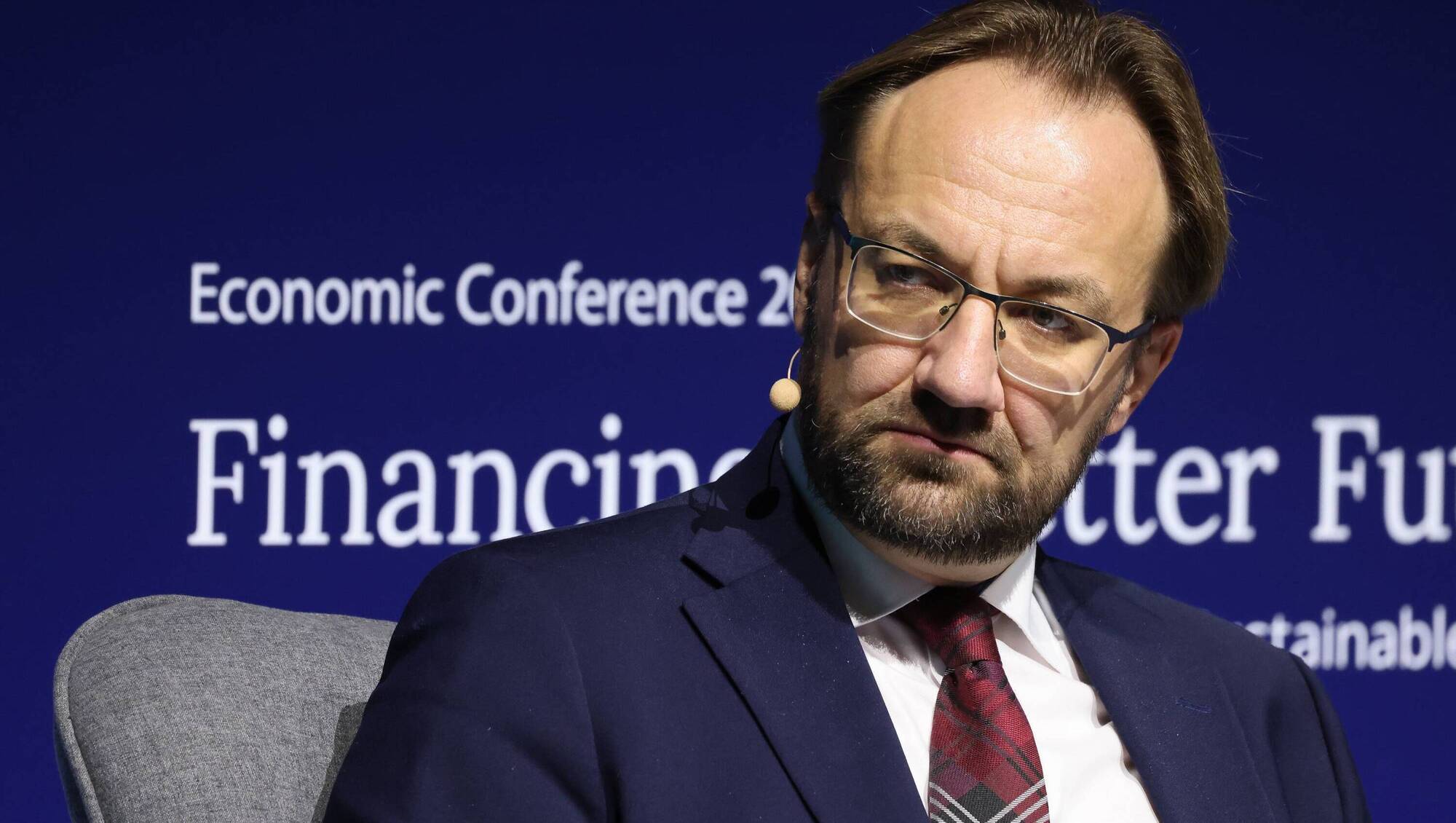
Gediminas Simkus, governor of the Lithuanian central bank, said there are signs inflation is 'affecting other areas of the economy'. Photo: Andrey Rudakov/Bloomberg
It’s “prudent” for the European Central Bank (ECB) to raise interest rates to levels that start to constrain the economy as price pressures broaden beyond oil, Governing Council member Gediminas Simkus said.
With underlying inflation at 2.6%, this “is no longer just an energy story”, the Lithuanian official said. “My main worry is that elevated energy costs will continue to transmit into overall prices next year, and inflation becomes more persistent.”
Given the fresh memories of the price shock five years ago, “we should act preemptively and rather sooner than later”, he said in an interview in Vienna, reiterating his call for a hike in December and potentially more tightening in 2027.
“I’d say prudence requires moving into a mildly restrictive monetary-policy stance,” Mr Simkus said.
With eurozone inflation double the 2% target and the economy weathering the Iran war surprisingly well, policymakers have telegraphed a third increase in borrowing costs next month. Some are already signaling further action to come, as markets expect.
Read More
Mr Simkus said there are signs inflation is “affecting other areas of the economy”. While oil and gas prices have been fluctuating recently, they’re “still at very high levels.”
“At the same time, we have a stronger-than-expected and resilient economy that's growing close to its potential,” he said.
“This suggests that there’s at least also a partial demand component to the inflation story too.“
While wages don’t show a material response so far, Mr Simkus is focusing on forthcoming negotiations, particularly in Germany and France.
“With inflation at 4% and the memories of the 2021-2022 price shock very vivid, I don’t see many reasons for trading unions not to ask for compensation for reduced purchasing power.“
Another issue is the weakening of the euro. “We do not target the euro’s exchange rate,” Mr Simkus said. “But the recent depreciation of the euro is another inflationary factor and adding to the inflation story.”
He described a December hike as “already on the minds of many,” adding that “if inflationary pressures persist, we’ll probably have to go beyond that next year.”
Estonian central-bank Governor Ulo Kaasik wasn’t quite so explicit but signaled additional tightening.
“The latest information that’s come in confirms that the central bank needs to raise interest rates in order to be sure that we get to around 2% inflation,” he told on Tuesday.
Vice president Boris Vujcic said he’s sure the ECB has the tools needed to bring inflation back to target. “Credibility cannot be taken for granted — it has to be earned,” he said in Vienna.
“That requires central banks to act when circumstances demand it, even when the decisions involved are difficult.”
The ECB isn’t in danger of over-tightening, Mr Simkus said. “If at all, we must avoid being late to an escalation of the inflation situation.”

BLACK FRIDAY
Already a subscriber? Sign in

CONNECT WITH US TODAY



Be the first to know the latest news and updates