Nicola Quinn: Tax breaks and growth initiatives for Ireland's businesses, workers, and families

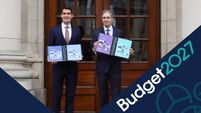
People watch finance minister Simon Harris deliver the Budget live on TV in a bar near Goverment Buildings in Dublin on October 6, 2026. Picture: Paul Faith / AFP via Getty Images
Budget 2027, with a higher overall package than expected, had something for everyone in the audience. With a €1.3bn package for personal tax reforms, workers and families were winners of Budget 2027. We saw some welcome measures from a business tax perspective, including a reduction in the capital gains tax rate.
The reduction in the standard rate of Capital Gains Tax (CGT) from 33% to 31% is a positive step and will be welcomed by investors and business owners alike. This rate will apply from 7 October 2026.
A number of enhancements to the R&D tax credit regime were also announced. The first-year payment threshold will increase from €87,500 to €105,000 providing a valuable cash flow benefit for smaller R&D projects and encouraging greater participation in the regime. Also, the current subcontracting thresholds for qualifying expenditure outsourced to universities, institutes of higher education and unconnected third parties will rise to 20% and €200,000 respectively. These are important changes for the SME sector in particular.
One of the notable changes announced is the simplification of preliminary corporation tax payment requirements, with the small company threshold increasing from €200,000 to €350,000.
Enhanced Employer Reporting requirements are being simplified, with employers given the option of reporting benefits either before payment is made or through a monthly return submitted by the 14th of the following month.
The Employment Investment Incentive; the Start-Up Capital Incentive; the Start-Up Relief for Entrepreneurs; and the Relief for Investment in Innovative Enterprises, also known as Angel Investor Relief, have all been extended.
Ireland's domestic enterprise sector continues to significantly underperform when it comes to scaling indigenous companies into globally competitive multinationals. A three-year investment programme through the Ireland Strategic Investment Fund (ISIF) will provide €1 billion for Irish businesses who wish to scale abroad but remain rooted in Ireland.
SMEs often face tax and regulatory burdens excessive to their risk profile. The intention to review the various grant schemes, enterprise tax incentives and business development programmes currently on offer should prioritise simplification and ease of access to measures.
On inheritance tax, we saw modest increases in the tax-free thresholds on the value of gifts and inheritances across the three bands. More will need to be done here in future years to keep pace with increasing property prices.
Employees We have seen a larger than expected income tax package of €1.3bn. Cumulatively, the changes will mean that for a couple with a joint income of €100,000 will benefit by €1,500. The entry point to the higher tax band of 40% will increase by €2,500 to €46,500. Personal, employee and earned income tax credits will increase by €125 to €2,125 and the ceiling for the 2% rate of Universal Social Charge has also increased by €1,600 from €28,700 to €30,300. Budget 2027 increased the minimum wage by 79 cent to €14.94, an increase of 5.6%.
We saw an improved childcare package involving an annual saving of €2,200 for families with children in childcare and an increase in the rent tax credit to €1,150. Despite inflation at nearly 4%, working families and households should feel money back in their pockets and an easing in their cost of living.
Investments Designed to make investing simpler, clearer and more accessible, the new Personal Investment Accounts (PIA) regime has the potential to reshape how Irish households build long-term wealth. Irish investors will have a broad range of options available with these introductions becoming available from 1 July 2027. They are designed to be simple in operation, with tax-free returns up to certain limits. Budget 2027 announced that the account will be subject to a flat rate tax of 1% above a tax-free threshold of €50,000. An annual contribution limit of €12,000 will also apply. Tax will be deducted and paid directly by the product provider.
Conclusion Budget 2027 delivered a number of practical measures to address the cost of living while supporting childcare, savings and investment and indigenous enterprise - all of which contribute to more sustainable long-term growth. We particularly welcome the measures to support, fund and scale domestic businesses, which should act as a counterbalance to the volatility associated with relying on tax receipts from large multinationals. Budget 2027 provides a better return for workers, investors and entrepreneurs.
ends


CONNECT WITH US TODAY



Be the first to know the latest news and updates