Port of Cork chief warns of funding 'gap' as spend on energy infrastructure accelerates
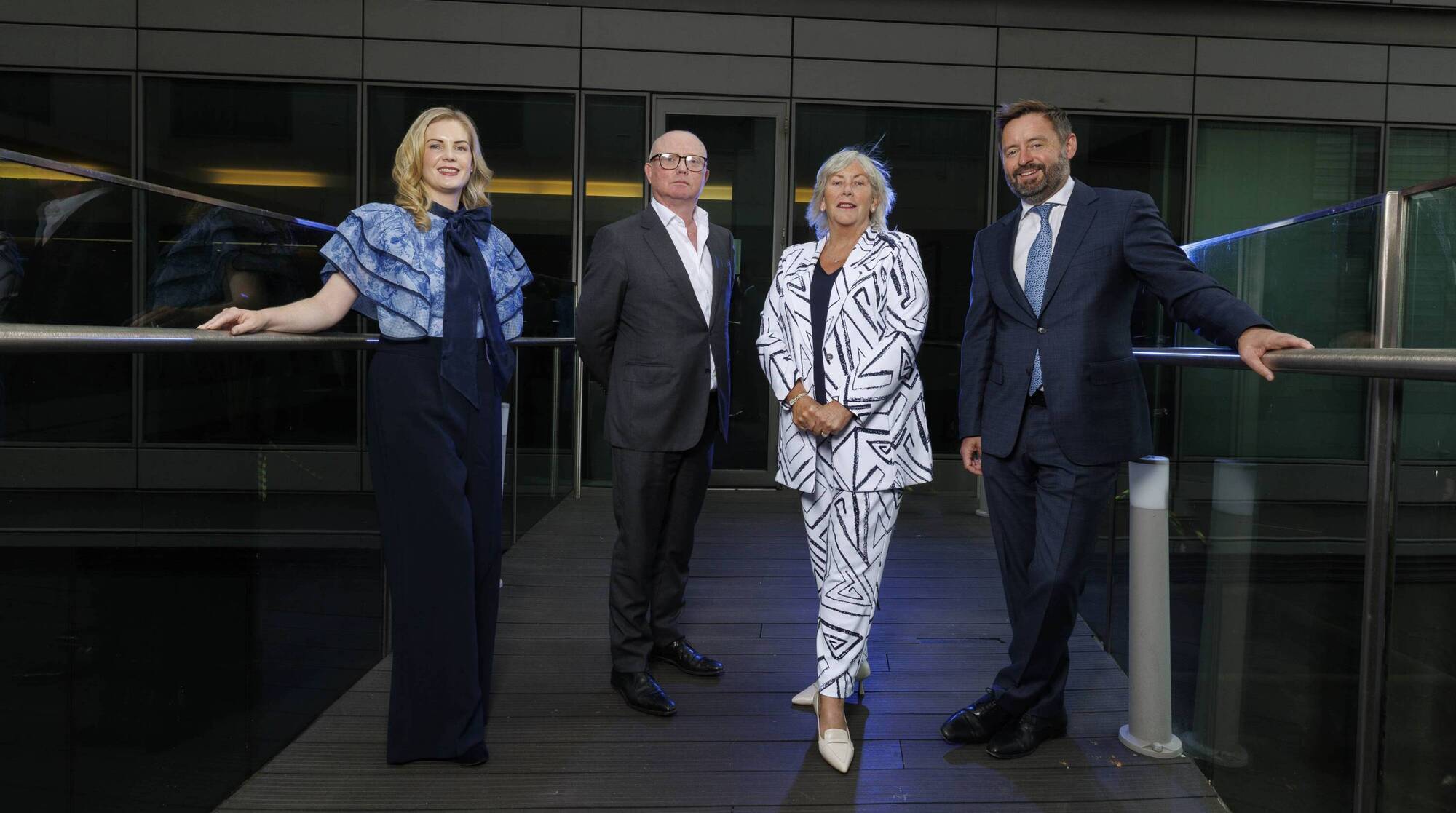
(Left to right) Lorna Devenney, chief financial officer, Bord na Mona , Dan O'Brien, chief economist of the Institute of International and European Affairs (IIEA), Ann Doherty, chief executive officer of the Port of Cork Company and Eoin Cassidy, partner and energy sector lead at Mason Hayes & Curran at Mason Hayes & Curran’s Annual Energy Conference in Cork today. Picture: Conor McCabe Photography
Ireland's ports risk being left out of the State's infrastructure funding push even as the country accelerates delivery of energy and grid projects worth tens of billions of euros, the chief executive of Port of Cork has warned.
Ann Doherty said ports remain the missing "leg of the stool" in Government infrastructure policy, despite being essential to landing offshore wind energy onto the Irish grid. She was speaking on a panel on infrastructure delivery hosted by law firm Mason Hayes & Curran in Cork on Wednesday.
"You have good policy in terms of planning about how far we're going to deploy, particularly offshore, and we've got regulatory pieces in place, the grid and other things, but we've nothing for ports," Ms Doherty said.
The Port of Cork, as a commercial semi-state company, receives no State investment and must raise all of its own capital. With an annual turnover of €55m and a borrowing limit of €16m, Ms Doherty said the port has had to be "really creative" to fund the infrastructure needed to support offshore wind.
Read More
The company has set up a separate entity, Port of Cork IDC, and secured a commercial loan from the Ireland Strategic Investment Fund (ISIF) to build a €100m, 200-metre quay wall, alongside more than 25 acres of dockside land in Ringaskiddy, to support fixed offshore wind off the Irish coast.
However, Ms Doherty said that investment is "only the beginning" and that at least double the capacity will ultimately be needed.
"We don't want free money. We want access to finance," she said, noting that a bank would be unlikely to lend against a project with no confirmed customer.
She said the Port of Cork is currently the only port in the State with infrastructure suitable for facilitating offshore wind development, a position Ms Doherty described as "a critical success" but also "a critical weakness," given the risk of relying on a single site.
Ireland's ports policy, published in 2015 and now under review, has historically ruled out direct State funding on the basis that ports are commercial entities expected to generate their own investment, a model she said puts Ireland out of step with many European counterparts, where ports often receive funding through municipal authorities.
Without a stronger funding model, she warned, the jobs and economic benefits of offshore wind deployment could ultimately go to ports in the UK or France instead of Ireland.
Panellists at the conference representing the electricity, gas and utilities regulation sectors, struck a broadly optimistic tone on the pace of infrastructure delivery, pointing to the Government's Accelerating Infrastructure Task Force as a turning point after years of delay.
David Kelly, chief executive of Gas Networks Ireland (GNI), said the war in Ukraine had forced a shift in mindset. "Since 2022, and we all know what happened in 2022, we're real now," he said, adding that gas will remain critical as a back-up to intermittent renewable generation for years to come, even as the company pushes ahead with biomethane and, eventually, hydrogen.
He said GNI expects gas to make up around 28% of the energy mix by the early 2030s, with new gas-fired power stations and data centre demand having created a "perfect storm" of pressure on the network in recent years.
Siobhán O'Shea, chief infrastructure officer at EirGrid, said the operator is running an "unprecedented" five-year programme of almost 400 major grid projects, including 1,000km of upgraded circuits, 450km of new circuits and 65 new substations. She said early community engagement, including a planned €40m community benefit fund, was proving critical to reducing objections at planning stage.
Fergal Mulligan, chairperson of the Commission for Regulation of Utilities (CRU), said the regulator had approved up to €18bn in network investment over five years and was actively encouraging ESB Networks and EirGrid to spend faster rather than slower.
He cautioned, however, that network tariffs, which make up about a quarter of household energy bills, will continue to rise as the cost of that investment is recovered, despite a public narrative that switching to renewables will bring bills down. He also warned of a "gap" in bringing consumers along with the transition, citing low uptake of smart meter features and patchy experiences with heat pump and EV charger installations.
All four panellists pointed to the task force's first tranche of projects under the Critical Infrastructure Bill, three from each sector, as early evidence that the initiative was moving beyond reports and into delivery. Mr Mulligan drew a parallel with the National Broadband Plan, which he said was dismissed as unworkable when it began in 2014 but will deliver fibre to 100% of rural homes by the end of this year.

CONNECT WITH US TODAY



Be the first to know the latest news and updates