Experimental hurling rules to ban consecutive hand-passes and allow six steps
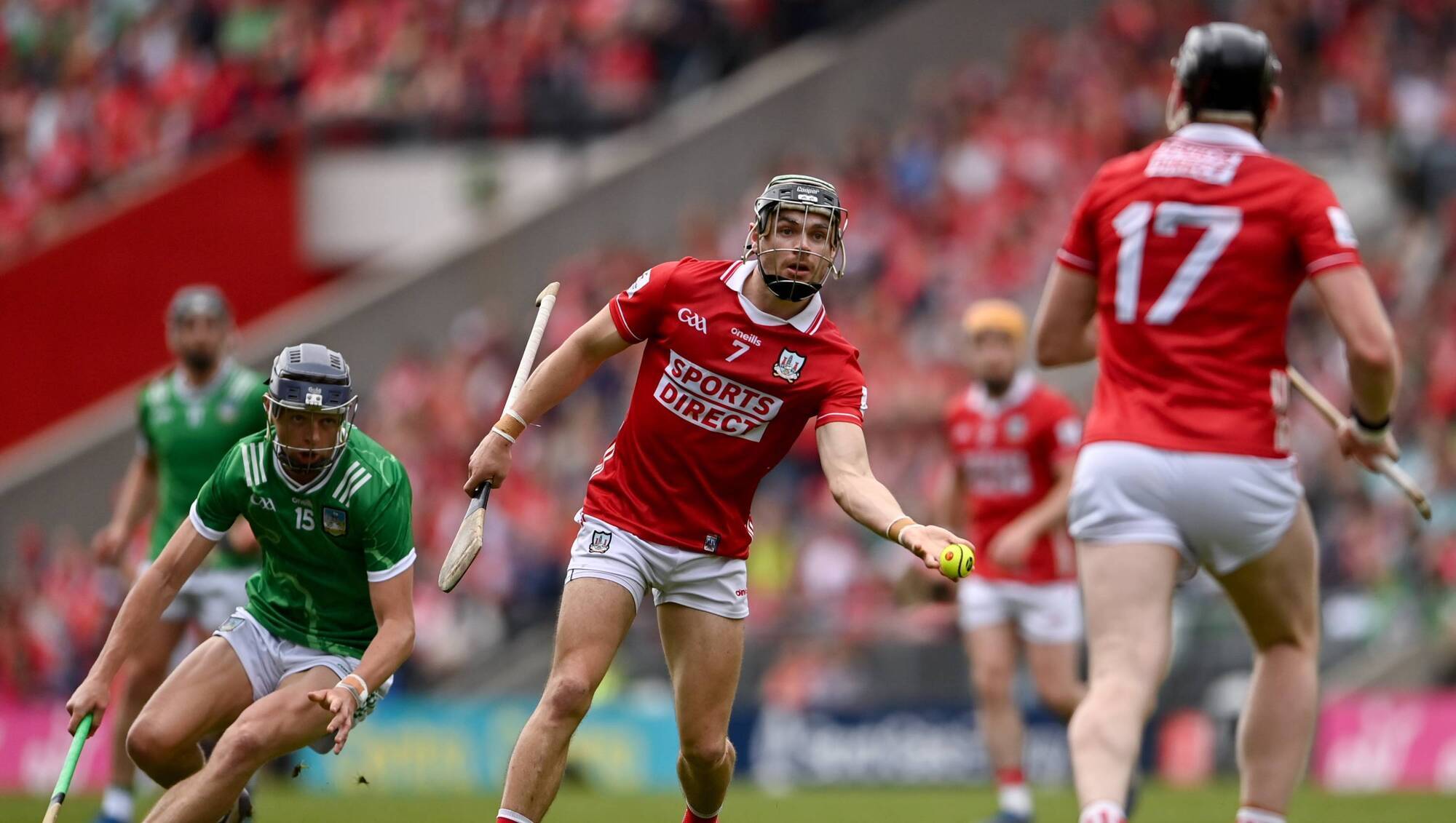
During the trial games, a player will be permitted to carry the ball in hand for a maximum of six consecutive steps, two more than previously, or to hold the ball for no longer than the time needed to take six steps. Pic: Tom Beary/Sportsfile
Teams will not be permitted to complete two consecutive hand-passes as part of the experimental rule changes that operate in the third level Division 1 league games later this year.
A hand-pass or attempted hand-pass by a player having received a hand-pass from a team-mate will be considered a technical foul and a free from where it was committed.
The hand-pass rule, which is defined as a definite striking action of a hand, will be updated to include “a clear and definite striking action of a hand”.
According to John Meyler’s hurling expert body who have recommended the changes, the “onus is now on the player to ensure the handpass is struck with a clear and definite action of the hand. If there is any doubt in the mind of the referee or the line umpire, a free should be awarded against the player.”
Read More
A player will also be permitted to carry the ball in hand for a maximum of six consecutive steps, two more than previously, or to hold the ball for no longer than the time needed to take six steps.
The tackle has also been redefined to prevent players from holding an opponent with their arm as well as their hand.
Throw-ins will take place between one player from each team as is the case in Gaelic football. A second player from each team shall stand on opposite sidelines of the halfway line and swap in the second half. All other players must remain in their respective positions behind the 45-metre lines.
All other throw-ins will be contested by a player from each side with all other players having to remain 13m away from the contest. Those competing in the throw-in must clash for the ball with a ground stroke and failure to do so will result in a free.
All puck-outs must clear the 45m line before the defending team can touch the ball and three players from each team must remain between the 45m and 20m lines. Puck-outs can’t be taken until the referee has blown their whistle.
The 65 has been altered to be taken from the defending 65m line as opposed to the one inside the attacking half of the field, an increase of 10m. Two points will be awarded for sideline cuts that are struck over the crossbar providing no other player from the attacking team has touched the ball.
The criteria for cynically denying a goalscoring opportunity has been updated to include a body collide when the opponent has played the ball away or taking the opponent out of the movement of play, to deliberately pull a jersey or to deliberately prevent or restrict an opponent from moving on from playing the ball by holding up an opponent or an attempt to do so. In such cases, a yellow or red card shall be shown instead of a black.
An advantage rule change will allow a team whose player has been fouled during the five-second advantage period to take a free from the location of the initial foul or any thereafter. Those five seconds can be extended by the referee to allow for a score attempt taken in that timeframe.
If the team who have earned the advantage have committed a foul during the period, that side will retain the initial advantage. The referee shall deal with the second infringement independent of it.
The hurling expert review group also allow for the return of the maor foirne (running selector). They can be permitted to enter the field of play but only during breaks in play. Any other incursion will be considered unauthorised.
Line umpires (linesmen) will be empowered to act as assistant referees, each operating one half of the pitch with each umpire patrolling the endline to the halfway line on alternate sides of the pitch.
Line umpires will bring to the attention of referees “any instances of foul play” and indicate it by raising their flag.

CONNECT WITH US TODAY



Be the first to know the latest news and updates