Alan Healy: Can a €3 charge save Europe's high streets?
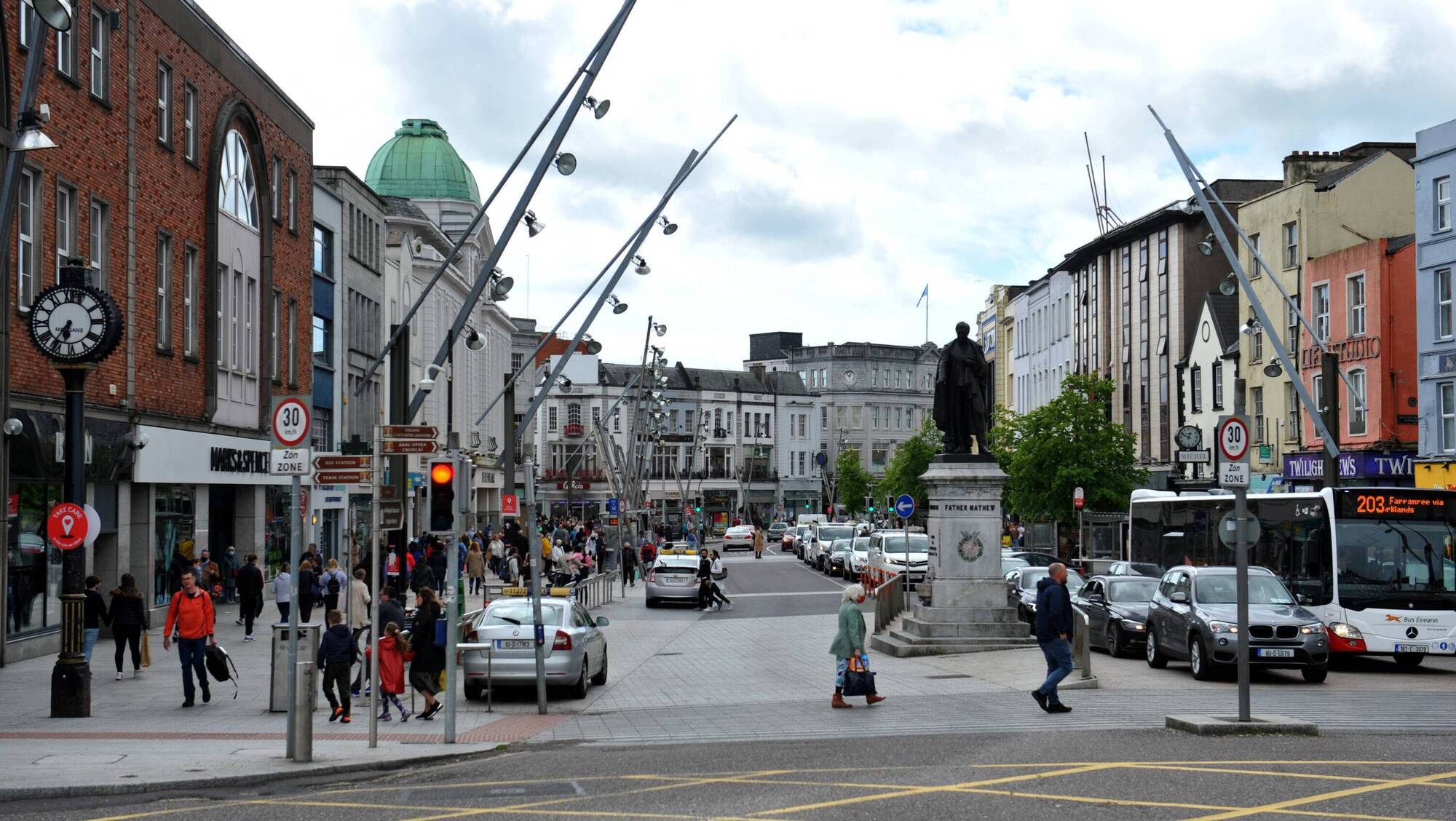
Cork City Council have opened 17 files this year over the clustering of vape, phone and barber shops, many of which took over sites previously held by fashion retailers impacted by Chinese competition. Picture: Larry Cummins
Europe has begun a campaign to save its high streets, one €3 step at a time.
From this week, all online purchases from outside the EU now attract a €3 customs duty per item. The target is clear: Shein, Temu, and AliExpress.
The Chinese firms benefited from a wave of European consumers hammered by a cost-of-living crisis that saw inflation peak at more than 10% in the wake of the Russian invasion of Ukraine.
China had already established itself as the global manufacturing hub for so many items, it was only a matter of time before they began selling directly to Europe’s consumers, cutting out the middlemen.
So just how big have they become? Last year, 5.9bn items in low-value packages from third countries “flooded” — the European’s Commission’s term, not mine — the EU market without paying customs duties. Low-value packages now represent 97% of all imported items in the EU, but they account for only 2% of the EU’s import value.
In Ireland, An Post is expected to deliver 100m packages to households this year, up from more than 75m last year.
The €150 exemption rule was also routinely exploited through the undervaluation of goods or splitting orders into multiple parcels to remain below the threshold.
The €3 rate is just a stop-gap solution. In two years, the EU will retire the flat fee and start applying customs duties in a more targeted manner based on a product’s origin and value.
This will mean rates of anywhere between 0% and 17%, depending on the contents.
Higher standards
EU traders have long pointed out the higher standards and compliance regulations they must meet compared to those outside the EU. An investigation last year found that over 60% of low-value goods entering the EU do not comply with product requirements or safety standards, often contain toxic ingredients, are incorrectly labelled, and put consumers in danger.
The damage to bricks-and-mortar retail is not theoretical. In France, data from the Institut Français de la Mode shows Chinese platforms captured around 5% of the apparel market in under two years — while the country’s fashion and home retail sectors have lost 60,000 jobs over the past decade.
Paris went further than Brussels last week, adopting its so-called “anti-Shein” law imposing per-garment penalties on ultra-fast fashion and banning its advertising.
Finland, which expects 50m parcels from Chinese platforms this year, estimated that if even 30% of these purchases had occurred domestically, the state would have gained €97.2m in tax revenue.
The European Economic and Social Committee (EESC), an EU advisory body, has made a direct appeal to the EU’s Commissioner for consumer protection, Michael McGrath, saying Europe is not for sale.
EESC member Emilie Prouzet said: “We have the facts. We have the toolbox. We have the mobilisation. Now we need resolve.
“Because what is at stake is the integrity of our market, the safety of our citizens, and the fairness of our economy.”
Impact on retail
In Ireland, retail in towns and cities has been slowly recovering from the impact of the covid pandemic, which saw retailers like Debenhams, Carphone Warehouse, TopShop, Argos, and Oasis all shut their doors during the lockdowns and never reopened.
Operators like Penneys/Primark has also felt the hit from Chinese competition given their position as the king of low-cost fashion items.
In 2021, the company was approved for a major €60m renovation for its flagship store on Cork’s St Patrick’s Street that would have taken over the entire city block.
However, those plans have been significantly revised, with a smaller, 6,000sq ft expansion now being proposed. Penneys said planning delays and rising construction costs had impacted its decision.
A turnover of stores on any street is viewed as healthy, as it helps bring in new operators. However, the concern in Ireland is what is filling those gaps, as the departure of some retailers in Ireland has left vape, phone, and barber shops often being the only potential new tenants. Cork City Council has opened 17 files this year to examine complaints about their clustering in certain areas of the city. Many of these locations were previously occupied by fashion retailers.
So will the €3 charge work? The sceptics note that Shein and Temu saw this coming and have been shifting stock into EU warehouses.
Shein has opened an Irish facility, and items dispatched from within the bloc escape the duty entirely.
So the charge may not be the killer blow some retailers hoped for.
However, for the first time in two decades, the playing field is no longer tilted quite so heavily against the shops still keeping the lights on.

Cancel anytime
CONNECT WITH US TODAY
Be the first to know the latest news and updates