'After my cancer treatment, the Springboard+ course came at just the right time for me,' says Aideen
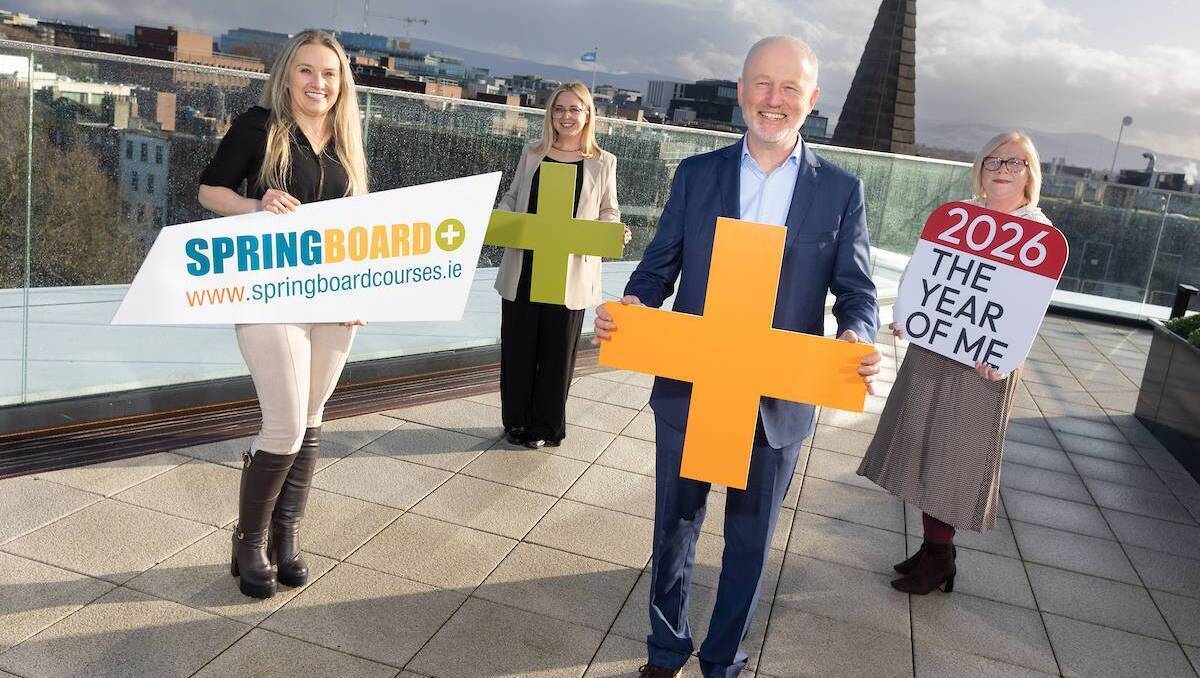
Springboard learners Elvira Benton, Shelley Coleman, John Corrigan and Aideen Brennan launching Springboard+ 2026, which is providing over 7,200 places across 244 courses nationwide through 36 education providers. Photo: Kenneth O’Halloran
People are being invited to boost their future employment options by signing up for the Springboard+ 2026 range of 7,200 places across 244 courses nationwide through 36 education providers.
Full or part-time Springboard+ courses are free for unemployed participants and returners to the workforce, while those in employment typically pay just 10% of the course fee, with micro-credentials having 50% of fees subsidised for all learners, regardless of employment status.
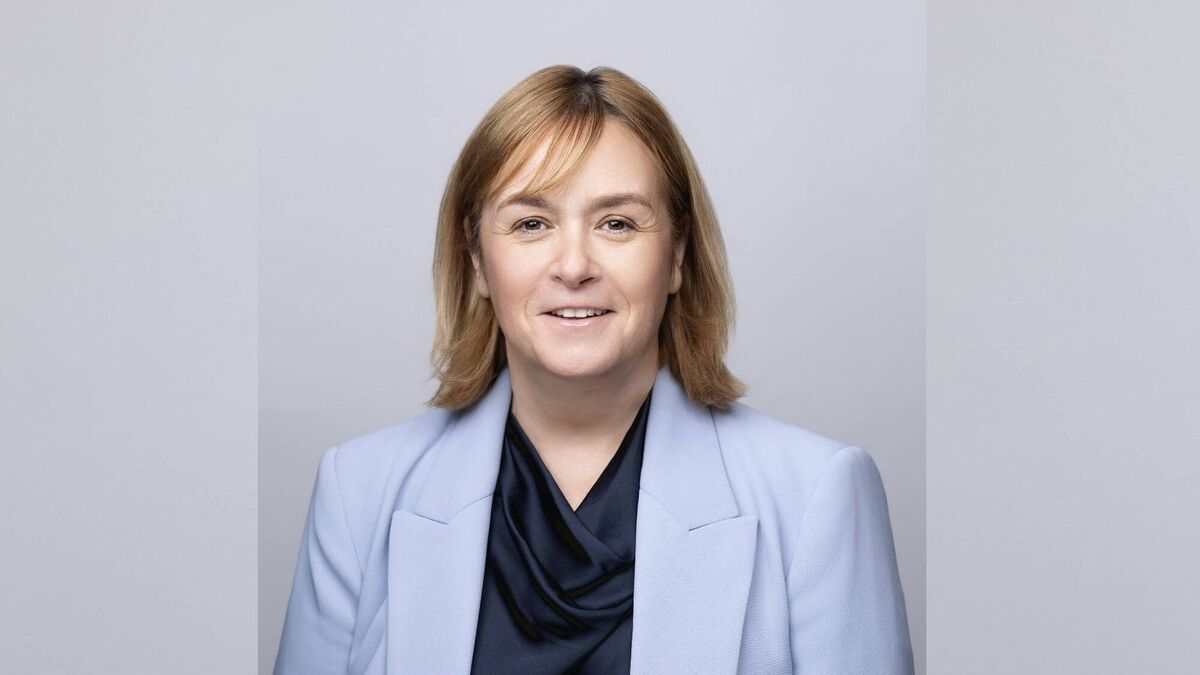
In this Q&A interview, Dr Vivienne Patterson, head of skills, engagement and statistics, Higher Education Authority, outlines some of the benefits offered by the Springboard+ 2026 courses.
Meanwhile, Aideen Brennan, from Co Roscommon, also outlines how she has benefited from recently completing a Springboard+ course in Human Resource Management through Technological University of the Shannon.
Springboard+ is a government-funded initiative that provides free and subsidised higher education courses in areas where there is clear skills demand across the Irish economy.
The courses range from Level 6 certificates through to Level 9 postgraduate qualifications and are developed in partnership with higher education institutions and industry.
The programme is open to a wide range of people, including those who are employed, unemployed, self-employed or returning to the workforce after a break. A key feature of Springboard+ is its flexibility, with many courses delivered part-time, online or through blended learning, allowing people to invest in their own development and study alongside work and other commitments.
Yes, we are seeing very strong demand from people who are thinking more actively about their skills and future career direction. There is a growing awareness of the importance of staying up to date and continuing to develop skills over time, regardless of where someone is in their career.
Springboard+ has always been about supporting people to take those steps, whether that is progressing within their current role or exploring a new direction. Each year, courses are heavily oversubscribed, which reflects both the demand for upskilling and the willingness among learners to invest in their own development.
Accessibility is central to the programme. For those who are unemployed or returning to the workforce, courses are free. For those in employment, courses are typically 90% subsidised, while micro-credentials are subsidised by 50% for all learners, regardless of employment status.
This level of support is made possible through funding from the National Training Fund, which is supported by employer contributions, as well as co-funding from the European Union. Together, this ensures that a wide range of learners can access opportunities regardless of their circumstances.
In addition, the flexible delivery formats mean that people can participate regardless of where they are based, or what their personal or professional commitments might be.
The courses are designed to align closely with areas of current and future skills demand.
That includes fields such as artificial intelligence, digital technologies, sustainability, healthcare innovation, advanced manufacturing and business leadership.
We are seeing strong interest in emerging areas such as offshore wind energy, circular economy initiatives, carbon accounting, aircraft leasing, agri-innovation and climate-related enterprise. The common thread is that these are sectors experiencing growth and change, where there is a clear need for new and updated skills.
For many people, Springboard+ represents an opportunity to take a meaningful step forward, whether that is progressing within their current role, changing career direction or returning to the workforce.
We have seen many examples of learners using the programme to build confidence, gain new qualifications and open up new opportunities. One of the strengths of Springboard+ is that it provides a practical pathway, combining academic learning with real-world skills that can be applied in the workplace.
Aideen Brennan, from Co Roscommon, who recently completed a Springboard+ course in Human Resource Management through Technological University of the Shannon, highlighted how the programme helped her rebuild confidence and develop new skills following a significant life and career transition.
After being diagnosed with and treated for breast cancer, Aideen was subsequently made redundant from her job in retail.
Aideen said: “After recovering from cancer treatment and making a major career transition, the Springboard+ course came at exactly the right time for me. It allowed me to get a Human Resource Management qualification as I moved into managing a co-working hub, while the flexible online format meant I could study in a way that suited my health, recovery and my schedule.
“The course helped me rebuild my confidence and reminded me of the strength and resilience I had developed through that experience. It was a hugely positive journey and even led to me being invited back to speak to students on the programme, which was a very proud moment for me. Taking the course was an important step forward for me and showed how valuable it can be to take time to invest in your own development,” Aideen added.
I would encourage anyone who is thinking about their next step to take the time to explore what is available. Springboard+ offers a wide range of flexible, accessible courses that are designed to support people at different stages of their career.
Courses are available through Springboard+ courses, where prospective learners can explore the full range of options and find a course that suits their needs. As application deadlines vary by course, it is important to review the details carefully and apply in good time.
Taking time to invest in your skills can have a very positive impact, both personally and professionally, and for many people this is about making 2026 their “Year of Me” by taking that step.
CONNECT WITH US TODAY



Be the first to know the latest news and updates