Derek McGrath: Protect hurling's handpass - every free given for 'a throw' last season was wrong
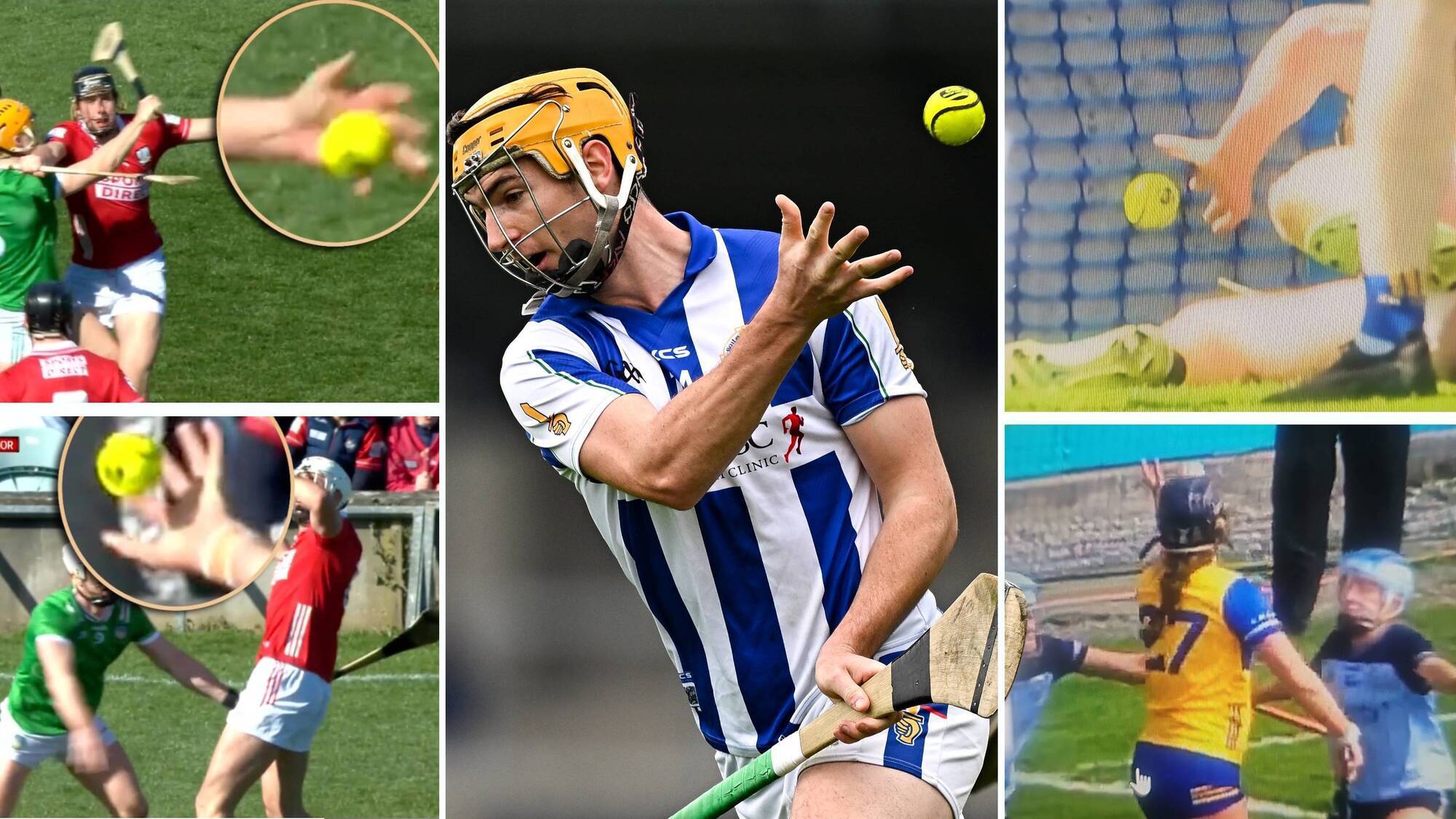
Clockwise from top left: Cork's Rob Downey, Darragh Kenny of Ballyboden St Enda’s; Eoin Cody of Kilkenny, Clare's Ellen Casey and Cork's Tim O'Mahony. Screenshots TG4 and RTE and Seb Daly/Sportsfile

Readers of this column will know my long held stance on the evolution of the handpass. Some years ago I left the rules committee in Croke Park when one of the members declared that the handpass was not a skill. Multiple All-Ireland winner Noel Skehan was of a similar mind in this paper recently when he declared that “all handpasses were throws”. Noel is not alone. Many hurling experts contend that many handpasses are indeed throws.
The imbalanced, ill-informed presentation of this narrative (touched on later) makes being of the minority view that bit harder. We all accept that being a referee, particularly of inter-county hurling, is an extremely tough job. The players' athleticism, mentality and skillsets are more advanced than ever.
This week, inter-county management teams were furnished with the 'Guidance to Hurling Referees Championship 2026' booklet that explains “how certain rules will be applied in all inter county games”.
Read More
The booklet informs us that the following technical fouls were discussed —
Rule 4.2 (a): “To throw the ball (b) to handpass the ball without it being released and struck with a definite striking action of the hand”. More importantly and crucially the definitions on page 67 deduce that the “releasing of the ball is considered an integral part of the handpass”.
Most of my mates in hurling would contend that “it's difficult to know”, but for me the picture is clear. All frees awarded for throws in the All-Ireland SHC last year were incorrect decisions. I make it 26 frees incorrectly given.
All frees awarded in the recent National Hurling League final for throws or “not releasing” were incorrect also. Shane Barrett's beautiful offload, Tim O'Mahony's reverse handpass, Aaron Gillane's on the ground pop pass, and Rob Downey's around the corner had (a) palm open, (b) separation, and (c) striking action.
I do accept the argument that real-time adjudication is different to post-match analysis, with the benefit of slow motion. But my contention is fairly concise, simple and crucially accurate — for every free awarded last year the replays show that all the elements needed to perform a perfect handpass were evident.
Even accepting the argument that referees do not have the benefit of replays, if the footage shows that 100% of their decisions were proved incorrect, should this not inform their and future hurling committee decisions. There is also a clear disparity in how referees interpret the variety of handpasses that players can now execute.
If you get a minute over the weekend, take to the full recording of the league final on YouTube and pause at 19 mins and 25 secs of the match clock. A young Cork supporter can be seen showing his Mom the process involved in the execution of the high handpass. Mom is having none of it and is simulating the execution of the underhand handpass as if this is the only type allowed under the rules.
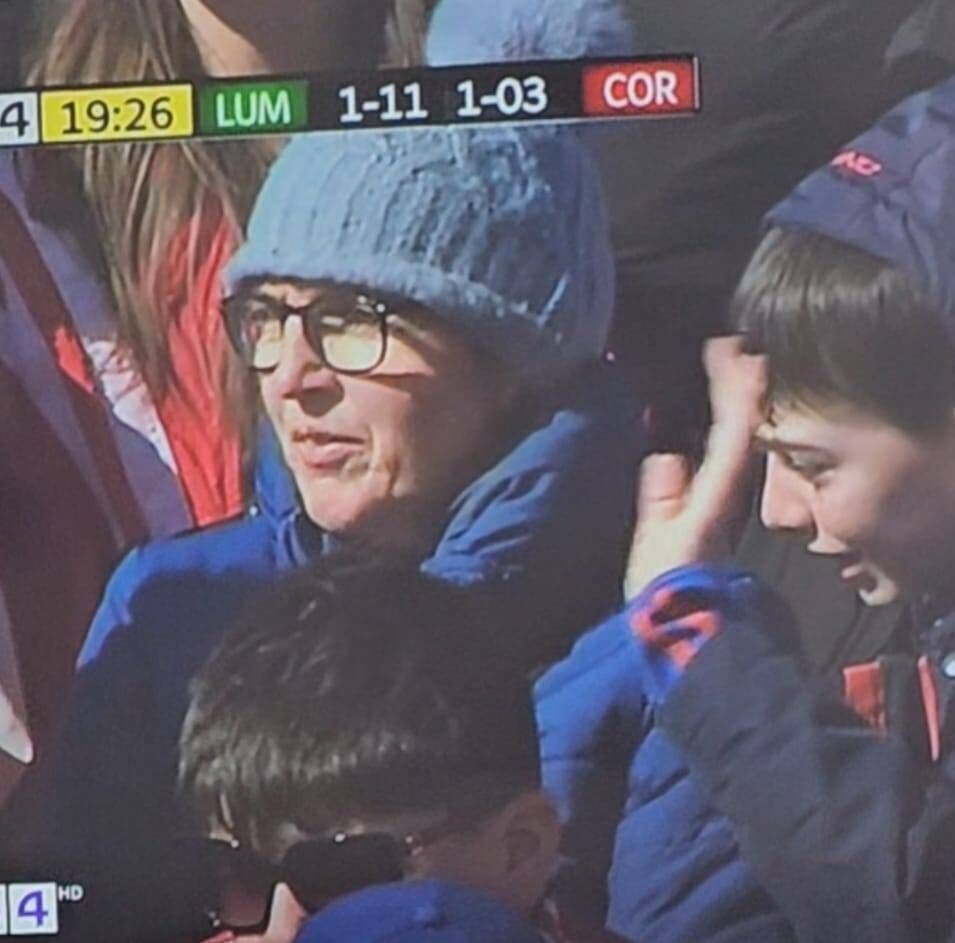
The clip is a microcosm of the debate. Surprisingly, many well-known pundits have added to that theory that an overhead handpass, particularly one executed when bottled up, is somehow illegal.
When Will O'Donoghue perfectly offloaded at the end of the Tipperary game last year, my favourite player ever Tommy Walsh declared “twas a throw in fairness”.
When Alan Connolly put Brian Hayes through for a brilliant goal, Michael Duignan and Liam Sheey declared the decision a fantastic one by Tyler Walsh.
The night time show on presented the real truth — both were perfect handpasses.
In 1999, when preparing De La Salle for the Féile in Wexford, we began coaching this skill. Getting your hand out from the swarm tackle, opening your palm and creating separation to get the ball away. Coaches all around Ireland recognise the evolution of this skill and the speed at which the lads can execute it when bottled up (see Tim O'Mahony), when swarmed (see Will O'Donoghue), when in full flight (see Alan Connolly).
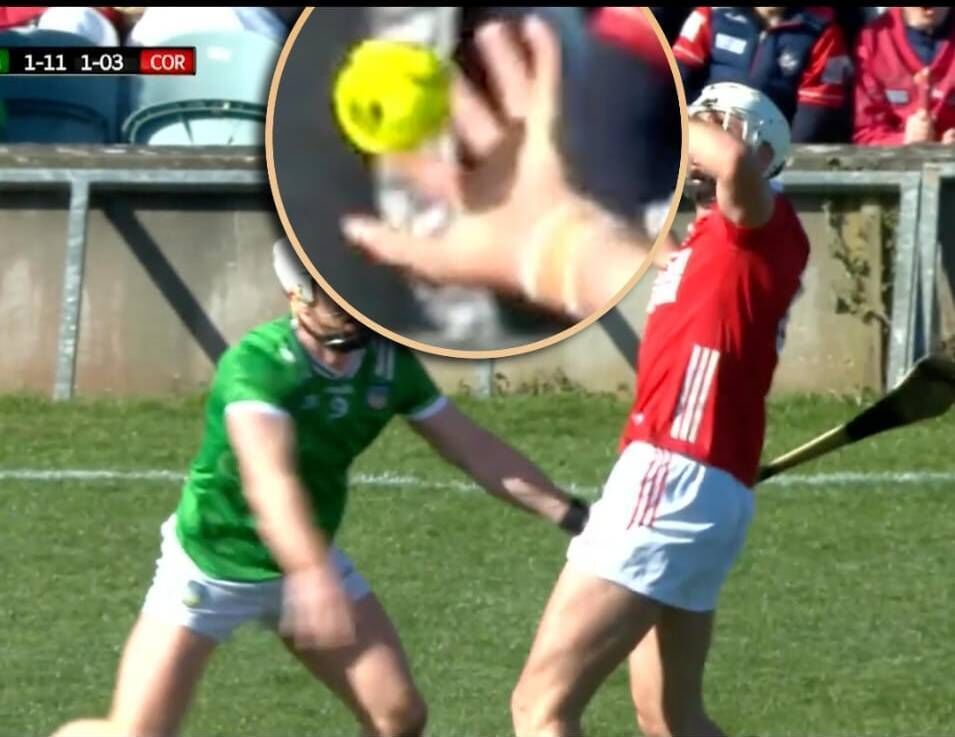
The lack of understanding by some referees when they gesture that an overhead handpass is illegal is hurtful to those who spend and have spent years, particularly in school, honing and sharpening that skillset. The danger is that frees are now awarded at club and local level (see attached from a local minor game) based on these mistakes. In fact the enthusiasm from referees to give frees against those who can perform this brilliant skill is notable.
Again a brilliant skill, whereby a player frees his hand up, is sometimes looking the opposite way, and still opens his palm to release. Within a millisecond, the player can have his arm looped around the back of an opponent before relasing with pace and separation. Rob Downey has mastered this art, a 6ft 7inch Rebel with the softest hands. Ethan Twomey, Shane O'Donnell, Cian Kenny, David Reidy and of course Cian Lynch are masters of this skill.
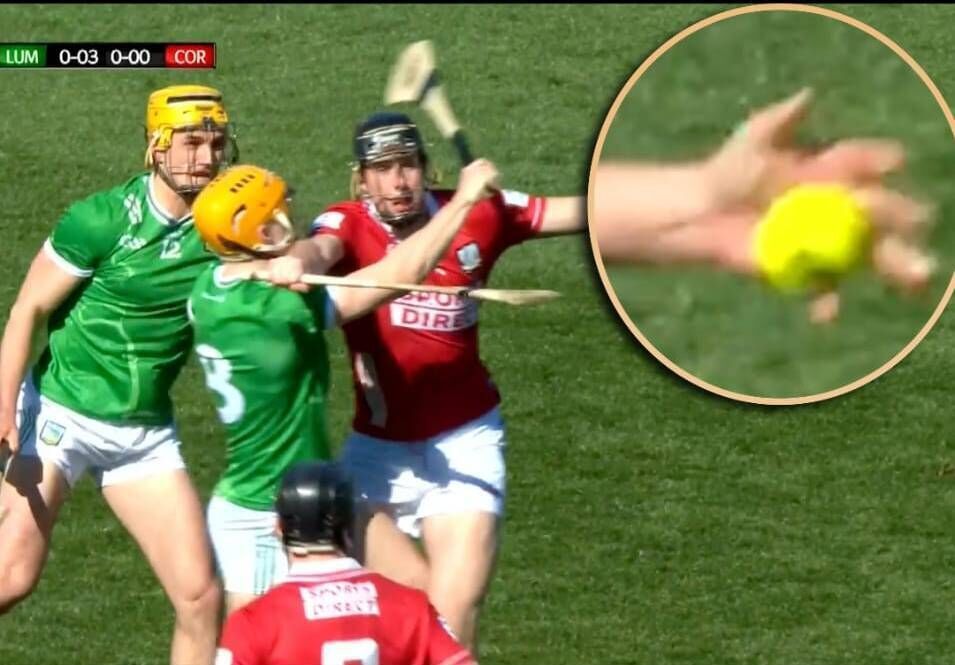
Again referees around the country seem to have made their minds up that when a player falls to the ground, or is at the bottom of a ruck, that they can't have the capacity to somehow get the handpass away.
The opposite is the case. Referees and supporters should put themselves in the minds (this could be hard) of Kinnerk, O'Rourke, Bugler, Corcoran, Curran, Franny Forde, Bevans and co, who will have spoken with the players about the need, when on the ground, to create that separation.
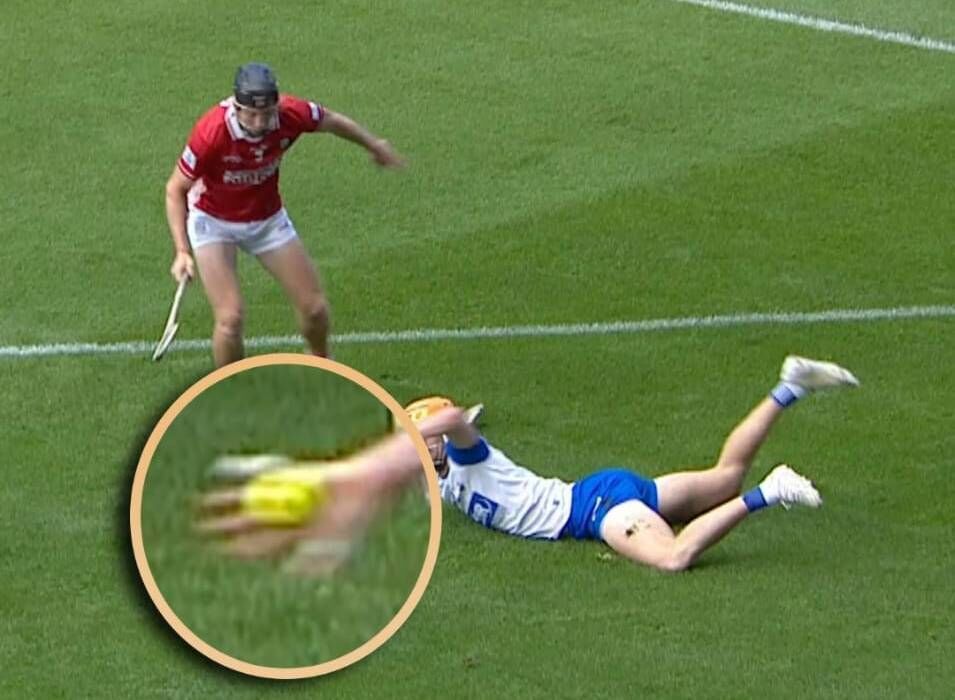
Not alone will they have spoken about it but it will have been simulated and practised repetitively on the training ground and in matches. Eoin Cody's brilliant release whilst being swarm tackled on the ground, Sean Walsh's ability to wriggle and squirm on the floor and get the handpass away, and Aaron Gillane's unrivalled ability to be on the ground and release, were all penalised with frees last year. All were wrong decisions.
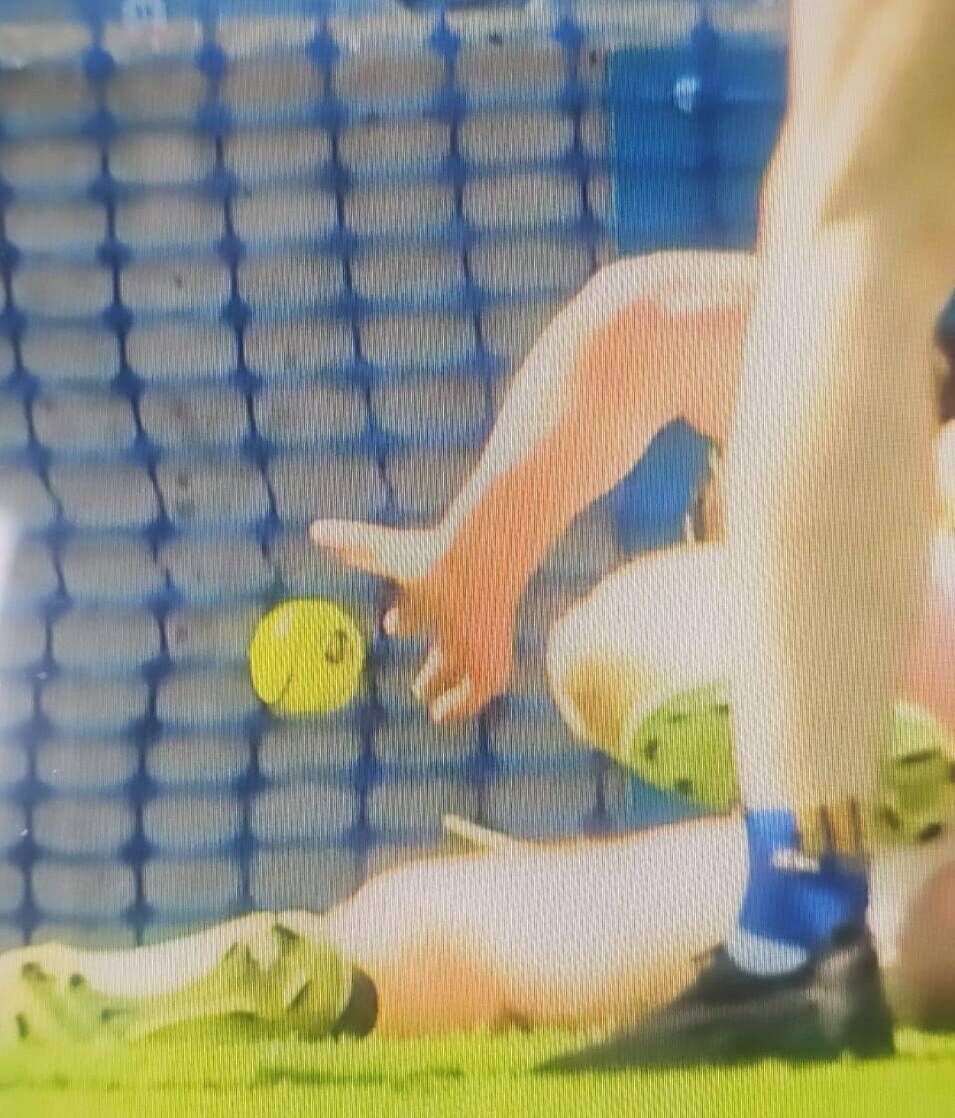
I have argued consistently that current players are students of the game. They can combine thinking and playing better than any other generation and this thirst for knowledge will continue to grow. There will come a time when they will volley the sliotar as it arrives, they will volley it on the hop (remember Seamie Callanan in 2019) and coaches will continue to add layers to their approach, while also realising that it's still hurling.
Shane Barrett's take into contact before speedily pop passing for a goal chance in the league final was a beautifully crafted skill. Last year’s U20 decisions against both Robert Loftus of Clare and Cork's Eoin Guinane for fast releases just before contact were both game-changing moments.
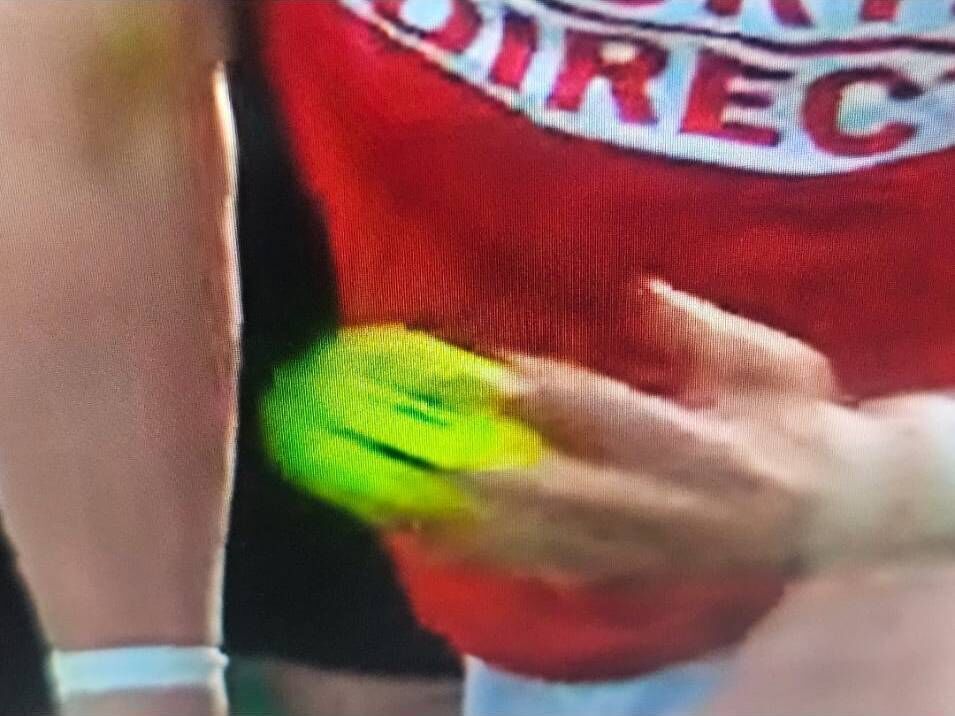
Outside of Dónal Óg Cusack attention to detail when clearly highlighting the “non throws”, the general narrative seems to be “the referee was right on the spot, a clear throw”.
Tim O Mahony's dynamic reverse handpass in the league final was initially called by Marty as a “throw ball”, but 10 seconds later he informed us that it “looked like a legitimate handpass to me”.
The TG4 boys tell us its “deacair a rá” and it is, but where is the commentator that will tell us that there’s a release there and will we have to wait till Piero (RTÉ's software tool) that night to get the true analysis. It seems too easy to just join the generic easy opinion that doesn’t reflect the skills and integrity of our players.
On the brilliantly insightful podcast, Colm Parkinson pointed to the genuine protestations of both Tim O'Mahony and Shane Barrett when blown for perfectly executed fast handpasses during the league final.
When Gearóid Hegarty, on Anthony's podcast two years ago, declared that “none of the handpasses are throws”, the 'ah hes only suiting the Limerick agenda' crowd got their tuppence worth in. When Paul O'Brien, manager of an outstanding Mount Leinster Rangers team, coach to Dublin U20s and analyst with Tipperary seniors declared something similar, his theory was dismissed as self-serving. Sean Finn, one of the most decorated players in the game, declared that 90% of the handpassses were genuine and he wondered how when bottled up players could release.
With the FRC's successful role in revolutionising Gaelic football the mood music seems to be pointing to a shift towards some change in hurling. To us coaches on the ground, it’s a case of be careful what you wish for. I will sleep easy if the committee pores meticulously through all the footage available associated with frees given for throws. When they have this data available, the next phase should be to consult and hire the best exponents of the handpass in our game. A suggested list could include Philip Mahony (Waterford), Shane O'Donnell (Clare), Cian Lynch (Limerick), Rob Downey (Cork).
The committee could do worse than to study the sensational overhead handpass by Ellen Casey to Áine Ó Loughlin for a brilliant Clare goal during the National League 1B camogie final last Sunday Referee Cathal McAllister's positioning and appreciation and understanding of the skill ensured the goal stood.
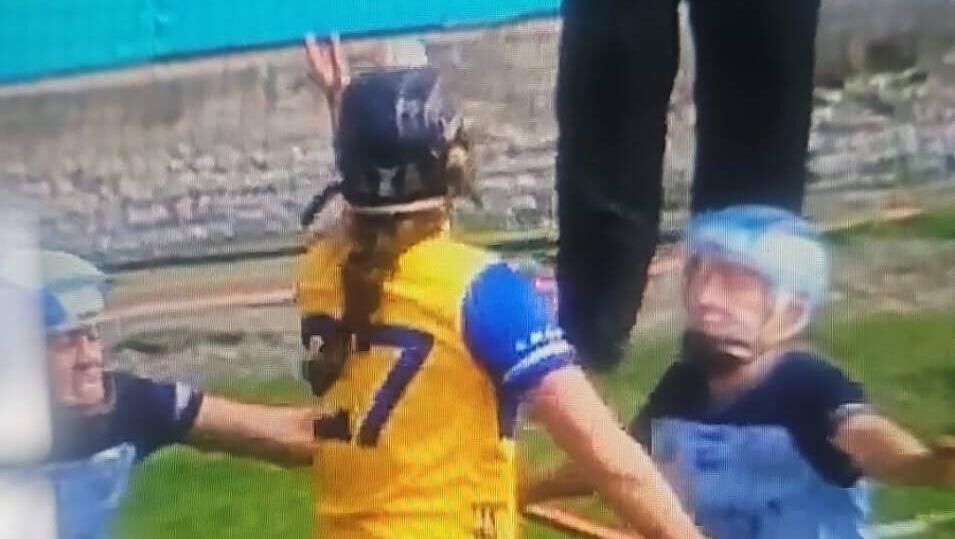
McAllister and fellow referees Sean Stack, Liam Gordon, Tyler Walsh, head of hurling Willie Maher, and coaches at all levels could aid John Meyler's newly formed committee to present the future path of hurling in Ireland. The foundational principle question on should always be: “What type of game do we want?”
In soccer, a player shouting “mine” or “leave it” to intentionally distract an opponent is penalised by a free and sometimes a yellow card. Waving imaginary yellow cards is also an offence. Players or mentors should no longer be allowed to shout 'throw'. Managers, coaches (me included) and players actively pursue frees by shouting 'throw' at every opportunity. More tuned-in refereeing, more sporting mentors, and a very willing player group can ensure that this brilliantly evolved handpass skill can adapt to a new rule.
I have written previously of the balance between technology and its impact in stopping and starting games. Within 10 seconds I had seen footage of Austin Gleeson's ghost goal in 2018. Perhaps the time has come for the referee to have some form of information relayed around the legitimacy of the handpass. I know what he will be told.
I have always held a genuine respect for referees. Having experienced Limerick club refeeeing over the past few years I can see that they know how the fluidity of the Limerick game is dependent on an alignment of thinking. I worry however that a major decision around the misunderstanding of the handpass will cost a county dearly.
Can you imagine a free being awarded 100 yards from goal in an All-Ireland final for a perfectly executed fast handpass, then the player argues his case and it's brought forward 30 yards under the new rules and the All-Ireland is won under a shroud of controversy. That night the referee will probably find out the decision was incorrect.
My hope lies in the adaptive ability of the players and some referees to collaborate and appreciate the evolution of the skill. I attended a rain-sodden Fraher field last Friday night for the minor hurling game between Cork and Waterford. Kieran Guina from Limerick officiated with poise and appreciation of the skills on show as players performed all the variety of handpasses with only one foul called (incorrectly).
Similar hope lay in the refereeing performance of Patrick O'Mahony from Kilbrittain in the next day’s minor championship game between Clare and Limerick as both teams' offloading game was clearly understood by the young referee. A previous interview he had conducted perhaps revealed the key starting point for all of us and not just referees: “When I referee a game the players always come first. It helps that I also played the game so I know what it’s like on the field of play. I always listen to the players."
CONNECT WITH US TODAY



Be the first to know the latest news and updates