House building activity declines for third month in a row
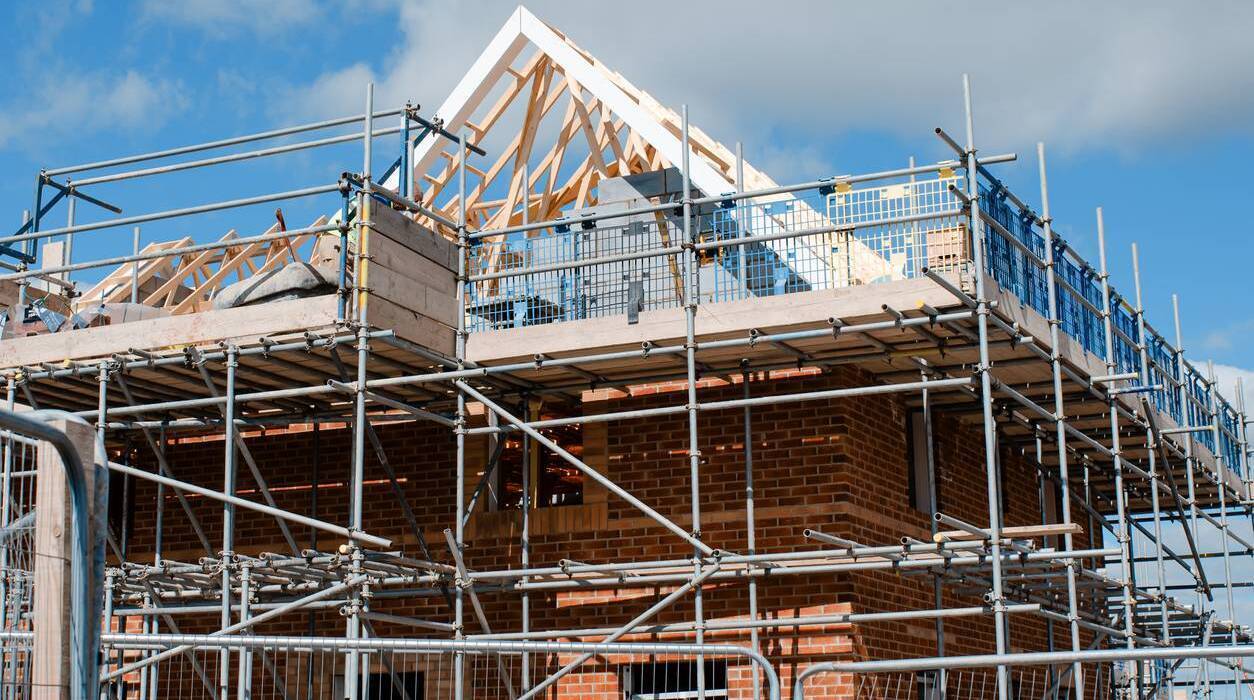
According to the latest AIB Purchasing Managers’ Index commercial building construction saw growth with activity increasing for the sixth month running
House building activity declines for third month in a row

The PMI index showed 'the pace of reduction accelerated compared to June' for residential construction activity.

Residential construction activity contracted for the third consecutive month in July as the overall construction sector saw a muted start to the second half of the year, the latest AIB Purchasing Managers’ Index (PMI) shows.

According to the PMI, marked reductions in housing and civil engineering activity were recorded in July while commercial building construction saw growth with activity increasing for the sixth month running.


Senior economist at AIB John Fahey said the PMI has shown “subdued” performance over the period of May to June which has carried over into July.

“The headline index was below the key break-even level of 50 for the third month in-a-row. Indeed, the July reading of 47.1 was lower than the 48.6 level reported for June, implying a faster pace of contraction in construction activity as the third quarter got underway,” he said.

Commercial building construction retained its position as the top performing subsector across the industry. However, residential construction activity contracted for a third consecutive month with Mr Fahey saying “the pace of reduction accelerated compared to June”.

The worst performing of the three subsectors continued to be civil engineering. It registered a third consecutive decline in activity levels, albeit the pace of contraction was marginally less severe compared to June.

The PMI found that while new orders continued to expand, the pace of growth eased to a five-month low amid some reports of customers delaying decision-making amid economic uncertainty.

Business confidence

Business confidence, meanwhile, dropped to the lowest since November 2022. The PMI said this resulted in firms scaling back their purchasing activity, but continued to take on extra staff.

Companies also reported being less optimistic regarding the outlook over the next 12 months with confidence falling to a 32-month low.

“While demand improvements and the expected awarding of new contracts supported optimism, there was uncertainty around US trade policy and conflicts around the world which dampened confidence,” the PMI said.

Other measurements

The sector also saw a decrease in the use of sub-contractors for the first time in four months during July. Although the reduction was slight, it was the sharpest in almost a year.

"Assessing some of the other main aspects of the July report, the new orders component, which is viewed as being a leading indicator, expanded for the sixth month in-a-row, although the pace of growth was slower compared to June,” Mr Fahey said.

“Alongside the ongoing expansion in new orders, construction firms continued to increase their staffing levels, lengthening the current period of growth to five months, with the pace of increase representing an improvement versus June.” 

Firms were also faced with higher input costs during July with a sharp rise in prices and longer lead times on deliveries. The rate of input cost inflation quickened from June and was faster than the series average.

“Meanwhile, the lengthening of suppliers' delivery times was the most pronounced in three months amid staff shortages at vendors and the need to wait for products to be made,” the PMI said.

x

More in this section

The Business Hub

Newsletter

News and analysis on business, money and jobs from Munster and beyond by our expert team of business writers.

Cookie Policy Privacy Policy Brand Safety FAQ Help Contact Us Terms and Conditions

© Examiner Echo Group Limited