Kevin Cullinane: Ireland once planned boldly. At another crossroads, State must do so again

The State took roughly 20% of the national budget in the 1920s and spent it on the hydroelectric scheme in Ardnacrusha, Co Clare.
“A prosperous society is one which plans for the future, not one which lives only for today.”
There was a time when Ireland dared to dream big and, more importantly, to plan big. From the moment the fledgling State emerged from the shadow of empire, it understood that survival and success would depend not just on grit but on vision.
Strategic thinking wasn’t a luxury, it was a necessity.
Take the Ardnacrusha hydroelectric power station. In the 1920s, this engineering marvel on the River Shannon was nothing short of audacious.
The State took roughly 20% of the national budget and spent it on the hydroelectric scheme in Co Clare.
Built in partnership with Siemens, it provided 80% of the country’s electricity at a time when most rural homes still relied on candles. It was a statement of intent: Ireland would not be left behind.
Then came the ESB, a national utility that brought light to the land and symbolised the State’s commitment to modernity.
Under the stewardship of leaders such as Seán Lemass, Ireland began to think in decades — not election cycles.
Lemass understood that infrastructure was destiny.
He championed industrialisation, education reform, and the creation of semi-state companies that would lay the foundations for future prosperity.
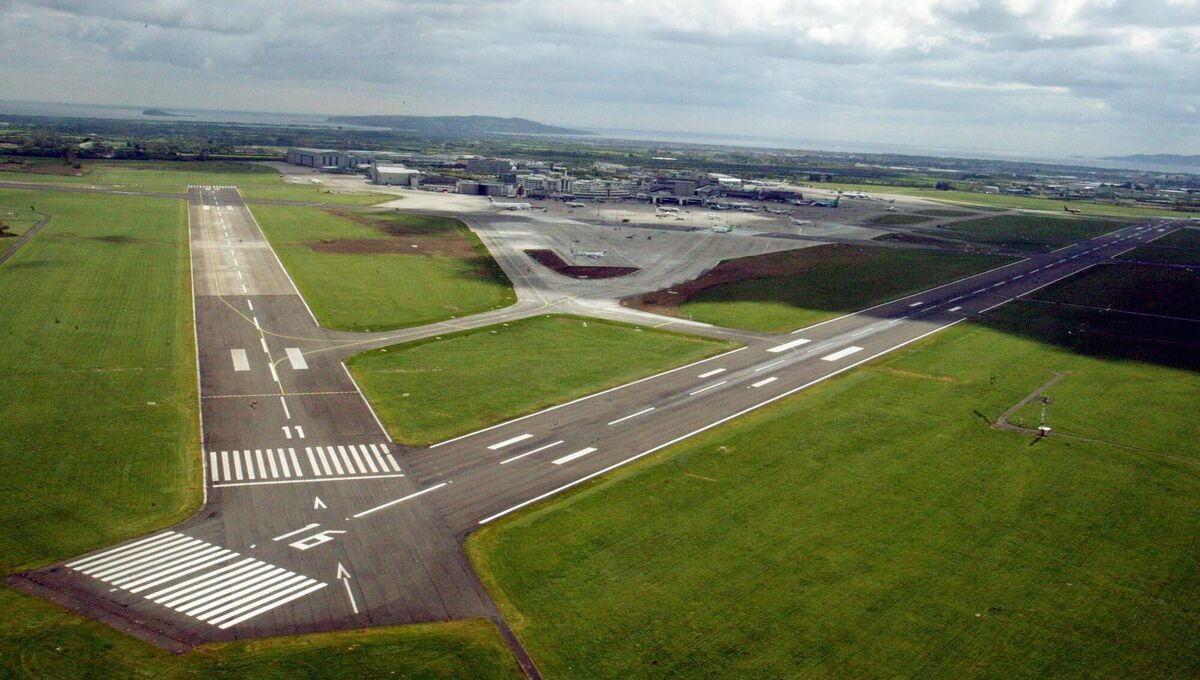
Our airports and ports followed suit. Dublin, Cork, and Shannon under Aer Rianta, the jewel in the crown of semi-state companies, became gateways to the world, not just for people but for ideas, trade, and opportunity. The foresight in the 1960s and ’70s to preserve land at Dublin Airport for a future parallel runway, delivered on time and within budget in 2022, was a textbook example of strategic master-planning.
So too was the reconstruction of Cork Airport’s main runway during the pandemic. At a time when others might have paused, we pressed ahead with investment in critical strategic infrastructure, with the long-term dividend for Ireland in mind. This is what strategic thinking looks like.
It’s not always headline-chasing. It’s not always universally popular. But it delivers.
The next 50 to 100 years will demand the same pioneering spirit that built Ardnacrusha, the same resolve that laid runways in peacetime and pandemic alike.
With the announcement of the National Development Plan, Ireland stands at another crossroads. We know what is possible when the State thinks long-term. The Government has committed €3.5bn to EirGrid for the development of Ireland’s electricity grid infrastructure, an essential step in delivering Ireland’s renewable energy targets and preparing for a decarbonised, electrified future. Uisce Éireann will receive €4.5bn between now and 2030, in an effort to build out projects supporting the Government’s target of 300,000 new homes and large-scale water infrastructure.
There is €2bn put aside to progress the construction of Dublin’s MetroLink.
DAA also has ambitious plans to continue investing in infrastructure and sustainability projects at Dublin and Cork airports, without State funding, once planning permissions are granted.
We must fund Ireland’s future. We must plan it. Above all, we must have the courage to make decisions and accelerate delivery. As Ireland’s population grows by nearly a third in 20 years, the urgency of infrastructure planning becomes even more critical. Planning must move faster. Infrastructure must be future-proofed. Ambition must return to the heart of our national conversation.
If we don’t think strategically, we will fall behind. But if we do, if we channel the spirit of Lemass, the vision of Ardnacrusha, and the competence of our people, we can build an Ireland that is not just ready for the future but is leading it. The ambition is clear; delivery will be the test.
CONNECT WITH US TODAY



Be the first to know the latest news and updates