Capacity constraints pose a risk to Irish inflation creeping up again, warns Central Bank governor
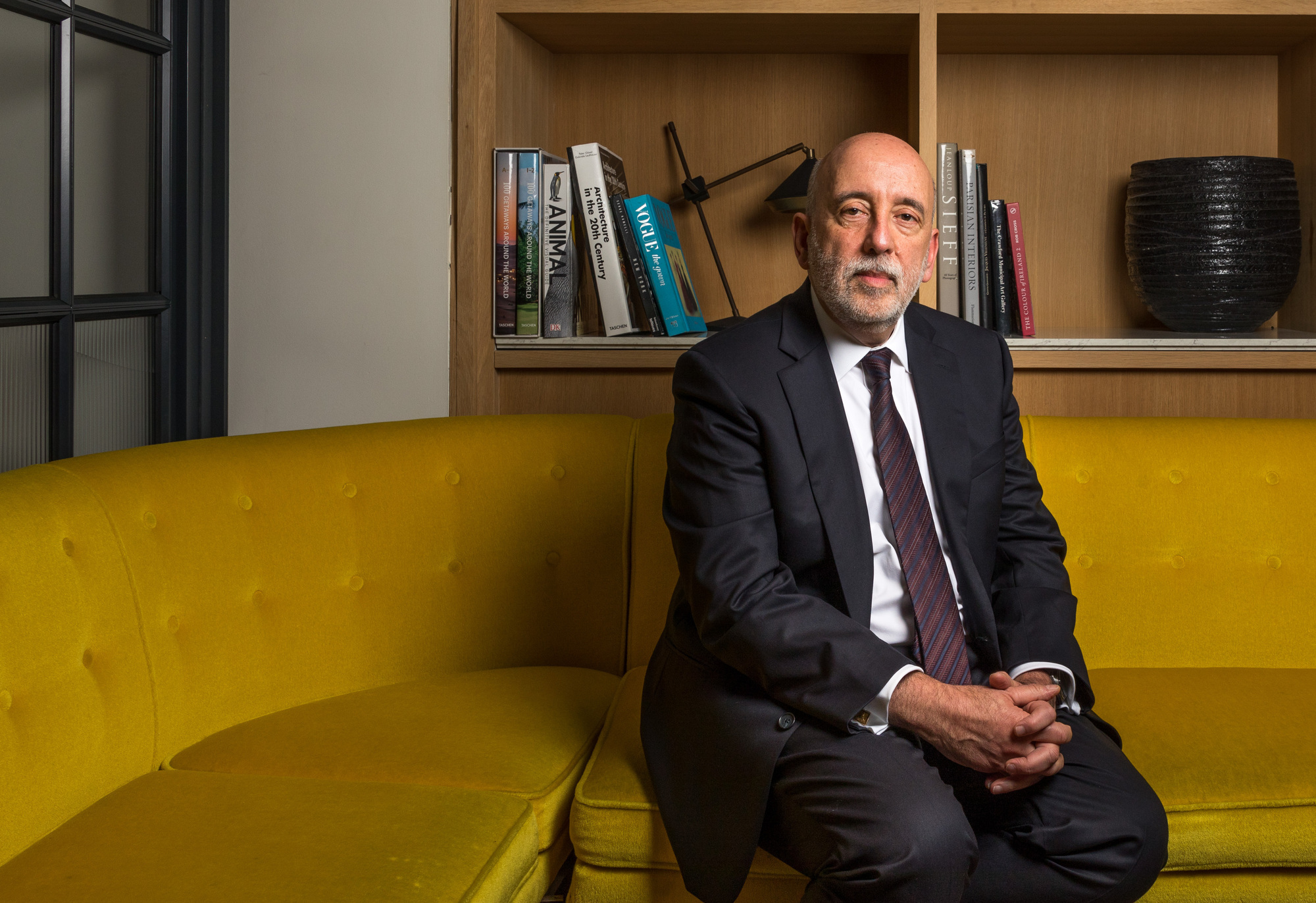
The Central Bank is also projecting real wages to grow - as inflation continues to recede. Mr Makhlouf said he isn’t concerned that these wage increases will feed inflation as they are built into their projections. Picture: David Creedon
Central Bank governor Gabriel Makhlouf has warned that there is a bigger risk of inflation returning to higher levels in Ireland due to capacity constraints within the economy.
Mr Makhlouf also said the nature of the monetary union means “we won’t have the means to deal with it directly”.

His comments come following a decision by the European Central Bank (ECB) on Thursday to leave interest rates unchanged. The ECB won’t be meeting again until September and speculation is mounting that the regulator will cut rates again when it reconvenes.
ECB president Christine Lagarde said that the Governing Council has left the door “wide open” for a rate cut in a few months time but added that the bank will keep rates “sufficiently restrictive for as long as necessary”.
In an interview with the Irish Examiner, Mr Makhlouf said the disinflation process is ongoing but the annual rate is not yet at the ECB’s medium-term target of 2% yet and it would need to remain at that rate over a sustained period of time.
"There's no need to actually rush to make decisions,” he said, adding that the process is working although the “road has been bumpy”.
“We’ve got no predetermined rate path… We're adopting a meeting by meeting approach,” Mr Makhlouf said.
The latest data from Eurostat shows that annual inflation in Ireland - using the Harmonised Index of Consumer Prices (HICP) - was 1.5% in June compared to the eurozone average of 2.5%. This is down slightly from 2.6% in May.
Other countries in the eurozone are experiencing much higher rates of inflation compared to Ireland including Belgium at 5.4%, Spain at 3.6%, and Croatia at 3.5%.
Services inflation is currently the main driver of overall inflation across the eurozone.
“In particular on the services side, we've got inflation that is just stronger and continues to be strong and that's the main thing really that we need to keep an eye on,” he said.
When asked if he is concerned whether the higher interest rates would adversely impact Ireland - given the lower rates of inflation - Mr Makhlouf said there is a “bigger risk here that inflation will return” to higher levels in Ireland because the economy is dealing with more capacity constraints than other countries in the eurozone.
If inflation was to increase again in Ireland, he said ECB monetary policy, which is set for the entire eurozone, would find it hard to target measures in a relatively smaller economy.
"It's important that domestic policymakers think about the implications of their decisions on inflation,” he said.
“A concern for me is that there's some sort of disconnect between monetary policy in the euro area and inflation in Ireland. I'm more worried about what could happen if there was a divergence,” he said.
Last week, the Government published the Summer Economic Statement which outlined the parameters for the budget on October 1. The budget will contain a package of €8.3bn which is split with €6.9bn going towards additional spending and €1.4bn going towards a tax package.
Prior to the statement being published, Mr Makhlouf published his letter to the Government where he advised Finance Minister Jack Chambers and Public Expenditure Minister Paschal Donohoe to keep spending increases within 5% in order to avoid the risks of overheating the economy and potentially damaging the country’s competitiveness.
The last several budgets from this Government have breached this spending rule despite warnings from the Central Bank and the Irish Fiscal Advisory Council (Ifac), among others, that it could add to inflation.
Mr Makhlouf said that one budget on its own won’t add to inflation but accumulation of additional spending could add to it.
"It's not a one off decision in a budget that will make or break our competitiveness, it is the accumulation,” he said.
“The team here already feel that the last couple of budgets, albeit a small amount, did add to inflation.” In terms of Ireland’s competitiveness and attractiveness for investment, Mr Makhlouf said infrastructure is one of the main factors along with the ongoing capacity constraints in areas such as the labour market and housing.
The Central Bank is also projecting real wages to grow - as inflation continues to recede. Mr Makhlouf said he isn’t concerned that these wage increases will feed inflation as they are built into their projections.
"We are expecting a real wage catch up to happen," he said.
In advance of the next interest rate meeting in September, Mr Makhlouf said they will have two more inflation readings and more data on wages along with further projects - all of which will influence their decision.
In terms of the Irish economic outlook, he said the economy is slowing down but “we’re still seeing growth” and the labour market remains “robust”.
However, the risks are “tilted to the downside” particularly when it comes to geopolitical conflicts as well as economic fragmentation.
He said this defragmentation is not good for the Irish economy as it is more exposed in these areas simply because of the reliance on imports and exports.
Mr Makhlouf is more concerned that the global rules-based trading system that has been established over many years is “breaking down”.
"It's also breaking down because tariffs are now become a policy tool,” he said.
The EU recently announced that it would start implementing tariffs on electric cars from China claiming that they benefit from unfair subsidies - an allegation which Beijing rejects. Over in the US Donald Trump has been campaigning on raising tariffs on foreign goods coming into the US should he win back the White House in November.
The consequences of tariffs can be “unexpected and surprising”, Mr Makhlouf said.
"I think Europe needs to be very careful as to being clear or what it is trying to achieve with the tariffs that it is contemplating on Chinese electric vehicles, because it's also important to be consistent in your overall policy-making,” he said.
"It looks to me that if we're serious about the green transition, that electric vehicles are going to play a very significant role in that. Therefore, I think we need to be careful that we're not stopping our ability to accelerate our move to electric vehicles.”
Since the invasion of Ukraine in 2022, energy prices have been the main driver of inflation across Europe. However, energy prices have now stabilised but unfortunately the situation - in Ukraine and in Gaza as well as the wider Middle East - is still volatile which means prices could change.
“Energy picture is probably as good as it's going so it could get worse and I think we are going to have to keep an eye on those,” he said.
Mr Makhlouf said Ireland’s economy has a “relatively positive picture” but the country has to be very vigilant on the risks.