Total labour force up 19% since 2019 driven by migration

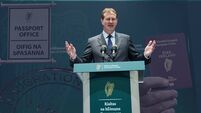
As of the end of 2025, the number of people employed in the State stood at 2.8 million — up from 2.4 million at the end of 2019. Picture: Denis Minihane
Total employment in the Irish economy increased by 19% since the end of 2019, driven by an increase in migration as well as the proportion of older people in the workforce increasing, new data from the Central Statistics Office (CSO) shows.
As of the end of 2025, the number of people employed in the State stood at 2.8 million — up from 2.4 million at the end of 2019. The CSO noted changing demographics — including fewer births and an ageing population — could have “implications for future labour supply”.

The CSO said its population and labour force projections indicate the labour force in Ireland could grow by between 337,000 and 610,000 people between 2022 and 2037, with migration and participation rates by sex and age likely to be factors in any increase.
Individuals aged 55 years and over made up 20% of the labour force as of the end of 2025, up from 10% at the end of 2000. The median age of Irish nationals in employment was 41 years, compared to 37 years for non-Irish nationals.
The 15-24 year age group is the only age group in which numbers in the labour force fell in absolute terms between the end of 2020 and 2025 — down 53,600 people.
CSO statistician Morgan O’Donnell said the total labour force was projected “to grow further in coming years, with older people likely to represent an increasing proportion of the workforce”.
Between 2019 and 2024, the number of employees working in the State increased by 355,332, of which non-Irish nationals contributed 61% of that growth.
In 2024, non-Irish nationals accounted for 27.5% of total employees, and represented a significant proportion of employees in the administrative and support services at 45.6%, accommodation and food service at 45.1%, as well as the information and communication sector at 41.4%.
Read More
After Irish nationals, 72.5%, the highest proportion of employees in 2024 were for those with Polish at 3.2%, Indian at 3.1%, and UK nationalities at 2.7%.
The highest level of employment at the end of last year was in the human health and social work activities sector, which accounted for 13.9% of all jobs, followed by industry — which does not include construction — at 12.5%, and wholesale and retail trade at 11.4%.
Since 2019, the number of people working in the human health and social work activities sector has increased by 95,100 — the largest increase of all economic sectors.
When it comes to demographic representation in companies, the CSO data shows that in 2025, 32% of senior executives in Ireland were female, while 28% of boards of directors members in Ireland were female, rising from 25% in 2023.
In 2024, just 31% of high earners were women.
Ireland’s employment rate for women was 70.9% in 2025, compared to 78.4% for men. The employment rate for women was the 15th highest in the EU in 2025, and compared to an employment rate for women of 78.9% in the Netherlands, the EU country with the highest employment rate for women.
In terms of earnings, the median weekly earnings for all sectors increased by 22.1% between 2019 and 2024 from €598.36 to €730.89, with the information and communication sector recording the highest median weekly earnings in 2024 at €1,440.36.
According to the CSO, Irish workers have consistently high rates of educational attainment, with 55% of people aged 25-74 years having a third-level qualification in Ireland in 2025, the highest in the EU.