ESRI warns new finance minister against stimulating the economy with tax cuts
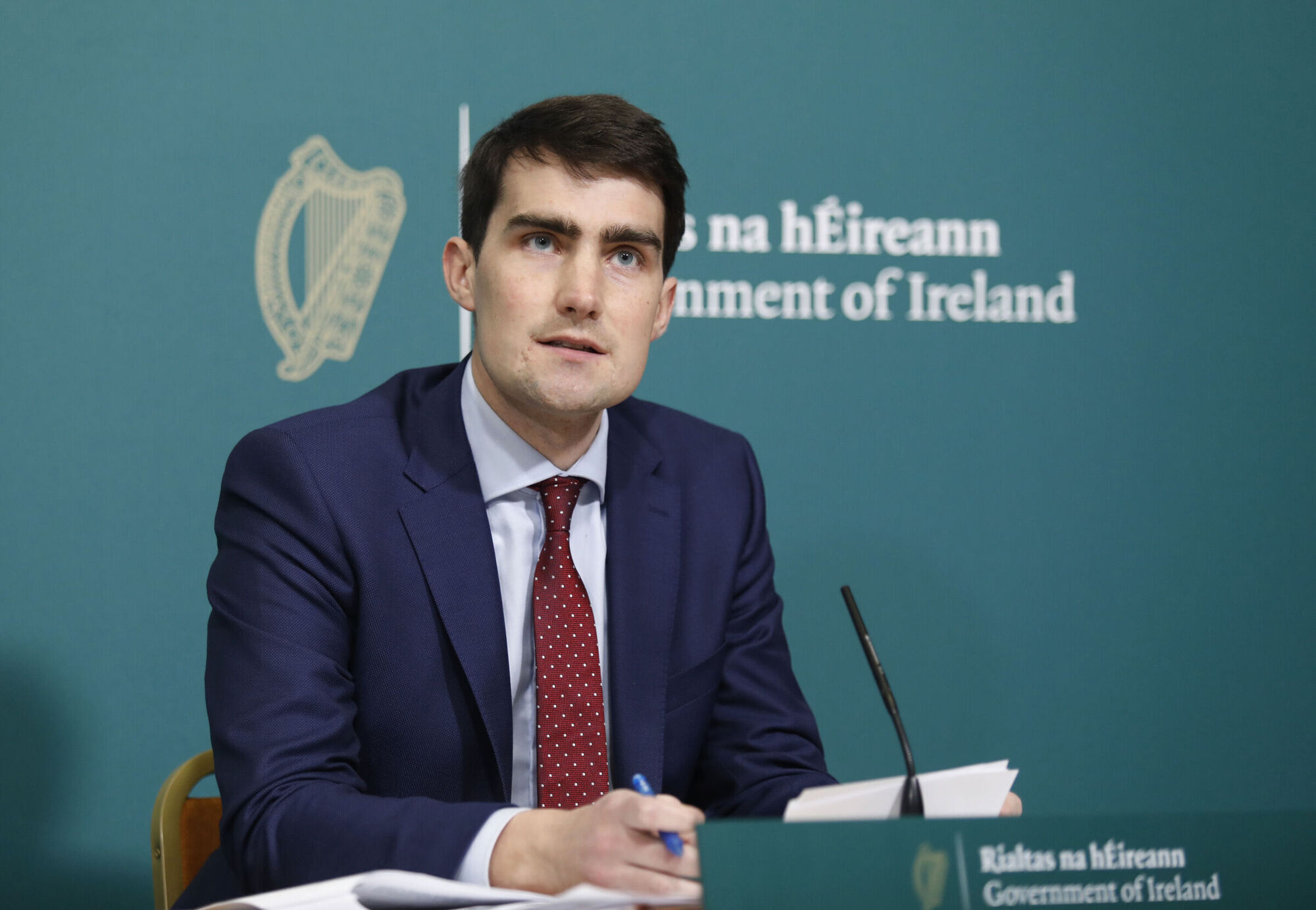
The warning comes ahead of the summer economic statement which is due to be released next month.
New Finance Minister Jack Chambers will have to show discipline when it comes to fiscal policy to ensure that the forthcoming budget does not “additionally stimulate the economy” through unaccounted for tax cuts, the Economic and Social Research Institute (ESRI) has said.
The warning comes as Mr Chambers prepares for the summer economic statement, due to be released next month, which will set out the parameters of the budget later this year. This will be the last budget of the coalition Government before an election is called.
In its latest quarterly economic bulletin, the ESRI said it is “imperative” that fiscal policy “be disciplined” to ensure that, while the Government increases expenditure particularly in investment, it does “not additionally stimulate the economy in other areas such as taxation”.
Research professor at the ESRI Kieran McQuinn said they have no problem indexing the tax bands to inflation, the issue comes when it comes to cutting taxation rates without clawing it back from other areas of the economy.
He added that if the Government wanted to make tax cuts it would have to ensure they are fiscally neutral.
“Care will have to be taken, especially in Budget 2025, to ensure that fiscal policy does not exacerbate the capacity constraints which may arise and lead to inflationary pressures,” the ESRI said.
The institute is forecasting moderate growth in the Irish economy this year and next. Gross domestic product, which is heavily influenced by the number of large multinational companies based here, is expected to grow by 2.5% this year and 3.2% in 2025.
Modified domestic demand — which excludes the activity of multinationals — will grow by 2.2% this year and by a further 2.9% next year. The pace of inflation is expected to continue to decrease with 2% projected for the rest of the year.
The ESRI said this, in combination with increasing nominal wages, has led to real wage growth for the first time in two years. Real wages are expected to grow by 2% this year and by 3% next year.
The ESRI suggests that consumption will “continue to grow strongly into 2024 and 2025 as real incomes recover” and the higher-than-expected savings ratio continues to provide a “potential boost to expenditure”.
The labour market is expected to remain strong with unemployment remaining just above 4%.
The ESRI said there are a number of risks to the domestic economy which include potential geopolitical shocks in both Europe and Asia. Another risk is maintaining investment levels in the presence of certain capacity constraints.
Among the other capacity constraints identified was housing. The ESRI said it is evident that while housing supply is on an upward trajectory, “it needs to increase at a faster pace if it is to meet the underlying demand for housing in the Irish economy”.
The institute added that net inward migration will play “an important role” in providing much-needed labour supply for many capital projects as well as the day-to-day running of the economy.

CONNECT WITH US TODAY



Be the first to know the latest news and updates