Government surplus tops €8.3bn as corporate tax receipts reach record levels
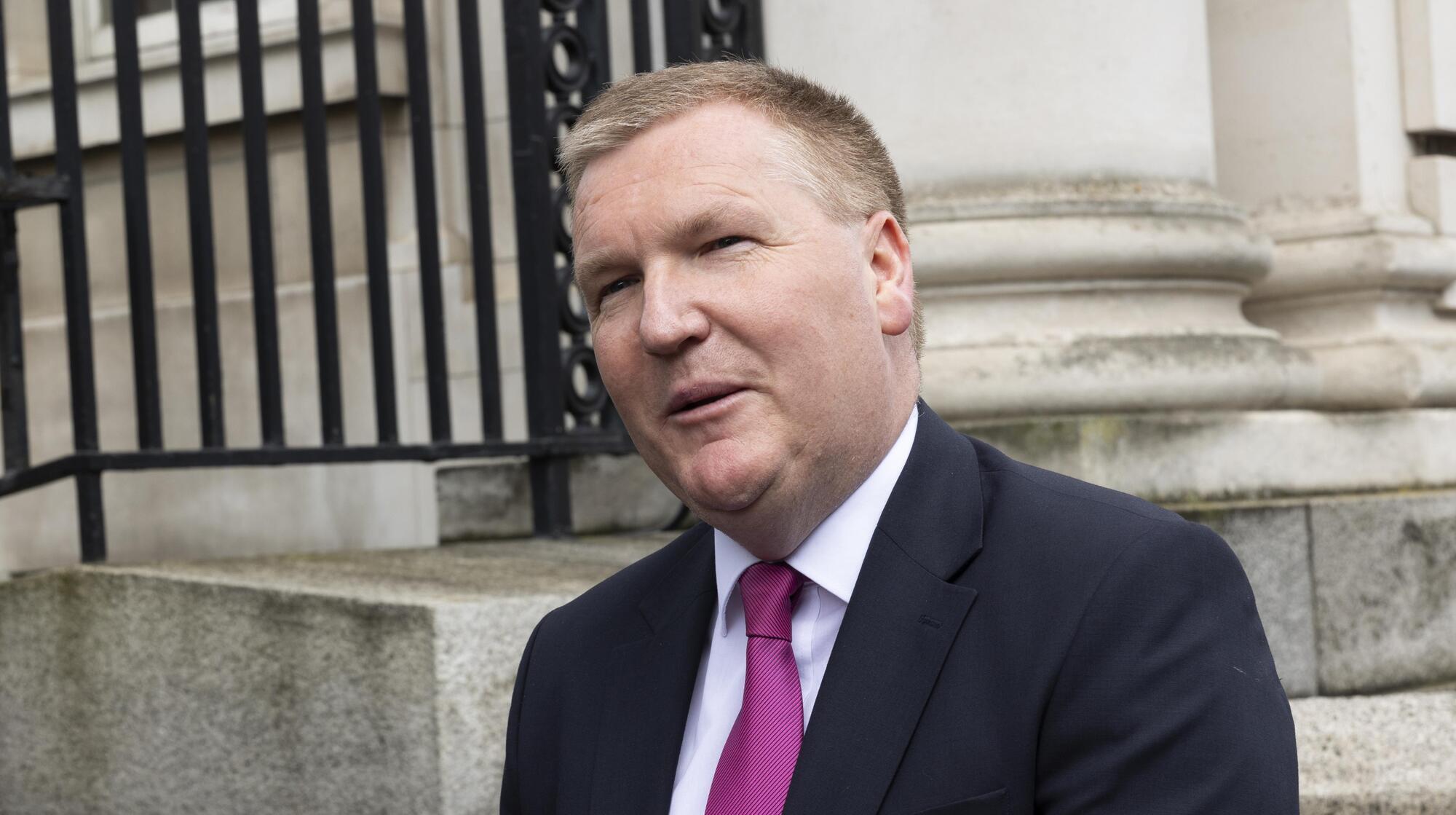
Welcoming the figures on Friday morning, Finance Minister Michael McGrath said the results "gives us options that are not open to many peer countries in the developed world."
A record year for corporate tax receipts has led to a government surplus of €8.3bn for 2023 with increased spending on employee compensations, cost-of-living measures and supports for Ukrainian refugees offsetting gains in revenue.
New figures released by the Central Statistics Office (CSO) on Friday show last year's surplus was 4% lower than the record €8.6bn reported for 2022, despite government revenue rising by €7.8bn last year to a total of €123.7bn in 2023.
However, increases in revenue were met with rising expenditure, which grew by €8.1bn to a total of €115.4bn in 2023.
This is the second successive year of positive fiscal accounts which follow large pandemic-induced budgetary deficits in 2020 and 2021.
The rise in spending was mainly due to "increases across most expenditure items, including compensation of employees, intermediate consumption, social benefits and gross fixed capital formation," the CSO said, adding that "cost of living measures and supports for Ukrainian refugees also contributed to a growth in expenditure."
Welcoming the figures on Friday morning, Finance Minister Michael McGrath said the results were "testament to the careful management of our public finances in recent years," adding that they "gives us options that are not open to many peer countries in the developed world."
“However, it is important not to lose sight of the fact that at least part of the surplus is due to the strength of corporation tax receipts, some of which is likely to prove windfall in nature."
Last year saw a record €23.8bn in corporate tax revenue, up from €22.6bn in 2022 and almost double the €11.95bn recorded in 2020.
"While our headline position is strong, this can change quickly given the inherent volatility in our corporation tax receipts and the dependence we have on revenues from a small number of multinational companies," Mr McGrath continued.
The Finance Minster stressed that windfall tax receipts are not to be used to finance permanent increases in expenditure or tax reductions, with the Government pushing to introduce legislation providing for the establishment of the Future Ireland Fund and the Infrastructure, Climate and Nature Fund.
Introduced last year, the Future Ireland Fund is part of the Government's longer-term strategy targeting Ireland's shifting demographics and is aimed at reducing impending budgetary costs and promoting inter-generational equity amid an aging population.
General government debt fell by €4.1bn to €220.7bn at the end of 2023, an equivalent to 43.7% of Gross Domestic Product (GDP), the CSO said.
It added that this is equivalent to 43.7% of GDP and represents debts of €41,781 per person, down from €43,354 in 2022.


CONNECT WITH US TODAY



Be the first to know the latest news and updates