Jim Power: Upcoming budget likely to lack long-term thinking and be highly political
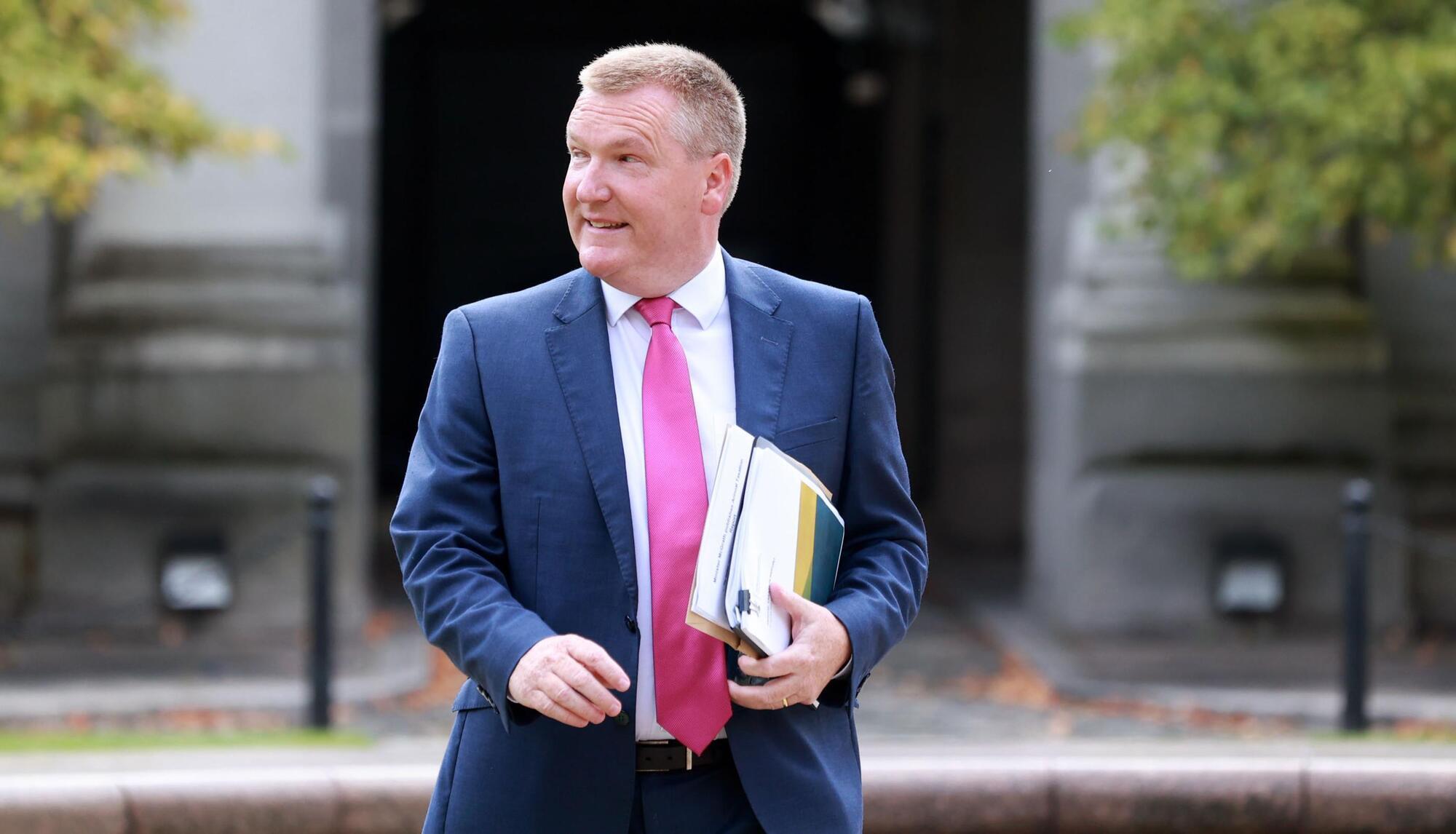
Finance Minister Michael McGrath said that the package will be €6.4bn, comprised of a little over €1.1bn in taxation measures and core expenditure of just over €5.2bn. Picture: Sam Boal / RollingNews.ie
In recent weeks Finance Minister Michael McGrath and Public Expenditure Minister Paschal Donohoe have received stern warnings from the Central Bank and the budgetary watchdog the Irish Fiscal Advisory Council (Ifac) about the dangers of giving too much stimulus in Budget 2024 to an economy that is, by and large, growing at a healthy pace.
These warnings are likely to be largely ignored as political imperatives will most likely overrule what would make sound economic sense in an ideal world, which this is certainly not.
Pro-cyclical fiscal policy is never a good idea, but our history shows us that we are not very good at counter-cyclical policy.
The upcoming budget is scheduled to be the second-last ahead of a general election that is due by February 2025. One thing we can be certain of, regardless of the nature of the package delivered, the Opposition spokespeople will stand up in the Dáil and berate the Government and argue they would spend a lot more. In the same breath, some of them will likely describe the budget as irresponsible.
Earlier this week in an Oireachtas committee, Mr McGrath said that the package will be €6.4bn, comprised of a little over €1.1bn in taxation measures and core expenditure of just over €5.2bn. This would bring net core spending growth to 6.1%, which is well above the 5% expenditure target set out in the Government’s original medium-term fiscal strategy.
This will be justified based on the ongoing cost-of-living and cost-of-doing-business pressures, which are not going away.
The flash estimate of the EU harmonised measure of inflation increased in September to an annual rate of 5%. During the month of September, energy prices increased by 3.7% and food prices increased by 0.4%. Crude oil prices have increased by almost 33% since the end of June. Cost pressures for households and businesses are still very much alive.
In addition to the pre-announced package of €6.4bn, there will be a significant package of once-off supports to assist with the cost of living, and the cost of doing business.
Bodies such as Ifac and the Central Bank will likely be critical of the package that is delivered, but those bodies do not have to operate in the world of real politics, as elected representatives do.
The reality is that with Sinn Féin continuing to strengthen in the polls, Budget 2024 will have to be driven by a strong political imperative to sway voters’ intentions. However, it is difficult to see how any size of budgetary package would turn the polls around, as the biggest issue for younger voters is housing.
The Government’s progress is not very impressive in that arena. Housing has simply not been given the crisis status that it undoubtedly warrants.
Budget 2024 is likely to be another scattergun approach to economic policy, with something small for everybody in the audience.
Most of us will wake up the following morning slightly better off, and nobody significantly better off. As is the case with most budgets, it will likely lack a longer-term strategic focus.
Unfortunately, the long-term for politicians rarely extends beyond the next election.
This week, the National Competitiveness and Productivity Council identified four strategic challenges for Ireland. These include reducing the cost of doing business; significantly improve the planning, development, and delivery of infrastructure; accelerate progress on the usage and generation of energy in line with the climate targets; and enable stronger productivity growth through research, development, and innovation.
These four challenges should guide fiscal policy, but they won’t. Meanwhile, we should be careful about wasting scarce resources in the face of a potentially even more challenging global outlook.

CONNECT WITH US TODAY



Be the first to know the latest news and updates