Do the numbers add up for cost of new minimum wage?
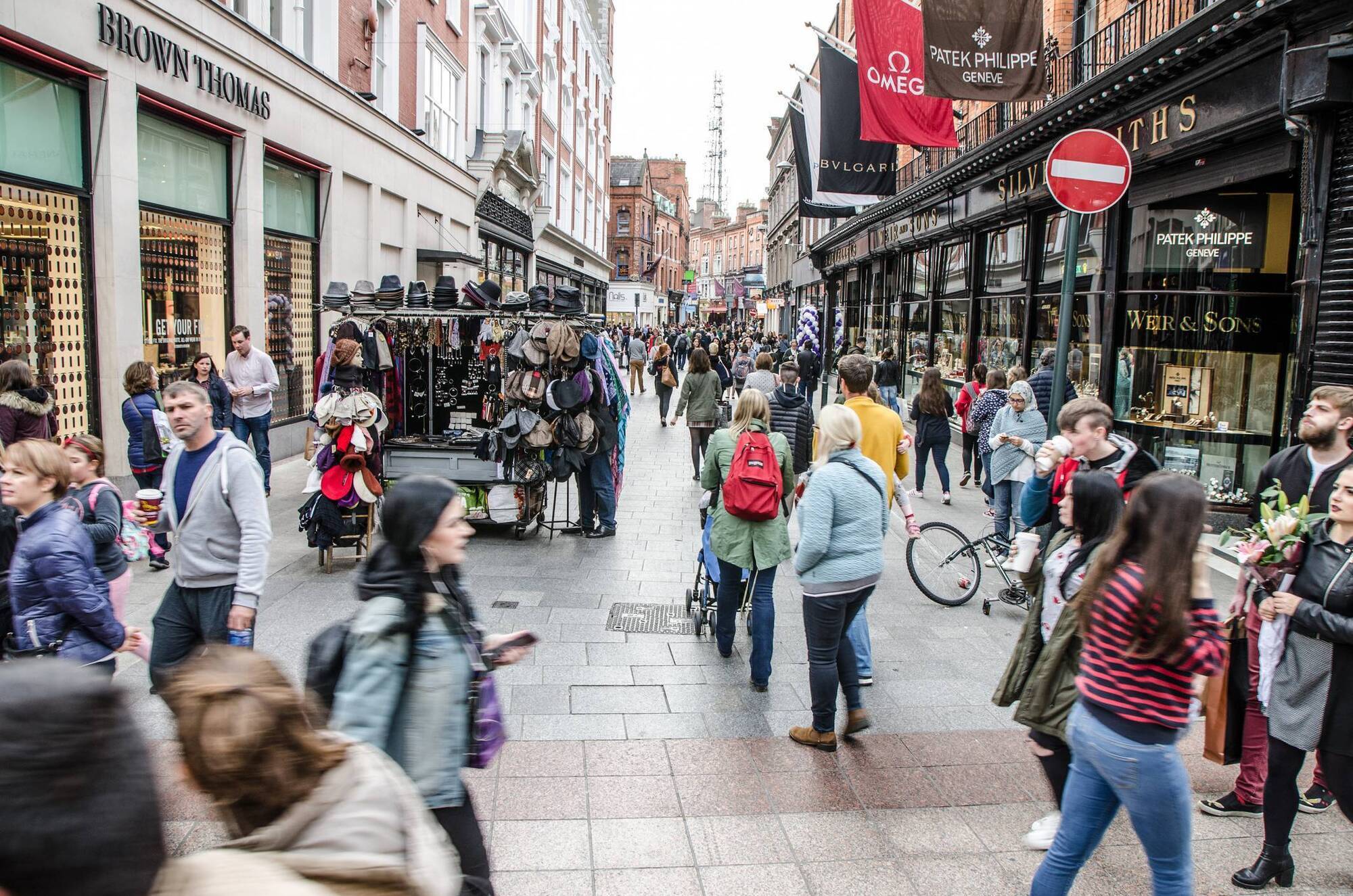
The Government looks set to confirm a significant increase in the minimum wage given soaring inflation but is still not enough to get to the goal of benchmarking it to 60% of the country’s median wage.
The budget which ministers Michael McGrath and Paschal Donohoe are set to present next month to the Oireachtas is going to be consequential for a lot of people and businesses still struggling with rising inflation, high-interest rates, and the increasing pressure brought on by the cost-of-living crisis.
The inflation environment is not as volatile as it was during the budget last year but remains embedded, running at 5.8% in the year to July with no signs of it dropping dramatically any time soon.
This high rate of inflation is having a particular impact on the lowest earners in the country as it continues to eat into wages but there is one lever that Minister McGrath is expected to pull to help these people and that is to increase the national minimum wage currently set at €11.30 an hour.
Over the summer, the Low Pay Commission recommended a 12% increase in the minimum wage which would bring it up to €12.70 an hour. In previous years, the Government has generally followed the advice of the commission when it came to increasing the minimum wage.
However, businesses, particularly smaller ones, are concerned that this kind of increase to the minimum wage would mean wages increase across the board - even for those currently earning more than that - as it is seen as a new benchmark.
Business owners have said that they will have to potentially cut hours, increase prices, or find other solutions such as automation to reduce their overhead.
Mark Bundschu, owner of ABC Bookshop which has four locations, said whatever the percentage increase in the minimum wage is decided on in the budget, is going to be reflected across your entire wage bill over the next 12 months regardless of whether an employee is on the minimum wage or higher.
“If the minimum wage goes up by 12%, the wages over the following 12 months will increase by 12%,” he said.
Mr Bundschu said that some businesses can move to self-service checkouts or automation to reduce the expenditure on wages but others only have a handful of options.
“You can increase your prices, which is absolutely going to happen… Hopefully you don’t lose any sales as a result of it.” Mr Bundschu said his company is going to have to change its recruitment policy as they are not going to take on any more unskilled staff.
“We just want to get better and quicker at training but no excess fat whatsoever in the business,” he said.
He added that they will need to look at cutting hours as well as look into automation solutions that may be suitable for his stores.
Philip Hurley, owner of Wild Side Sports in Bandon in Cork which opened in April 2011, said that staffing costs are the company’s second biggest expense following stock and if wages goes up he is going to have to make some tough decisions.
He said that the minimum wage is used as a starting point for “how you value your staff” and even if a person is not on the minimum wage, you have to reflect the increase in their wages if you want to keep your staff.
“Nobody can argue that a minimum wage is not a very important thing to have in a society. It has to be measured how that impacts on all the other costs of living,” Mr Philip said.
“A living wage in Dublin is very very different to a living wage for someone living in west Cork. It won’t ever be approached from that perspective because that wouldn't be acceptable.” He points out that someone on the minimum wage in Dublin would find themselves struggling whereas a person living in Bandon might not.
Mr Hurley added that you can see the impact of the cost-of-living crisis in their store as people just don’t have the disposable income that they may have had before.
“Since 2020-2021, we’ve had Brexit, we’ve had covid, then we had the war which created a supply shock which is what has brought about the cost of living crisis. Then you have interest rate rises,” he said.
Mr Philip added that businesses are going through the cost-of-living crisis just like everyone else.
Dr Paul Redmond, senior research officer with the Economic and Social Research Institute (ESRI), said quite a lot of people on minimum wage are younger people, often students, working a lower amount of hours and are not at risk of poverty.
They are also often employed in businesses such as restaurants, hotels, and retail stores.
“One of the ideas of minimum wage is to redress the balance in bargaining power between employers and the lowest paid workers in society. When you increase the minimum wage, we found that it reduces wage inequality as you would expect it would,” he said.
Dr Redmond said that the minimum wage increases, it does affect some businesses more than others but the proportion of businesses that have most of their employees on the wage is very low.
Research from the ESRI found that three-quarters of firms in Ireland have no staff on the minimum wage while 12% had 10% or less of their workforce on it. Just over 3% of firms in Ireland have staff where half are on the minimum wage.
“When you think of minimum wage employers, they are more likely to be accommodation and food, or retail employers. For a minimum wage increase to have a big impact on their overall wage bill, they’d really want to be employing quite a few minimum wage workers.
“A common employer of minimum wage workers are things like housekeepers in big hotel chains or porters. It is really unlikely that that kind of a scenario that a minimum wage increase is going to have much of an impact on their overall average labour costs,” Dr Redmond said.
“If you think about your small family-run newsagents, suppose they just have a couple of employees on the minimum wage, then that could have a significant impact on their average labour costs.” “Overall, the number of firms and the intensity by which they are going to be impacted is going to be low.” However, Dr Redmond did confirm that there is a “spill-over effect” of the minimum wage increase is that employers earning more than that will also be looking for a pay bump.
Finbarr Finlan, owner of a Centra in Sligo and vice-chair of the Irish Small and Medium Enterprise Association (ISME), said increasing the minimum wage is the Government forcing costs on to businesses and “ultimately those costs have to be passed back on to the customer”.
He said that the Government should look at alternatives to increase people’s standard of living such as reducing VAT, making childcare more affordable and doing more on the housing crisis.
“We need to start looking at the bigger picture,” he said.
“There is this disconnect out there that when you increase the minimum wage, it is only for the people on the minimum wage but that is a falsehood because in my business when I go from €11.30 to €12.70, the people that I currently have on €12.70 will go up.
“In all businesses, it is across the board,” he said.
He added that it's an employee market at the moment and if businesses don’t increase wages “they will just walk”.
“So businesses will be left with no option but to increase it across the board,” he said.
The labour market in Ireland is currently very tight and is expected to remain so for the foreseeable future. The unemployment rate was 4.1% in August.
However, certain sectors of the economy are experiencing an even tighter labour market than others.
The Irish Fiscal Advisory Council recently said the Irish economy is in an “unusually strong position” and is now “beyond full employment” with many sectors, particularly construction, experiencing an extremely difficult labour market.
On top of the minimum wage, business-owners are also concerned about all the added expenses that the Government is requiring them to shoulder in recent years.
The increase in the minimum wage, along with other pay increases that might come as a result, would cause employer PRSI contributions to go up.
In addition, they complained about the introduction of statutory sick pay as well as the looming introduction of the pension auto-enrolment in the coming years.
Last month, Taoiseach Leo Varadkar vowed that the budget would include a package of measures for businesses that will recognise the additional costs coming down the line, including the expected increase in the minimum wage.
He added that the Government would likely accept the Low Pay Commission’s recommendation on increasing the minimum wage.
Should the Government go ahead with the increase recommended by the Low Pay Commission, this will be one of the largest increases ever seen in the minimum wage.
However, Dr Redmond pointed out that this isn’t even enough to get to the Government’s goal of benchmarking the minimum wage to 60% of the country’s median wage.
Late last year, a new national living wage was agreed and will replace the minimum wage by 2026. It is due to be phased in over a four-year period and will be set at 60% of the hourly median wage.
It was estimated at the time, the minimum wage would have to be set at €13.10 per hour this year to reach that target with more increases likely to come next year as wages across the board increase further.
CONNECT WITH US TODAY



Be the first to know the latest news and updates