Eoghan O’Mara Walsh: North America delivers for Irish tourism this summer
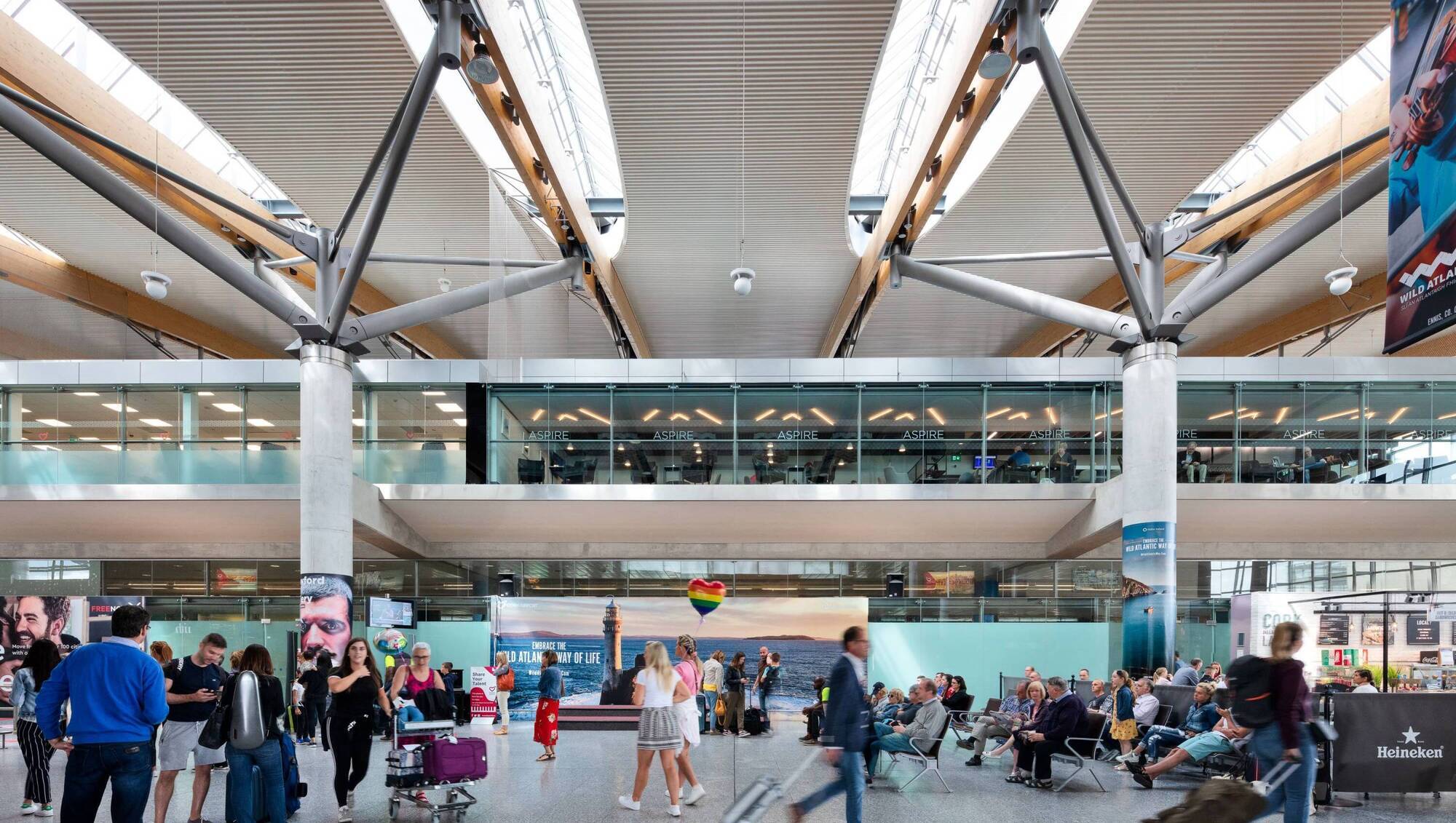
Cork Airport is seeing its passenger numbers increase this year.
Where is Irish tourism at? As we hit peak summer it is a good question but one that no one can answer definitively.
There’s a prevailing narrative of expensive hotel rooms, plentiful American accents, and busy airports — after the ravages of the pandemic, Irish tourism is surely back and booming.
Or is it? Delve a little deeper into each of these areas and a more complex tale emerges.
Let’s start with those hotel room rates, a subject that grabs public and media attention regularly.
Yes, they have increased substantially but in fact at a less fast pace than the costs of business that accommodation providers have been wrestling with.
The situation is further complicated by the Government’s over-reliance on tourism accommodation to house Ukrainian refugees and international asylum seekers.
One in five visitor bedrooms is now no longer available to the tourism economy.
With increased business costs allied to suppressed availability is it any wonder that hotel room rates have increased?
The answer, just like the housing crisis, is increased supply.
Put simply, Ireland needs far more hotels in order to moderate prices and meet projected demand and the Government may well have to introduce incentives and allowances for developers to enable new supply.
And what about the Americans and their valuable dollars?
Thankfully the North American market is performing strongly this year and Aer Lingus’s rapid reinstatement of their transatlantic capacity has been a boon for Irish tourism.
But while North American business may be robust there are worrying signs from Britain and Germany, two key source markets.
The former is suffering from Brexit blues with an economy facing recession, while the latter has seen a double-digit drop in air connectivity to Ireland.
To the great frustration of the industry, there is still no national data on international visitor numbers coming into the country and tourism leaders worry that, as a result, Government policy is being made in a data vacuum.
Shannon and Cork airports are performing well which is so important to regional Ireland, and the behemoth that is Dublin Airport is having a strong year.
But industry intelligence suggests that there has been a noticeable shift in Irish outbound travel compared to inbound international visitors. The former has increased its share of airport traffic quite significantly.
Dublin’s woes of late, from night time flying restrictions to curtailed car parking capacity, show that Daa's ambitions are not matched by the country’s planning framework.
If tourism, to say nothing of foreign investment and exports, is to grow, then Dublin must to be allowed expand.
A cap on flights as the current planning legislation articulates is an outdated approach.
Most other European capital cities operate on the basis of the quantum of noise that affects the locality and such a policy should be put in place in Dublin.
Ironically Daa and Fingal County Council are in agreement on this and both await a decision from An Bord Pleanála.
The Central Statistics Office recently produced a valuable deep dive into the importance of the tourism sector to the national economy.
The Tourism Satellite Account used 2019 data — the last full year of data pre-pandemic — and estimated that the sector is worth over €10bn annually and accounts for 4.4% of the national economy.
There are 46,000 tourism enterprises and a remarkable 13% of the national workforce is employed in the tourism and hospitality industry.
The CSO data definitively proves that tourism is the country’s largest indigenous industry and biggest regional employer.
The sector has eagerly embraced the sustainability agenda too and the Midlands has secured €68m of tourism investment over the next three years from the EU’s Just Transition Fund as the region moves away from peat production.
However, the over-reliance on a handful of multinationals for corporation tax receipts shows that Government must support and nurture indigenous industries such as tourism.
Huge swathes of regional Ireland depend on a vibrant tourism industry.
Revenue for parts of the sector may have returned to pre-pandemic levels but much of this is fuelled by inflation and the profitability of business is under serious pressure.
The Government must underpin rather than undermine Ireland’s tourism industry starting with deferring the the upcoming Vat hike on the sector.


A collection of the latest business articles and business analysis from Cork.
CONNECT WITH US TODAY



Be the first to know the latest news and updates