Budget will support businesses with the cost of minimum wage hike – Varadkar
However, Isme said that if minimum wage increases are so large that firms require state support, they should not go ahead
Budget will support businesses with the cost of minimum wage hike – Varadkar

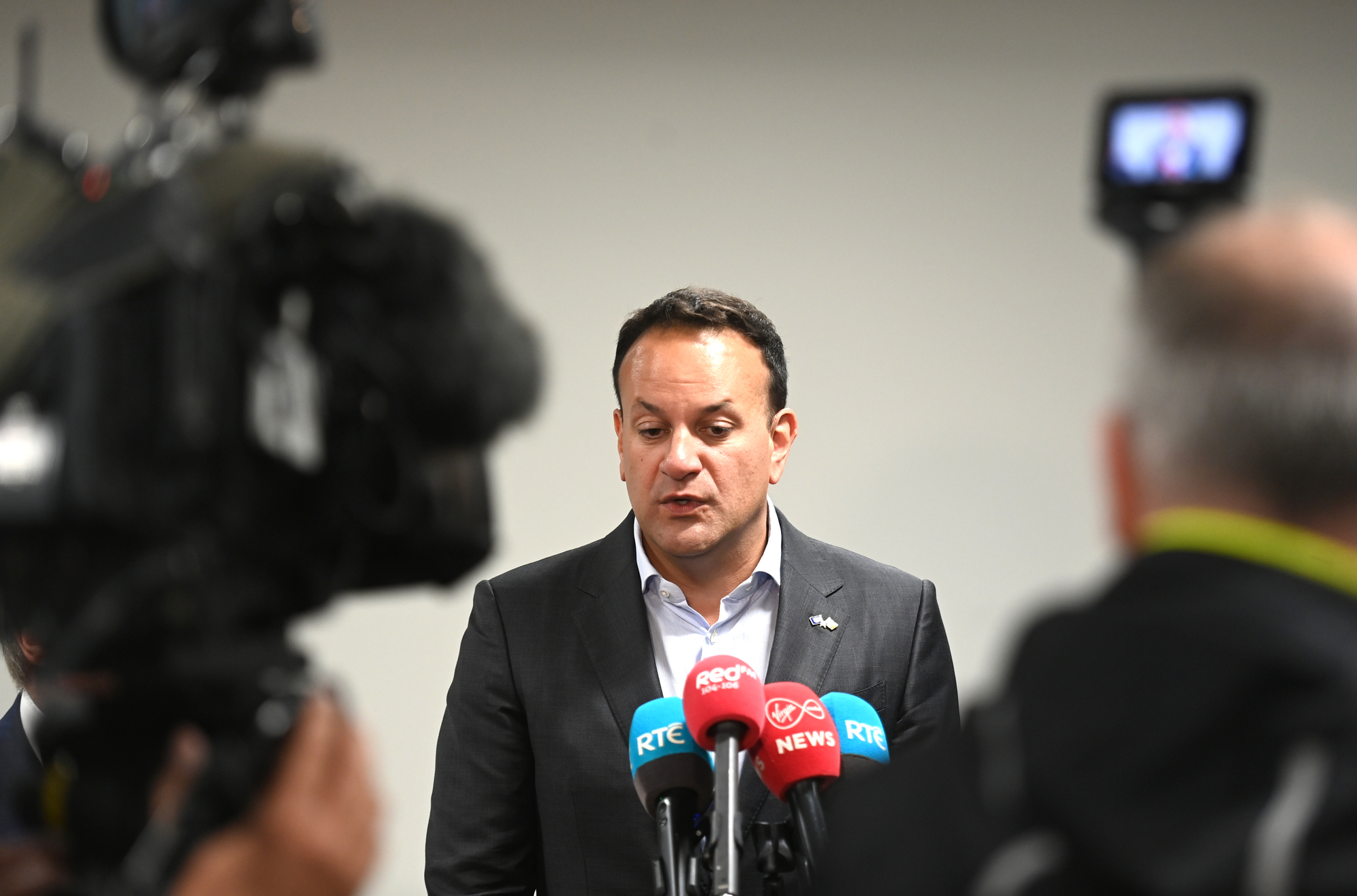
Taoiseach Leo Varadkar said Budget 2024 would include a package for firms 'recognising that a lot of additional costs are going to come the way of businesses'. File picture: Larry Cummins

Taoiseach Leo Varadkar has vowed Budget 2024 will include a package of measures for businesses that will recognise the additional costs coming down the line, including the expected increase in the minimum wage.

The Government is awaiting a report from the Low Pay Commission, which is expected to recommend a double-digit increase in the minimum wage to keep it well above inflation.

The Taoiseach said recently that the Government would likely accept the commission’s recommendation.

Business group Isme wrote to Mr Varadkar last week to highlight the impact of the reported increase, saying the measure will create a financially unsustainable situation for many small and medium businesses.

“The retail members of Isme estimate that the 12.4% wage impact of the national minimum wage will add between 1% and 2.5% to grocery bills, depending on store size,” Isme chair Marc O’Dwyer said.

Isme chairman Marc O’Dwyer: 'Where businesses cannot afford to pay NMW [national minimum wage] increases, they simply reduce employee hours worked, negating the justification for the increase in the first place.' File picture: isme.ie

“The current earnings in small business average €720.33 per week, or €37,457 per annum, and we genuinely feel the hard work done by the Low Pay Commission lacks context around the fact that the majority of Irish workers are employed by SMEs, with earnings that are reflective of this, and not the exceptional premiums earned in FDI businesses and the public service.

Speaking in Cork in recent days, Mr Varadkar said the budget will again focus on the impact of the cost-of-living crisis for both households and businesses.

“There will be a package for business recognising that a lot of additional costs are going to come the way of businesses,” Mr Varadkar said. “Small businesses, in particular, such as the increase in the minimum wage and other costs as well.”

“The exchequer figures indicate that we will record a very significant surplus this year. There has been a lot of talk about projected surpluses that haven’t happened yet. This is a surplus that has happened.

“We will have the money, if you like, in the bank come October and that will allow us to do a number of one-off measures that will take effect in this calendar year.”

The Government collected a record €47.8bn in tax revenues for the first seven months of the year, providing further temptation for spending increases when the budget is announced in October, but Mr Varadkar said they would act cautiously.

“It is really important, as a country, that we don’t engage in any hubris here. We have seen, in the past, how quickly a small, open economy like Ireland can be affected by making the wrong policy choices and by events that happen internationally.”

“That is why we are taking the decision to set aside about €10bn from the surplus next year to pay down the debt.

“To set that aside for future infrastructure costs. To set it aside for future pension costs and I think that is the right decision.”

However, Mr O’Dwyer said support measures for businesses to pay increases to the minimum wage were counterproductive.

“There have been suggestions that businesses may be supported by government in delivering the increased national minimum wage in January. We consider this possibility unwise,” he said.

“If proposed increases in the NMW [national minimum wage] are so large that businesses require state support, they clearly should not go ahead. In our view, the social wage and social welfare supports should be used to bridge identified gaps, not an increase in the NMW.

“Research the Government has already seen suggests that where businesses cannot afford to pay NMW increases, they simply reduce employee hours worked, negating the justification for the increase in the first place.”

More in this section

The Business Hub

Newsletter

News and analysis on business, money and jobs from Munster and beyond by our expert team of business writers.

Cookie Policy Privacy Policy Brand Safety FAQ Help Contact Us Terms and Conditions

© Examiner Echo Group Limited