Britain's economy is likely to fall further behind eurozone next year

While the UK struggles to build any momentum, the eurozone is expected to grow by 0.5% this year and 1% next, as strong rebounds from France, Italy and Spain — and Germany in 2024 — help boost the area’s performance, according to a new survey
Britain's economy is likely to fall further behind eurozone next year

British prime minister Rishi Sunak with European Commission president Ursula Von Der Leyen. Economists expect Mr Sunak will hit his target of halving inflation by the end of the year.

Britain’s economic growth will fall further behind the eurozone next year, and inflation will remain stubbornly high, according to new forecasts that paint a bleak backdrop for the next general election.

Gross domestic product is expected to grow by 0.6% in 2024, well below the 1% gain anticipated in the euro area, a monthly survey of economists by Bloomberg showed. 

The UK figure was revised down by 0.3 percentage points from the last reading, the biggest change in the poll. This year may deliver a meagre 0.2% growth.

While some economists, including Bloomberg’s own analysts, have raised the spectre of a potential recession this year, most surveyed still expect the UK to avoid a prolonged contraction. 

Still, they see a deteriorating outlook and stagnation through 2024, which will do little to support prime minister Rishi Sunak’s bid to win an election that must be held by early 2025.

Confidence has dropped sharply among the chief financial officers of some of the UK’s biggest listed companies. A net balance of 10% of CFOs surveyed by Deloitte were less optimistic about their businesses’ financial prospects than three months ago, down from a balance of 25% who were more optimistic in the first quarter.

Both the Conservative government and Labour opposition will put the economy at the centre of their election campaigns in an attempt to win over beleaguered households and businesses. The Conservatives currently have just 25% of the vote compared to Labour’s 43%, according to the latest YouGov/Times poll.

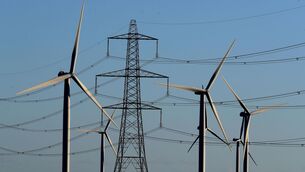
The Confederation of British Industry waded into the debate in a report on Monday suggesting green growth — projects to move the UK away from fossil fuels and toward clean energy — could deliver a £57bn (€66bn) boost to GDP by 2030, equivalent to between 1.6% and 2.4% of GDP.

While the UK struggles to build any momentum, the eurozone is expected to grow by 0.5% this year and 1% next, as strong rebounds from France, Italy and Spain — and Germany in 2024 — help boost the area’s performance, according to the Bloomberg survey.

Inflation expectations for the UK were also revised up more than for any other major European economy. Economists expect Mr Sunak will hit his target of halving inflation by the end of the year, but they are now predicting that rate for the fourth quarter will be 4.8%, up from 4.6% previously.

• Bloomberg

More in this section

The Business Hub

Newsletter

News and analysis on business, money and jobs from Munster and beyond by our expert team of business writers.

Cookie Policy Privacy Policy Brand Safety FAQ Help Contact Us Terms and Conditions

© Examiner Echo Group Limited