'We’ve faced challenges before and been successful,' says IDA South West boss
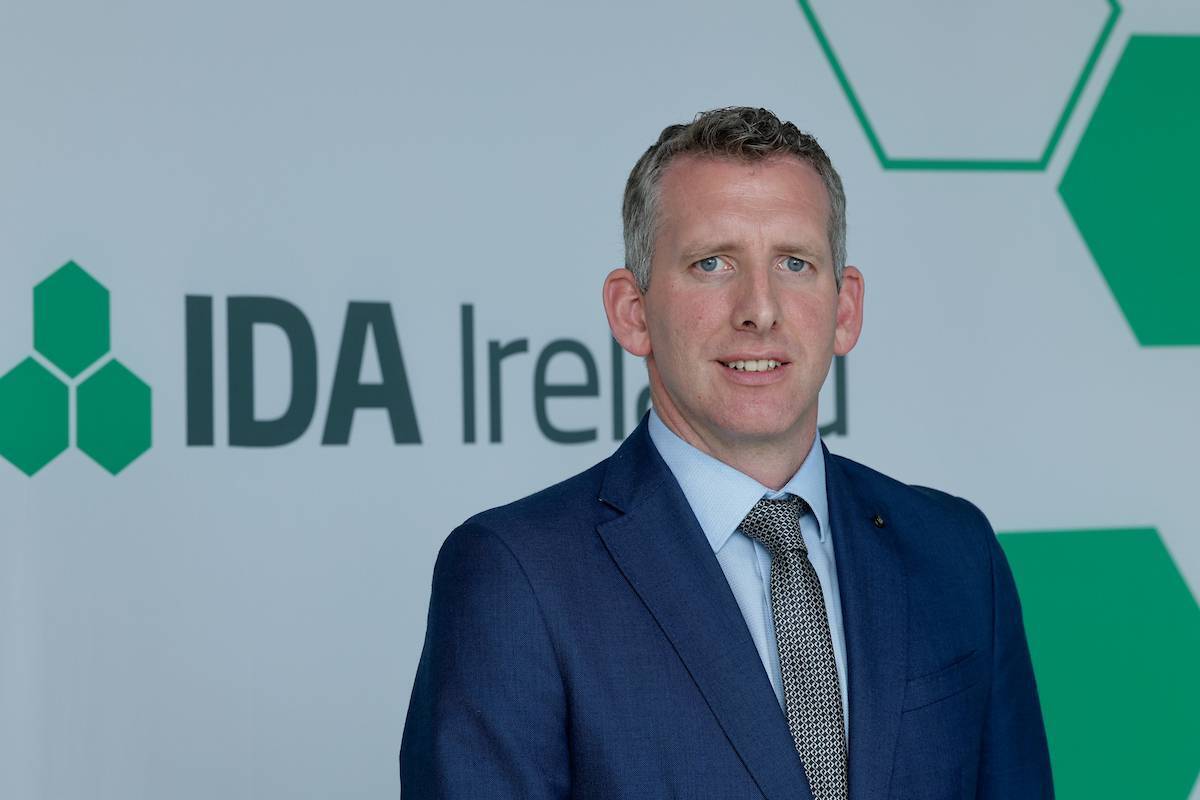
Patrick Doyle was coy about divulging details about investment plans for the region next year but said there is “healthy pipeline for the next two quarters”.
Four months ago, Patrick Doyle became IDA Ireland’s regional manager for the South West in a time of growing uncertainty for securing foreign direct investment.
This year, companies have been navigating the consequences of record inflation levels, constrained supply chains, soaring energy costs and the fall-out of Brexit.
Since Mr Doyle took up his latest appointment, there has also been a downturn in the tech industry with Twitter, Stripe, Meta and Intel among the multinationals cutting their workforce around the globe.
Despite all of these economic headwinds, Mr Doyle remains confident about the future of multinationals in Ireland, especially in the South West. “There is still strong confidence in Ireland as a location to invest in,” said Mr Doyle.
“Across the region, we’ve faced challenges before and been successful,” he said.
Mr Doyle was coy about divulging details around investment plans for the region next year but said there is a “healthy pipeline for the next two quarters”. This reflected recent comments made by IDA’s interim CEO Mary Buckley at the State body’s annual results briefing earlier this month.
“In the face of such uncertainty, we are likely to see companies adopt a cautious approach, so slower growth is likely in 2023 with less clarity in H2 of next year,” said Ms Buckley.
The uncertainty in the tech sector could lead to a greater focus on investment for pharmaceutical and life science multinationals, hinted Mr Doyle. “I think certainly the life science and pharma space, there’s opportunities there,” he said.
Switching the attention from tech to pharma in terms of securing investment would be a boon for Mr Doyle and the South West region in general as it has become an intentional hub for pharma multinationals in recent years with Stryker, Pfizer and Johnson & Johnson operating bases in the area.
However, Mr Doyle said the IDA will still market the region for further tech investment. “Is there a slowdown in tech? Yes of course. But there’s still a very strong technology base here in Cork,” he said.
“And while investment may slow down, there’s no companies here exiting the market,” said Mr Doyle. Two tech multinationals that operate out of Cork are Dell and Apple, showing that some of the world’s biggest companies are not just choosing Dublin for their European base.
Some companies will naturally “gravitate” towards Dublin, said Mr Doyle, but he added that the region he works on remains “the largest region for FDI outside of Dublin”.
However, if investment is to continue to grow in the South West, especially during this period of uncertainty, Mr Doyle said the supply of housing needs to speed up. The availability of talent and housing are the “main concerns” he is hearing on the ground from client companies.
This echoed comments from Chamber of Commerce CEO Michelle Aylward who told the that businesses in the county are struggling to expand due to a lack of housing for staff.
Employers that cannot offer remote working are finding it difficult to hire staff due to a lack of rental accommodation, she said. Mr Doyle remains hopeful though and said that “while things are looking challenging ahead we work and we partner closely with our clients at all times”.
Multinationals continue to help drive the State's tax revenues and are used to create extra financial padding in budgets. For every €8 that is collected in tax revenue in Ireland’s economy, €1 out of that comes from multinationals.
However, the Economic and Social Research Institute (ESRI) recently said that heavy reliance on multinationals has left Ireland’s economy vulnerable to shocks. Budgetary watchdog the Irish Fiscal Advisory Council (Ifac) also urged government to be cautious when it comes these “risky revenues”.
This has led to government publishing a risk analysis on Ireland’s corporation tax ahead of this year's Budget. “I’ve recognised for some time that there is a concentration risk here,” said former Minister Paschal Donohoe in September, while he was in the role of Minister for Finance.
Mr Donohoe made these comments before the tech downturn. Government added that there is a compelling case to treat a portion of corporation tax receipts as volatile into the future.
CONNECT WITH US TODAY



Be the first to know the latest news and updates