Ben Bernanke shares Nobel Economics Prize for research into crisis-era banks
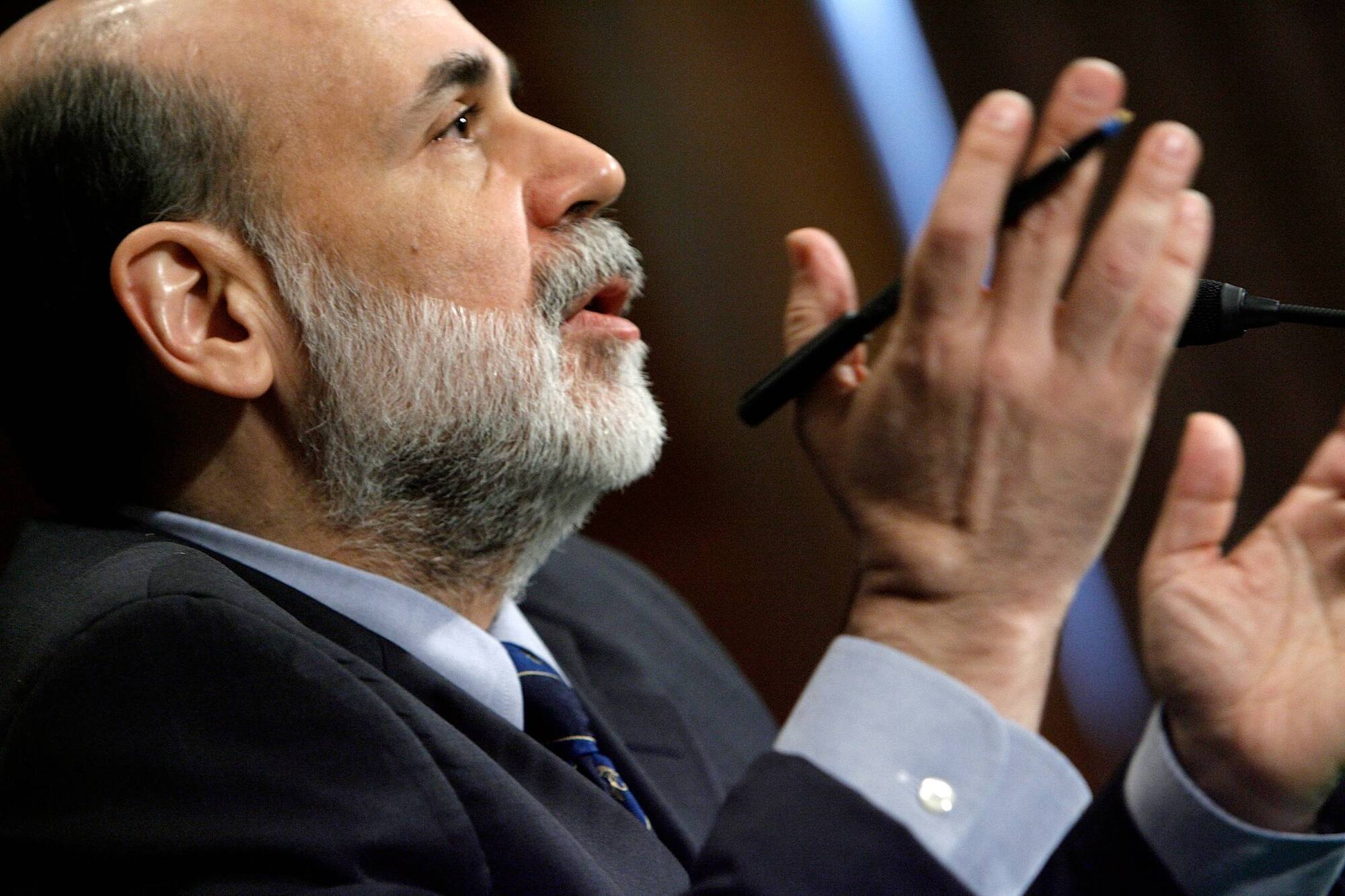
Former US Federal Reserve chair Ben Bernanke argued at the time that there was no legal way to save Lehman so the next best thing was to let it fail and use the government's financial resources to prevent wider systemic failures.
A trio of US economists, including former Federal Reserve chair Ben Bernanke, have won this year's Nobel Economics Prize for laying the foundation of how world powers now tackle global crises like the recent pandemic or the Great Recession of 2008.
The trio, who also include Douglas Diamond and Philip Dybvig, won for their research on how regulating banks and propping up failing lenders with public cash can stave off an even deeper economic crisis, such as the Great Depression of the 1930s.
"The actions taken by central banks and financial regulators around the world in confronting two recent major crises – the Great Recession and the economic downturn that was generated by the Covid-19 pandemic – were in large part motivated by the laureates’ research," the Swedish Academy said in announcing this year's prize winners.
Governments around the world bailed out banks in 2008 and 2009, generating a torrent of criticism as ordinary consumers suffered with many losing their homes even as banks, a key culprit of the crisis, were saved. The Irish Government paying for the private bond debts of Irish banks meant the State here needed to seek a bailout from the international troika.
"Even though these bailouts have problems, ... they could actually be good for society," Mr Diamond, a University of Chicago professor, told a news conference, arguing that preventing the collapse of investment bank Lehman Brothers would have made the crisis less severe.
Ironically, Mr Bernanke was the chair of the US Federal Reserve at the time of Lehman's collapse in 2008, which became one of the main catalysts of the world's biggest financial turmoil since the 1930s.
Mr Bernanke, now a fellow at the Brooking Institution, argued at the time that there was no legal way to save Lehman so the next best thing was to let it fail and use the government's financial resources to prevent wider systemic failures.
Part of that response, including ultra-low interest rates and massive central bank asset buys, are being reversed now as inflation is at its highest level in around a half a century in many parts of the world.
"What Bernanke did was to show that banks played a central role in turning relatively small recessions into the depression in the 30s, and that was the worst economic crisis that the world has seen ever since," Professor John Hassler, member of committee for the Nobel Prize for Economics, said.
Bank runs can easily become self-fulfilling leading to the collapse of an institution and putting the entire financial sector at risk. "These dangerous dynamics can be prevented through the government providing deposit insurance and acting as a lender of last resort to banks," the academy said.
CONNECT WITH US TODAY



Be the first to know the latest news and updates