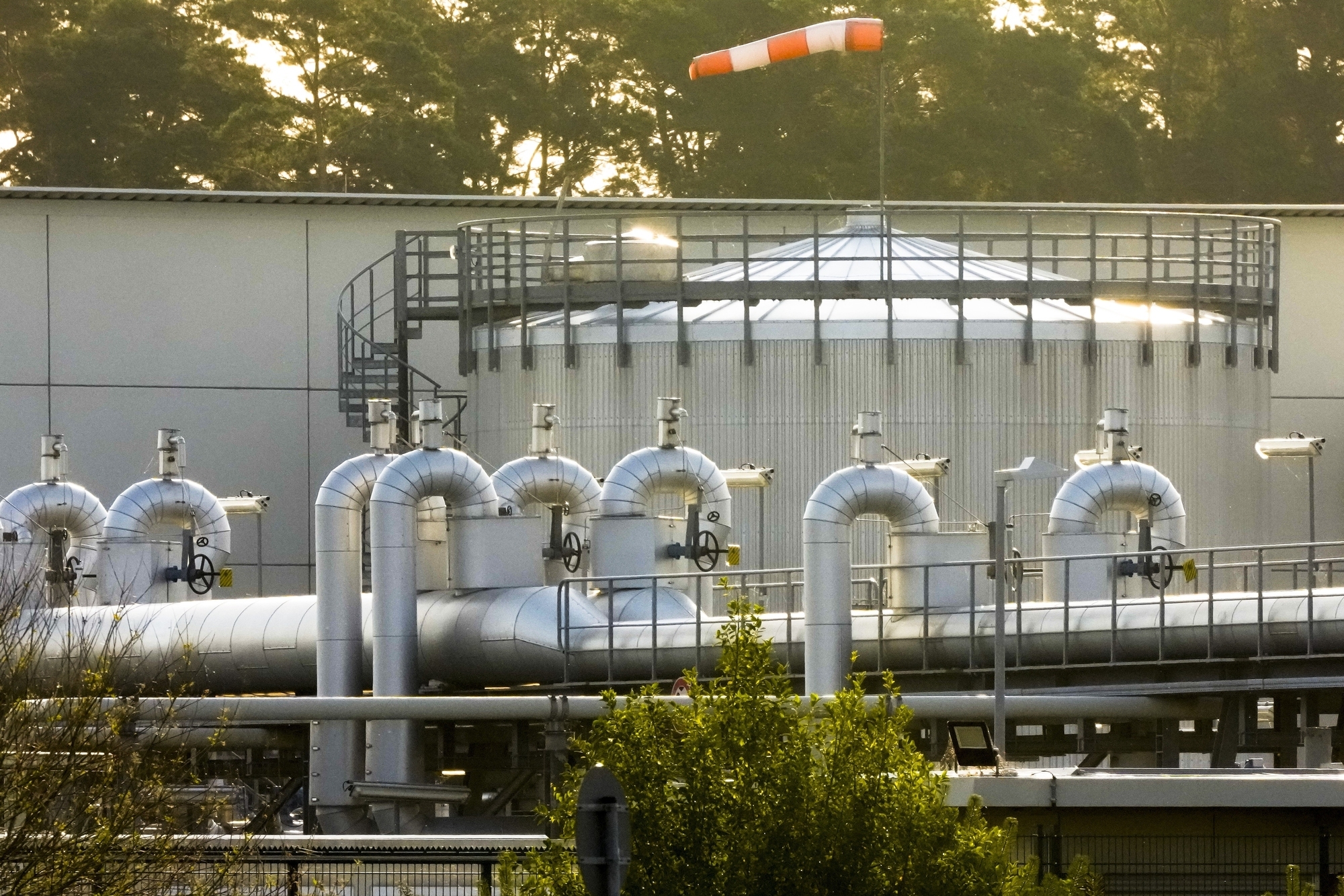
European wholesale gas prices fell on Monday amid signs that the continent will be able to navigate this winter with sufficient supplies, as an influx of liquified natural gas and steps taken by the EU contain the crisis.
Prices for delivery in January fell 5.25% as European demand is likely to fall by a record 10% this year, and another 4% next year due to the high prices, according to the International Energy Agency. Gas saving measures will be crucial to help stretch gas stocks to the end of winter even with dwindling Russian supply, it said.
Reduced consumption would give the EU some breathing room as it tries to prevent shortages and blackouts. EU ministers last week supported measures including a power-demand reduction goal and a profit grab from energy companies, and said more steps were likely this week. The issue of a cap on wholesale gas prices has returned to the table.
Russian gas is still flowing to Europe through Ukraine, but concerns about stoppages will remain as long as the war continues. There is also supply through the TurkStream pipeline to some smaller consuming nations and Turkey. Over the weekend, Gazprom suspended deliveries to Italy in an apparent scuffle over regulation in Austria.
North Sea gas
Ireland doesn’t get its key gas supplies directly from the continent but prices of gas sourced from the North Sea have also soared along with continental prices.
The British regulator on Monday said Britain faces a significant risk of gas shortages this winter and a possible emergency.
Although Russia only meets about 4% of Britain’s gas needs, a disruption in supply to Europe has contributed to driving up British prices and makes it harder for Britain to secure gas from others.
In a letter to power company SSE, regulator Ofgem said Britain faced the possibility of a “gas supply emergency” in which gas supplies to some gas-fired power plants are curtailed, which can stop them from generating electricity. In the event of gas supply issues, the regulator and Britain’s national grid could be forced to curb supply of gas to gas-fired power stations to make sure enough supply remains available to households.
Separately, the IMF has said up to 20 countries, many in Africa, could need emergency assistance to cope with the global food crisis. IMF managing director Kristalina Georgieva, speaking at a conference in Saudi Arabia, also said 141m people in the Arab world are exposed to food insecurity.
The IMF last week approved a new food shock borrowing window under its existing emergency financing instruments to help vulnerable countries cope with food shortages and high costs stemming from Russia’s war in Ukraine.
Ms Georgieva said that 48 countries are particularly exposed to the food crisis.
“Of the 48 countries, about 10-20 are likely to be asking (for emergency assistance)”, Ms Georgieva said, and that “quite a lot of them” are in sub-Saharan Africa. “We are here for you,” she promised members at the event.
The IMF will add its voice to fight food trade restrictions.
- Bloomberg, Irish Examiner, Reuters
CONNECT WITH US TODAY
Be the first to know the latest news and updates