Mario Draghi saved the euro but Italian politics beat him
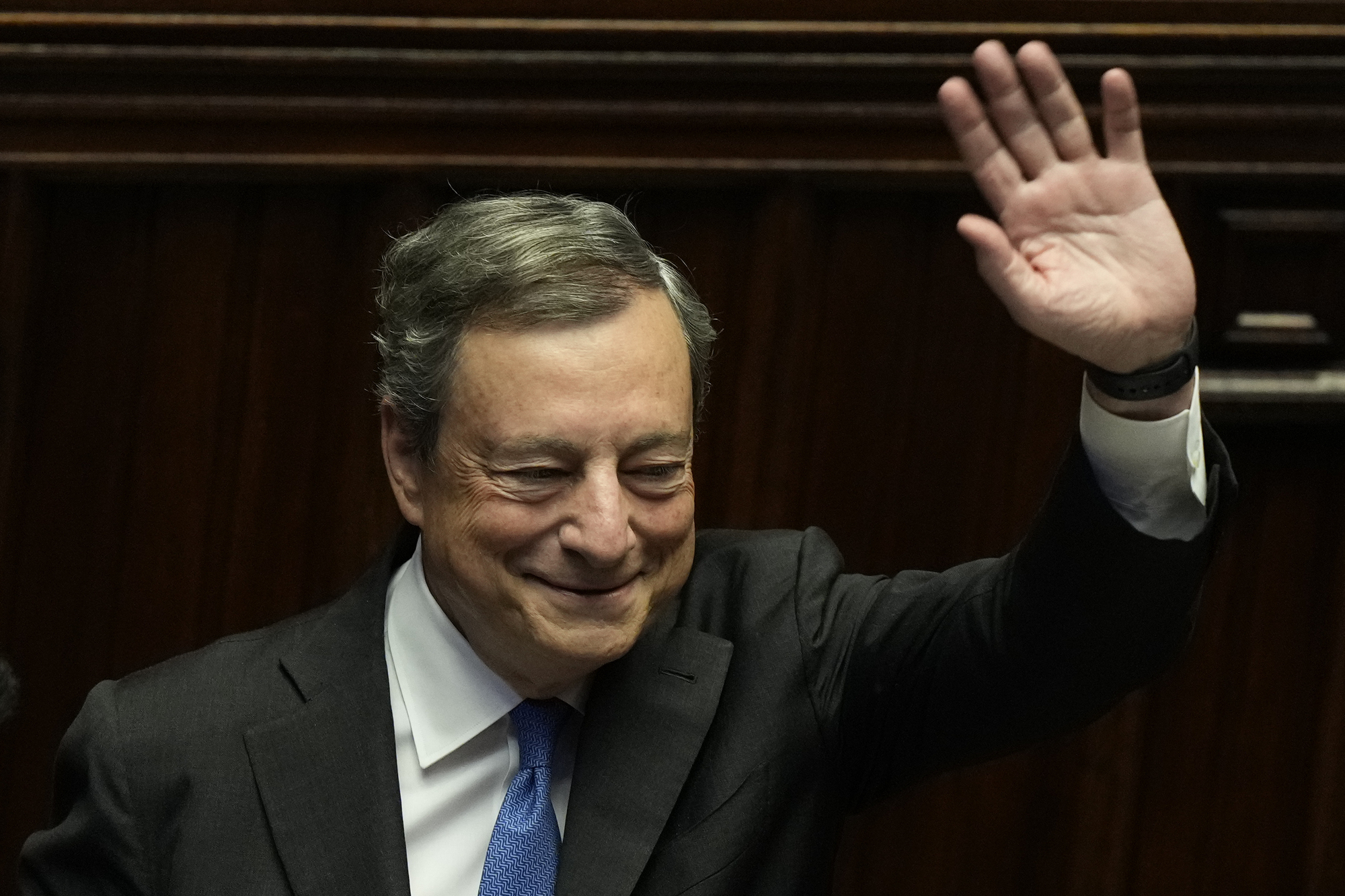
Italian premier Mario Draghi resigned on Thursday.
Mario Draghi managed to keep the euro together at the height of the sovereign-debt crisis but he failed to keep Italian political parties in line — just as the eurozone grapples with a new energy and inflation crisis.
The premier resigned on Thursday after three coalition allies withdrew their support for his government, shattering the unity which had propelled him into office in February 2021.
The timing couldn’t be worse. His resignation came on the day the European Central Bank he once headed raised its key interest rate by 50 basis points, the first increase in 11 years. ECB president Christine Lagarde and colleagues also unveiled a tool they hope will ensure markets don’t push up borrowing costs too aggressively in vulnerable economies, like Italy's.
Italian bonds, which had sunk after Mr Draghi’s resignation, plunged following the ECB’s move. The eurozone is facing record inflation, slowing growth and energy shortages after Russia’s invasion of Ukraine, putting investors on edge.
Ironically, his exit from power comes shortly before the 10th anniversary of his pledge on July 26, 2012, to do “whatever it takes” to keep the single currency in place.
When he became prime minister, Mr Draghi offered a boon to markets because he brought an impetus for reforms and temporary stability to Italy’s notoriously unstable politics. A fresh bout of turbulence in Italian bonds will make it harder for the ECB to tighten monetary policy without creating fresh strains within the currency union.
The 74-year-old was picked by President Sergio Mattarella to head Italy’s 67th government since the Second World War after parties failed to resolve a political impasse. He quickly set about revamping a stagnant economy, which still needed to recover ground lost to the Covid-19 pandemic.
Under his technocratic stewardship, Italy engaged in an initial reform spurt tied to an effort to spend EU recovery cash sensibly. The economy grew in the first quarter of this year faster than economists predicted and outpaced its European peers in the second quarter.
All of that is now called into question after weeks of mounting political tensions which started when the Five Star Movement, a key coalition ally, refused to back Mr Draghi in a confidence vote on July 14.
The climax was a day-long Senate session of heated debate in which Mr Draghi tried to reimpose his authority, setting out his terms for continuing in power before he was abandoned by his former partners.
• Bloomberg
CONNECT WITH US TODAY



Be the first to know the latest news and updates