State faces higher borrowing costs but major infrastructure projects unlikely to be derailed
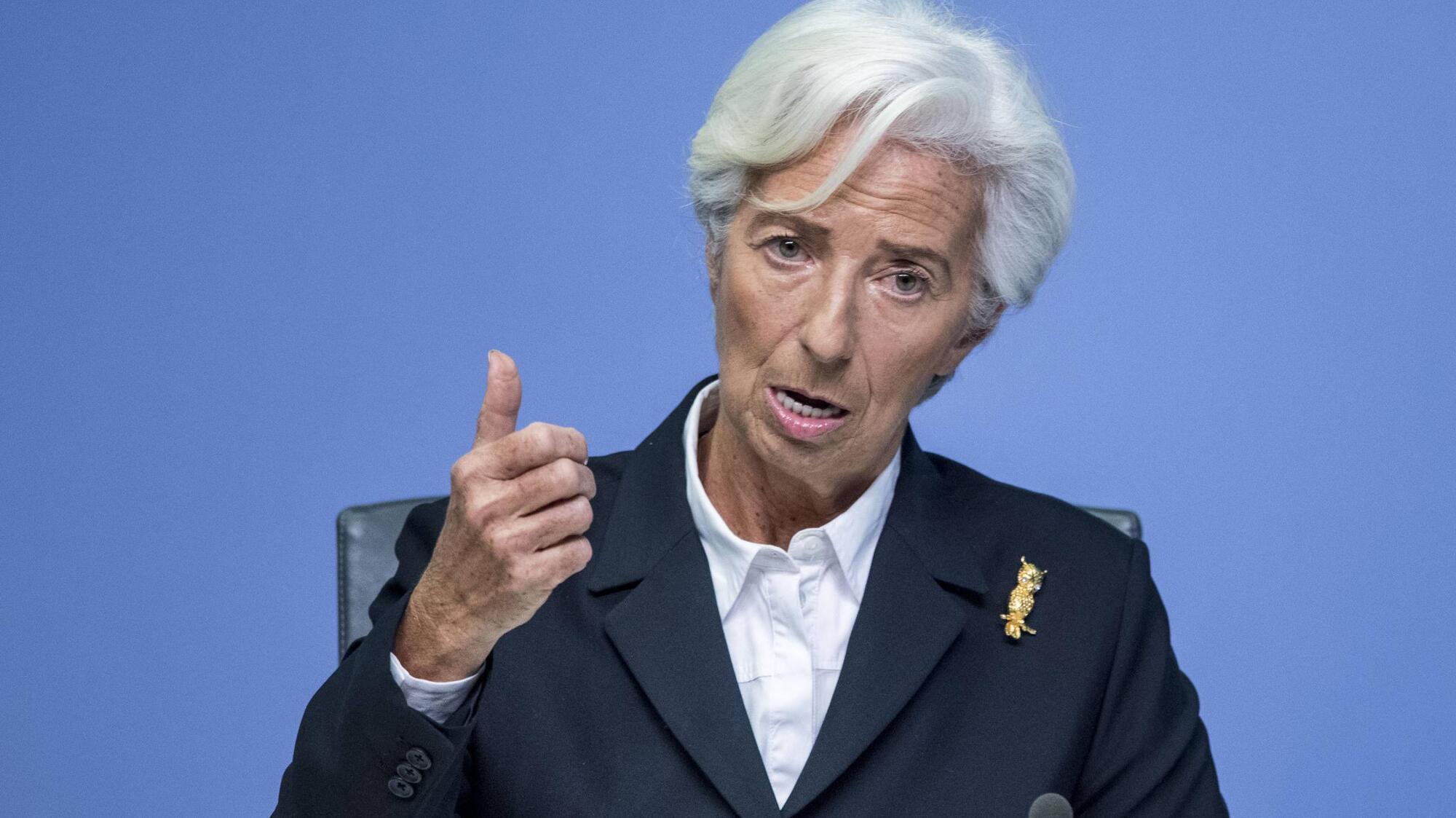
ECB president Christine Lagarde spelled out plans for a series of hikes starting in July.
The interest costs for the State to borrow money spiked higher this week, but experts say that the sovereign borrowing costs should not at this stage dent the ambitions of the Government to finance its big spending plans on infrastructure projects in the coming years.
Sovereign yields or interest rates rose for all eurozone governments as the European Central Bank signalled a lift-off in its official rates as it fights to check consumer prices that have soared to levels not seen for many decades.
Financial markets have bet the central bank will likely be forced to continue to hike rates through 2023, because inflation is showing no signs of being tamed any time soon.
The yield on the Irish 10-year bond closed on Friday at 2.16%, up by a significant 30 basis points in the past week. A year ago, the State could borrow at zero or negative rates, which implied that investors for safety purposes were prepared to lend their money to Ireland, and many other eurozone states, at little or no cost.
The 2.16% yield for the Irish Government to borrow money for 10 years compares with the 1.5% for the equivalent bond in Germany. Ireland's yield is still much lower than those of Portugal and Greece, two other eurozone countries that required official bailouts during the financial crisis 12 years ago.
However, experts said the Government's ambitious plans to invest big in infrastructure are not under threat at current market costs.
They point to current yields still being lower than debt that will come up for refinancing in future years.
Meanwhile, the focus of sovereign debt markets this week has returned to Italian borrowing costs because Italy is among the most indebted states in the eurozone.
The yield on the Italian 10-bond traded on Friday at almost 3.85%, significantly above German and Irish levels.
The Italian cost of borrowing "is trending in the wrong direction but there is some way to go for it to become problematic", said Ryan McGrath, head of fixed income strategy and sales at Cantor FitzGerald Ireland.
On ECB monetary policy, Conall Mac Coille said that markets like policy to be credible and "they may test it".
The selloff of Europe’s weakest bond markets, such as Italy's, is showing no signs of easing, piling pressure on the ECB to make clearer how it plans to keep diverging borrowing costs contained.
The yield gap between 10-year Italian bonds and their German peers widened to almost 226 basis points, the most since May 2020. The move brings the measure — a key gauge of risk in Europe — closer to a 250-basis-point threshold that strategists have previously pinpointed as a “danger zone” that could spark action from policy makers.
ECB president Christine Lagarde underscored officials’ determination to stop so-called fragmentation within the eurozone on Thursday as she spelled out plans for a series of hikes starting in July. But she fell short of elaborating on any new tool — such as another bond-buying programme — which some investors and analysts see as necessary.

CONNECT WITH US TODAY



Be the first to know the latest news and updates