Hiking interest rates alone to fight inflation would be 'extremely costly'
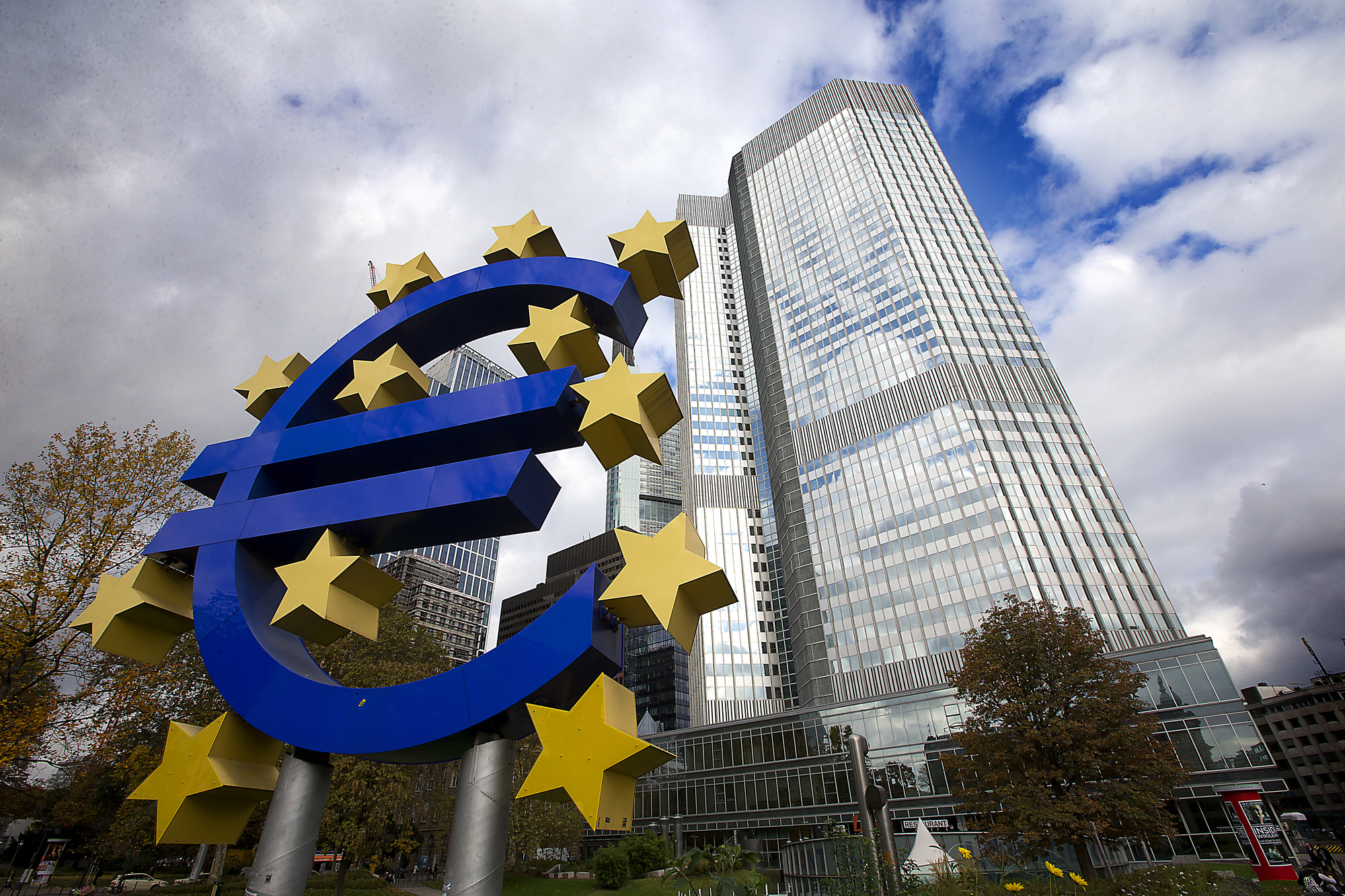
The European Central Bank in Frankfurt. While the ECB has accelerated its exit from stimulus, there remains disagreement over when to start raising rates.
Tackling record eurozone inflation through monetary policy alone would risk imposing steep costs on society, a senior ECB official has said, urging governments to share some of the burden by shielding households from soaring energy prices.
Much of the surge in inflation, which is now more than three times the ECB’s 2% target, is down to geopolitical factors beyond the influence of central bankers, executive board member Fabio Panetta said in a speech in Cassino, Italy.
He called for a “coherent fiscal- and monetary-policy strategy” as a less damaging way to tame prices, suggesting that reductions in indirect taxes or bigger transfers to the most vulnerable would mitigate the effects of the spike in energy prices.
ECB president Christine Lagarde also backs targeted aid by governments, which have already spent tens of billions of euros to ease the cost-of-living squeeze.
Mr Panetta said: "Asking monetary policy alone to bring down short-term inflation while inflation expectations remain well anchored would be extremely costly.
Speaking at a conference in Greece, ECB chief economist and former Irish Central Bank governor Philip Lane echoed Mr Panetta on the nature of the price shock.

“There’s a difference between an episode which is driven by domestic inflation environment versus an episode where a lot of the inflation is essentially imported,” said Mr Lane, reiterating that policymakers should be ready to move in either direction, depending on how the war in Ukraine develops.
The comments highlight the challenge of curbing inflation while not derailing Europe’s pandemic rebound, especially following Russia’s invasion. They also underline how the backdrop differs from the US, which is set to ramp up interest rates in the face of faster — and much broader — inflation pressures that are more domestic-driven.
While the ECB has accelerated its exit from stimulus, there remains disagreement over when to start raising rates. With the US Federal Reserve and the Bank of England already doing just that, markets are betting on quarter-point hikes by the ECB in September, December, January and March.
A study by Germany’s Institute for Economic Research confirmed the “dilemma” facing officials. While rate increases could lower fuel costs by 4% and heating costs by 2%, they’d also weigh on industry and boost unemployment, it said.
Tighter monetary policy would bring down domestic energy prices by making the euro appreciate, reducing the cost of oil imports, according to the report. But to achieve this outcome, the ECB would have to raise rates by more than 50 basis points this year because that is what investors expect, the authors said.
A half-point hike would only return the ECB’s deposit rate to zero — and officials stress that this process is part of a normalisation, rather than tightening, of monetary policy, alongside the conclusion of large-scale asset purchases.
Mr Panetta said the ECB will not hesitate to act if the supply shock leads to inflation expectations running out of control, or if wages rise excessively. He sounded sceptical, however, that such a scenario would materialise.