Ukraine economy 'to shrink by 20% this year before bouncing back' if ceasefire struck soon
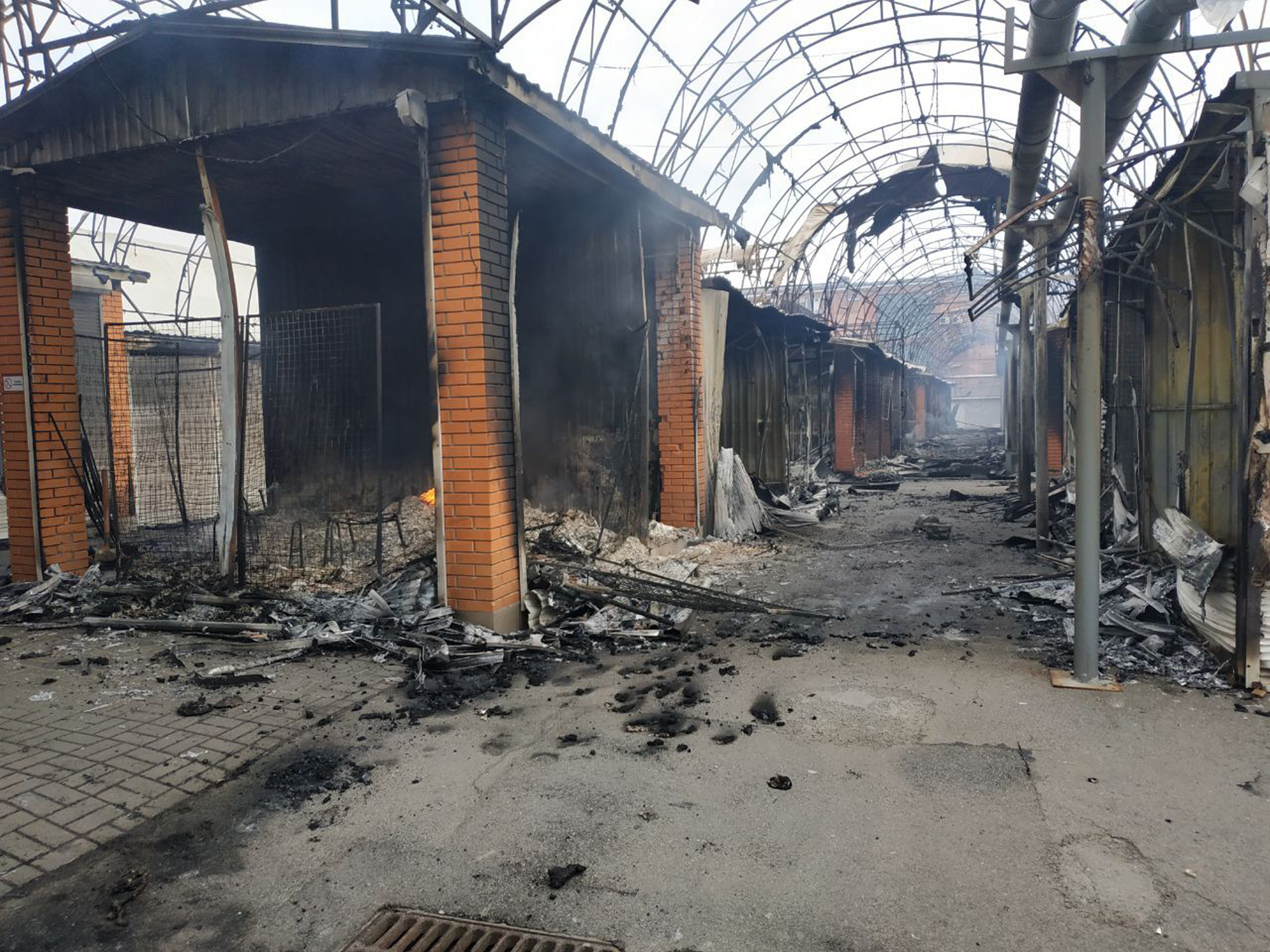
The city market after being damaged by night shelling in Chernihiv, Ukraine, on Wednesday, March 30.
Ukraine’s economy will shrink by a fifth this year before bouncing back in 2023, according to the European Bank for Reconstruction and Development, or the EBRD, under a scenario where a ceasefire is brokered in a couple of months.
The forecast is subject to major downside risks “should hostilities escalate or should exports of gas or other commodities from Russia become restricted”, the EBRD said in its biannual Regional Economic Update.
Russia’s invasion of Ukraine has created the greatest supply shock since at least the early 1970s, the EBRD said, snarling supply chains, upending the energy trade and threatening food exports due to both countries’ key agricultural sectors.
“Currently, the war is happening on territories that produce 60% of Ukrainian GDP,” the EBRD said in the report. About 30% of businesses have stopped production, and electricity consumption is estimated at 60% of pre-war levels, it added.
The forecasts assume that a ceasefire will be negotiated within a couple of months, and reconstruction of the country can begin in 2023, in which case the economy will grow 23% next year, it said.
Russia’s economy is forecast to shrink by 10% this year and stagnate in 2023, according to the EBRD. Russia’s recession could be deeper if Europe joins a ban on its oil imports or severely reduces the use of Russian natural gas.
The focus in recent days has been on signals from the Kremlin that it would insist on west European countries paying for its gas and oil in roubles.
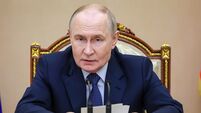
However, Russian President Vladimir Putin told Italy’s prime minister that European gas purchases can still be made in euros, reinforcing a message relayed by the German government and pointing to a possible softening in the Kremlin’s demand for payment in roubles. “Putin said that current contracts will remain in place,” Prime Minister Mario Draghi said in Rome.
Meanwhile, direct talks between Russia and Ukraine were set to resume on Friday, according to a top Ukrainian official, seeking to build on in-person talks this week in Turkey that failed to produce significant progress.
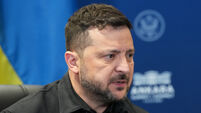
Ukrainian President Volodymyr Zelenskiy accused Russia of seeking to damage the country’s agriculture sector, potentially provoking a global food crisis.
NATO’s chief said that Russian forces were not pulling out of parts of Ukraine even as it focuses on the eastern Donbas region — and will maintain pressure on Kyiv. Oil dropped sharply on reports the administration of US President Joe Biden is considering a release of roughly a million barrels a day from US reserves.
The UK announced new sanctions targeting Russian state media, including the owners of broadcasters RT and Sputnik, as well as Sergey Brilev, a state television host accused of spreading Kremlin propaganda.


CONNECT WITH US TODAY



Be the first to know the latest news and updates